Page of Cups Tarot Card Meaning
A curious Page sees a fish rise from his cup beside the sea. Discover what the Page of Cups reveals about tender news, imagination, and learning to listen to your feelings.
- imaginative insight
- emotional news
- kindness
- study
- reflection
Card at a glance
- Number
- Page
- Element
- Water
- Astrology
- Princess of the Waters, Earth of Water, a distinct court-card tradition with its own imagery.
- Keywords
- imaginative insight, emotional news, kindness, study, reflection, a surprising message, tender curiosity.
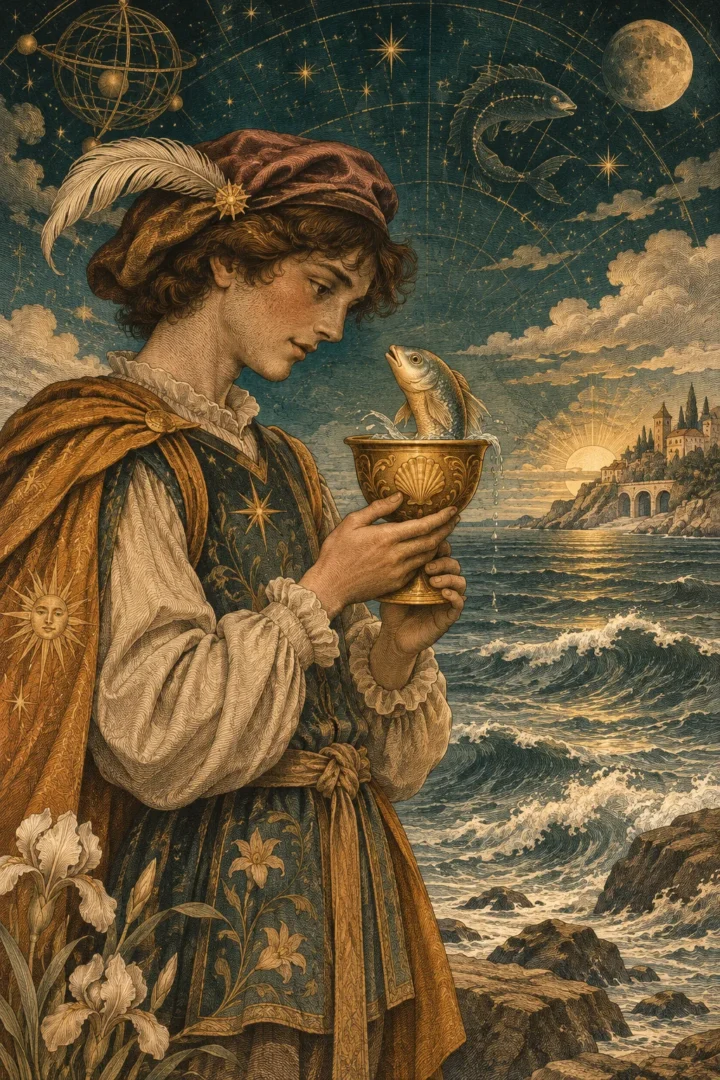 Page · Page of Cups
Upright meaning
imaginative insight, emotional news, kindness
Upright, the Page of Cups often appears with a surprising piece of emotional news. You might receive an affectionate note, an invitation to talk, or an idea that changes how you think about something familiar.
- imaginative insight
- emotional news
- kindness
- study
- reflection
- a surprising message
Reversed meaning
confused attachment, seductive appearances, misleading messages in Waite's account; self-doubt or creative withdrawal in contemporary practi
A reversed Page is often described today as insecure, emotionally immature, or blocked creatively. Those readings can fit when you are afraid to share an idea or have difficulty expressing an important feeling.
- confused attachment
- seductive appearances
- misleading messages in Waite's account; self-doubt or creative withdrawal in contemporary practice.
Card symbolism
-
A living surprise in a familiar vessel
The fish is the most memorable part of Pamela Colman Smith's illustration. A cup that ordinarily holds water now contains a creature capable of looking back. The image turns a private feeling into something that can be encountered.
-
The Page's attentive gaze
The young figure studies the cup with concentration. He is not running toward an adventure, and he has not yet offered the vessel to anyone else.
-
Waves behind him, feet on the shore
The sea rises and falls behind the Page, while he remains on solid ground. Water is present without overwhelming the scene.
-
The flowered tunic and long scarf
The Page wears a patterned tunic and a soft hat with a long scarf. His clothes lend him an expressive, almost theatrical presence, although his attention is wholly on the cup.
In depth interpretation
A young figure stands beside a rolling sea, holding a golden cup with both curiosity and care. A fish has lifted its head from the vessel and seems to look back at him. Neither figure appears alarmed. Something impossible has arrived in an ordinary moment, and the Page is giving it his full attention.
The Page of Cups represents a tender message, imaginative discovery, emotional curiosity, and the willingness to listen when something unexpected stirs your heart. Upright, it can describe news, a creative image taking shape, or the first words of affection. Reversed, it asks you to examine mixed signals, seductive impressions, or feelings you have not yet learned how to express clearly.
Look at the fish for a moment. It has risen from a cup, a vessel made to hold feeling and water. What might your inner life be trying to show you before you rush to explain it away?
The spiritual meaning: listening to what rises
Sometimes a feeling finds you before you have language for it. You wake from a vivid dream and carry its colors through the morning. A line of music makes you remember someone you have not thought about in years. A small act of kindness brings tears you did not expect.
The Page of Cups meets you in that interval. The Page is looking at the fish, but the fish seems just as interested in him. There is an exchange of attention, playful and mysterious, between the person and the life emerging from the cup.
You may recognize this card when your imagination is unusually alive. A memory, a dream, or a creative idea wants your attention. It may also appear when you are learning how to speak honestly about affection without knowing exactly what response you will receive.
The Page's spiritual gift is curiosity. You can consider a symbol without deciding immediately what it must mean. You can let a feeling be tender while you learn where it belongs in your life.
In this sense, the card asks you to keep a little room for wonder. An image that seems strange at first may become the beginning of a poem, a conversation, a prayer, or a new way of understanding yourself.
The Page of Swords can help you work with an intriguing new feeling or idea. Where the fish in this cup evokes surprise and imagination, the Swords Page wants to ask questions and test what is being noticed. Together, they encourage wonder with enough curiosity to learn from it.
The fish in the cup: why this image matters
A living surprise in a familiar vessel
The fish is the most memorable part of Pamela Colman Smith's illustration. A cup that ordinarily holds water now contains a creature capable of looking back. The image turns a private feeling into something that can be encountered.
Waite described the Page's vision as a picture of the mind taking form. That is a valuable distinction from interpretations that treat the fish as a literal messenger delivering a prediction. The scene can represent an idea becoming vivid enough that you are ready to notice, study, and perhaps share it.
Imagine receiving the first clear image for a story you have wanted to write. You know little about its plot. You can already see a character standing beside the sea. The Page invites you to be interested in the image before demanding that it become a finished project.
There is no need to assign the fish a single universal meaning. In different symbolic traditions fish carry varied associations. In this particular card, the visible relationship between the Page and the creature is the strongest place to begin.
The Page's attentive gaze
The young figure studies the cup with concentration. He is not running toward an adventure, and he has not yet offered the vessel to anyone else.
This posture deserves attention. In Waite's divinatory list, the Page is connected with study, application, reflection, meditation, service, and messages. The qualities of a careful learner stand alongside the more familiar modern themes of intuition and creativity.
If the card appears when you are waiting for news, its messenger role may be relevant. If you asked how to approach a new interest, the posture of study may be the better guide.
A feeling can become more meaningful as you listen to it. Sometimes the best first response is to ask another question.
Waves behind him, feet on the shore
The sea rises and falls behind the Page, while he remains on solid ground. Water is present without overwhelming the scene.
This is a useful picture for bringing emotional or imaginative experiences into daily life. You may have a powerful dream, a sudden affection, or a creative impression. You still have a body, responsibilities, and people around you. The Page stands where those worlds meet.
The waves do not prove that a psychic message is arriving from another person. They offer a visual language for movement within the Cups suit. You can appreciate the card's mystery while attending to the real circumstances of your question.
The flowered tunic and long scarf
The Page wears a patterned tunic and a soft hat with a long scarf. His clothes lend him an expressive, almost theatrical presence, although his attention is wholly on the cup.
Modern readers sometimes see the floral pattern as a sign of creativity or openness. Those are plausible responses to Smith's design, not fixed meanings documented in Waite's brief description.
What feels important is the contrast between the lively costume and the quiet act of looking. A person can carry a rich imagination while appearing still to the world.
Page of Cups upright: a message worth listening to
Upright, the Page of Cups often appears with a surprising piece of emotional news. You might receive an affectionate note, an invitation to talk, or an idea that changes how you think about something familiar.
The message does not have to come from another person. Sometimes it is an inner recognition. You notice that a friendship has become precious to you, or that a creative subject you once dismissed has begun returning to your thoughts.
Imagine someone who has kept a notebook of dreams but has never done anything with the images. One morning, a small story occurs to them while rereading an old entry. They begin sketching it for the pleasure of seeing where it leads. The Page belongs to that attentive beginning.
It also has a practical side. Waite included study and matters connected with business in his upright list. If you are learning a craft, considering training, or drafting an application, this card may encourage careful attention to what is being communicated.
The Page invites you to respond sincerely, with enough curiosity to learn more before promising too much.
Page of Cups reversed: the pull of an appealing story
A reversed Page is often described today as insecure, emotionally immature, or blocked creatively. Those readings can fit when you are afraid to share an idea or have difficulty expressing an important feeling.
Waite's historical reversal turns our attention toward attachment, inclination, seduction, deception, and artifice. His additional divinatory notes also mention obstacles. This language has a different emphasis from the familiar modern story of a shy dreamer.
Consider a message that feels wonderfully flattering. You want it to mean a great deal, and you begin imagining a future before asking what the sender actually intends. The reversed Page might describe the temptation to let desire complete a story for which you have only a few details.
A misleading impression can also arise without deliberate dishonesty. You may have misunderstood the tone of a conversation, or held on to an idea because it comforts you. The card asks you to examine the message carefully.
It cannot prove that someone is deceiving you. In an actual relationship or agreement, clarity comes from conversation, evidence, and whether actions support the words.
Is the Page of Cups a message, a person, or an inner quality?
All three are possible court-card approaches. The question and spread position help you choose.
If you ask what is entering your life, the Page's older association with news and messages becomes especially relevant. A thoughtful invitation, reply, or new piece of information may be the central image.
If the position represents a person, the Page might suggest someone gentle, imaginative, studious, or eager to offer help. Age and gender need not match Smith's youthful figure. Someone of any age can inhabit the role of learner or messenger.
If you ask what to cultivate in yourself, the Page may encourage receptivity, imaginative practice, and a kinder way of listening to feelings.
The strongest reading is the one that actually helps you understand the question you brought. A court card does not force every spread to involve a mysterious stranger.
Page of Cups in love and relationships
In love, the Page of Cups often belongs to the early exchanges that reveal affection. Someone sends a thoughtful message or finds the courage to say they enjoy your company. You may discover your own feelings becoming clearer as you spend time together.
If you are single, the Page can encourage you to approach someone with sincere curiosity. You need not turn the first conversation into a prediction about the relationship's future.
For an established couple, the Page can bring fresh tenderness to a familiar bond. Perhaps you have forgotten to ask about each other's inner worlds. A question about a dream, a favorite song, or an old memory might open a gentle conversation.
Reversed, notice whether affection is being expressed clearly. A flattering message may be sincere while still lacking the consistency needed for a relationship. If you have been holding a feeling inside, consider how you might communicate it respectfully.
Page of Cups as feelings
As feelings, the Page suggests affection, interest, vulnerability, or someone beginning to recognize an emotion. Its imaginative quality can also reveal how much of the experience is still a private hope. The card cannot verify what another person secretly feels.
Does the Page of Cups mean an apology?
An apology is one possible kind of emotional message. The Page can symbolize the first effort to say something tender or acknowledge a feeling.
The image alone does not promise that someone will apologize. If an apology does arrive, its meaning becomes clearer through the person's willingness to understand the hurt and act differently afterward.
Page of Cups for creativity, study, and spiritual practice
This is a beautiful card for a creative beginning that still feels fragile. You may be experimenting with drawing, learning an instrument, or noticing that stories are appearing more readily than before.
In a spiritual practice, the Page can invite attention to dreams, prayerful imagery, or personal symbols. A dream may leave you with a question that deserves contemplation. You can explore what the image evokes without claiming that it contains a literal message about someone else's future.
Try keeping a few notes on images that return. Notice what you remember and the feeling that accompanies it. Later, you may discover a pattern that enriches your own understanding.
The Page's older association with application and meditation is especially useful here. Curiosity gains depth when you return to the practice gently, allowing skill and attention to grow.
Page of Cups for career and money
In work, the Page can symbolize a creative proposal, a supportive colleague, or news about an opportunity you are still learning to assess. It may appear when you are studying new material and discovering a way to contribute.
Imagine joining a community arts program as a volunteer. You enjoy hearing people's stories and begin wondering whether you could help create a small exhibition. The Page reflects the listening and early imagination that make the idea possible.
The reversed card is useful when a proposal appeals strongly to you but remains vague. Ask about time, costs, responsibilities, and what the other people have agreed to provide.
For money matters, the Page does not promise a windfall. Waite's additional card notes include a favorable omen in some contexts, but those historical associations are not evidence about an actual payment or investment. Let reliable information guide financial choices.
Princess of the Waters: an older image with a different creature
The Golden Dawn's Book T calls the related court card the Princess of the Waters, associated with Earth of Water. This is its Knave or Page rank in that system.
Its picture differs markedly from Smith's. Instead of a youth gazing into a cup from which a fish emerges, Book T describes a standing, Amazon-like figure on a foaming sea. She bears a lotus and a cup with a turtle issuing from it, while a dolphin and swan imagery surround her.
The text associates this Princess with sweetness, poetry, imagination, gentleness, and courage when roused. It is a richer and more formidable figure than the idea of a permanently naive beginner.
These are related tarot traditions with distinct artwork. The turtle in Book T is not an alternative name for Smith's fish, and the earlier Princess should not be treated as proof that every Page image carries the same detailed symbolism.
The comparison offers a spiritual insight without forcing the two pictures into one story. The Page's imagination can be gentle and powerful at once, especially when it is given time to become part of the material world.
Worked reading: should I turn a vivid dream into a creative project?
Imagine you have been writing down a recurring dream about a small house beside the sea. The image moves you, and you wonder whether to use it as the beginning of a short illustrated story. You draw the Page of Cups for the present, The High Priestess for what to explore, and the Three of Pentacles for how to proceed.
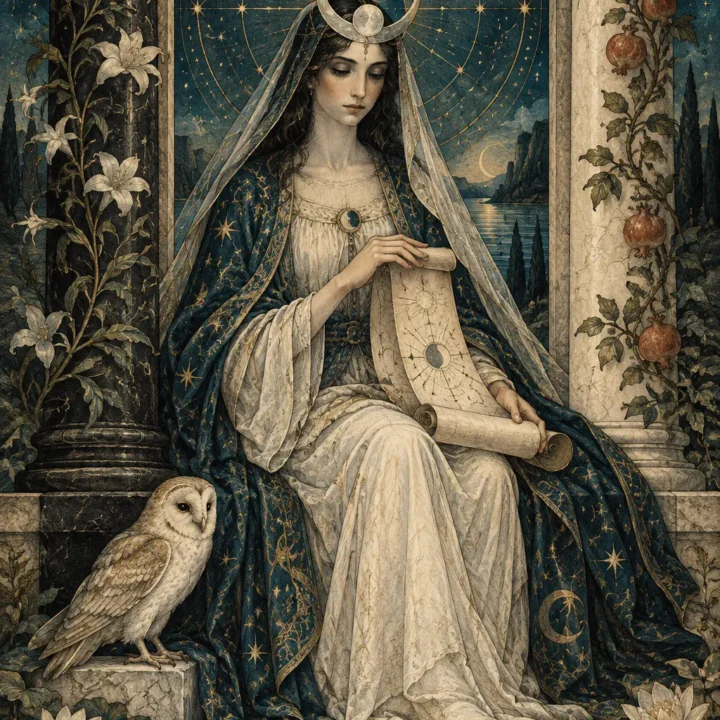
The Page is the image becoming vivid enough to notice. Its fish in the cup mirrors the unexpected life of the dream. The High Priestess invites you to sit with the image's mystery and pay attention to what you genuinely feel when you remember it.
The Three of Pentacles offers a practical direction. You might draft a short scene, make a few sketches, or ask a trusted creative partner to help you develop the idea. The work can gradually reveal which parts of the dream belong in the story.
If The Moon appeared in place of the Three of Pentacles, the reading might emphasize uncertainty, shifting imagery, and the importance of exploring your assumptions before assigning a fixed meaning.
The spread does not claim the dream predicts an event. It offers a way to honor an imaginative experience and give it a form you can work with.
How the Page differs from the Ace and Knight of Cups
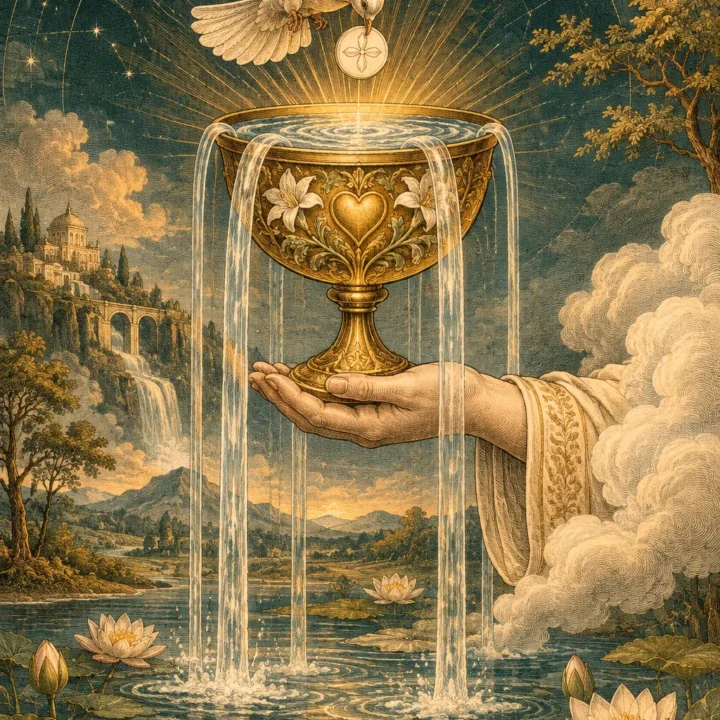
The Ace of Cups shows a cup offered from a cloud, with emotional possibility flowing from a mysterious source. The Page holds a vessel himself and studies a living surprise within it. Feeling has become something a person can notice and reflect upon.
The Knight of Cups moves toward a destination with a cup in his hand. Waite associated the Knight with arrival, invitation, and proposals. The Page is especially suited to the first recognition of an emotion or image. The Knight begins carrying that feeling outward in the form of an approach or offer.
If you draw the Page and Knight together, ask whether the situation is still becoming clear or whether a real invitation has already been made. That distinction is more useful than giving both cards the same phrase about romance.
Page of Cups as advice: listen before you name it
Look at the fish and imagine how surprised you would feel to see it rise from your own cup. What is asking for your attention in a way you did not expect?
You could spend a few minutes writing about a recent dream, a tender feeling, or a creative idea. Describe what you noticed before trying to decide what it means.
If the feeling concerns another person, consider one kind question you could ask or one honest thing you could share. Leave room for their response. If it concerns your own work, choose a small experiment that lets the image grow.
The Page offers a gentle form of courage: giving something unusual your attention long enough to discover what it might become.
Is the Page of Cups a yes or no card?
The Page of Cups tends toward a gentle yes for exploring a feeling, sharing a kind message, or beginning a creative practice. Reversed, clarify what has been communicated and whether your expectations rest on something real. The card does not guarantee a message, pregnancy, confession, or relationship outcome.
A note on tradition
Pamela Colman Smith illustrated the Rider-Waite-Smith Page of Cups with a fish emerging from a vessel. Waite emphasized study, service, reflection, and messages, with attachment and deception among his reversed meanings. The Golden Dawn's older Princess of the Waters depicts a different court figure, with a turtle, swan, dolphin, and lotus. Modern practice often reads the Page through intuition and emotional immaturity. Those approaches can inform a reading when their sources and differences remain clear.
Frequently asked questions
What does the fish in the Page of Cups mean?
The fish is a surprising living presence rising from the cup. Waite connected the image with thoughts taking visible form. Modern readers often use it to explore imagination, creative insight, or feelings becoming recognizable.
How do I know whether a Page of Cups message matters?
Listen to how the words make you feel, then consider what they actually say. A small invitation might be the beginning of something meaningful, but you can ask questions and let trust develop through the exchange rather than inventing the next chapter.
Is the Page of Cups a pregnancy card?
Some contemporary readers include pregnancy among possible beginnings associated with this card. The illustration does not confirm pregnancy, and tarot cannot establish a medical condition. If pregnancy is a real question, use an appropriate test or medical guidance.
Why is the reversed Page sometimes connected with deception?
Waite's reversed list includes attachment, seduction, deception, and artifice. Modern readers more often emphasize insecurity and difficulty expressing feelings. A reversed Page invites discernment about what has been communicated; it does not prove dishonesty.
Is the Page of Cups the same as the Golden Dawn Princess of Cups?
They occupy related court ranks in different systems, but their images and doctrines differ. Smith shows a fish rising from a cup; the Golden Dawn Princess stands by the sea with other animals and a lotus. Their shared themes do not make their details interchangeable.

Keep reading
Explore the Cups
Every card page names the tradition behind each meaning, so you can compare readings instead of taking one as fixed.
Cards to explore alongside this one
Their symbols reveal useful similarities and differences for your next reading.

Page of Swords
curiosity, learning, questions, vigilance
Ace of Cups
new feelings, love, compassion, emotional renewal
The High Priestess
intuition, contemplation, inner knowledge, privacy
Six of Cups
childhood memories, nostalgia, kindness, innocence
Sources and further reading
- A. E. Waite, The Pictorial Key to the Tarot, Page of Cups, main and additional divinatory meanings Read the text
- Golden Dawn, Book T, Princess of the Waters and Lotus of the Palace of the Floods Read the text
- Biddy Tarot, Page of Cups, contemporary readings Read the text
- Labyrinthos, Page of Cups, modern symbolism and practice Read the text