The Moon Tarot Card Meaning
A crayfish leaves a moonlit pool as a dog and wolf call beside a winding path. Explore The Moon’s mysterious teachings about dreams, feeling, and the unknown.
- intuition
- dreams
- mystery
- imagination
- uncertainty
Card at a glance
- Number
- XVIII
- Element
- Water
- Astrology
- Pisces (Golden Dawn)
- Keywords
- intuition, dreams, mystery, imagination, uncertainty
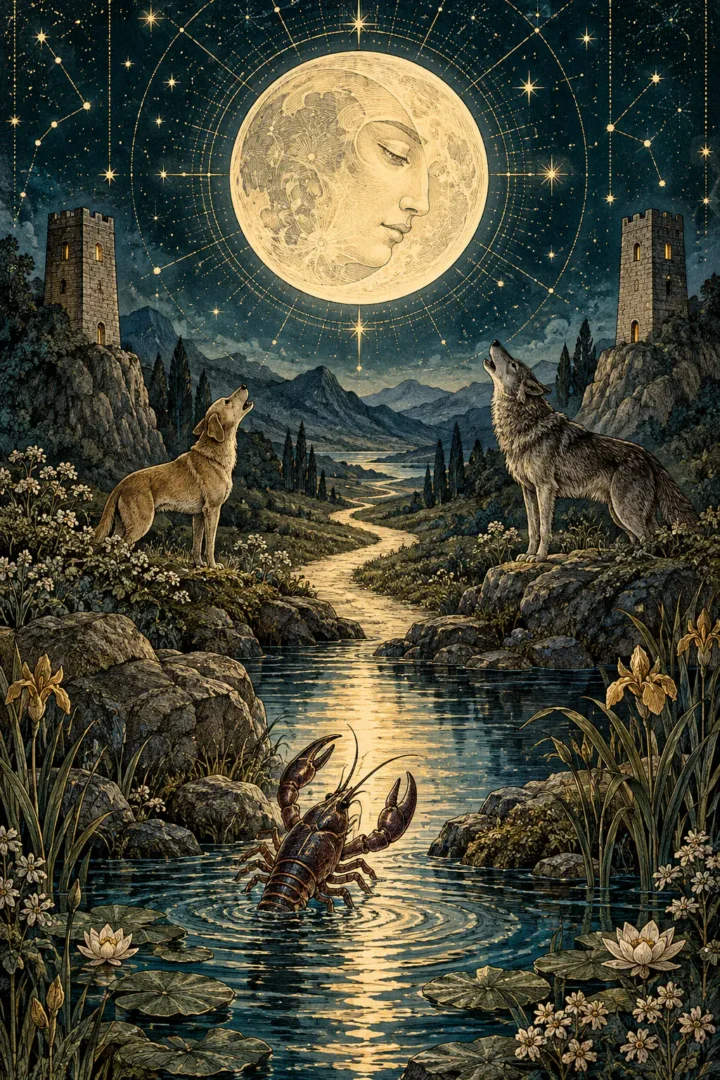 XVIII · The Moon
Upright meaning
Intuition, dreams and mystery
Upright, The Moon frequently appears when a question is surrounded by impressions, uncertainty, and important gaps in understanding. You may suspect that something has changed without knowing what it is. You might be revisiting old feelings or experiencing a period of vivid dreams and creative inspiration.
- Intuition
- Dreams
- Mystery
- Imagination
- Uncertainty
Reversed meaning
Confusion easing or deepening, anxiety and self-deception
Reversed, The Moon has more than one possible atmosphere. Sometimes the fog begins to lift. A confusing conversation is finally explained, or you realize that an old fear has been shaping your expectations.
- Confusion easing or deepening
- Anxiety
- Self-deception
- Emerging understanding
Card symbolism
-
The moon’s face and falling drops
The moon looks down from a disk ringed with rays. Small drops descend toward the landscape below, adding an almost enchanted quality to the night.
-
The dog and the wolf
A dog and a wolf stand on opposite sides of the path, both responding to the same moon. One is a familiar companion of human life; the other evokes the wild world beyond our houses and fences.
-
The crayfish and the water
At the very bottom of the card, a crayfish makes its way out of the pool. It is a small, unlikely traveler beneath an enormous sky.
-
The winding road and two towers
The path passes between two stone towers and continues toward distant heights. It suggests a journey that extends far beyond the scene we can see.
In depth interpretation
A narrow path begins at the edge of a pool and winds between two towers into distant hills. A dog and a wolf lift their heads toward the moon. At the water’s edge, a crayfish has begun to emerge, its body still caught between the depths and the land. Above everything hangs a luminous face, watching the landscape in its strange, borrowed light.
The Moon is the tarot card of dreams, imagination, intuition, uncertainty, and the feelings that rise when you cannot see the whole picture. Upright, it often asks you to listen to your inner world while giving a confusing situation time to reveal itself. Reversed, it can describe a fear gradually losing its hold or the exhaustion of trying to make sense of mixed signals.
You may feel this card in your body before you find an interpretation for it. Perhaps the scene is haunting, beautiful, familiar, or unsettling. Stay with the detail that catches your attention. It may hold the beginning of your question.
Walking by moonlight
Have you ever returned to a familiar place after dark and found that it felt entirely different? A garden path seems longer. A tree casts a shape you do not recognize. You know where you are, yet your senses keep asking you to look again.
The Moon inhabits that peculiar experience. The landscape is visible enough to draw you onward, and every shadow invites a story. When this card appears, your feelings may be especially vivid. A dream lingers after waking, a conversation leaves an impression you cannot explain, or a possibility seems both enticing and frightening.
There is genuine spiritual richness in this atmosphere. Imagination can bring us close to things we struggle to express in ordinary language. A symbol may gather an old memory and a present longing into one image. The Moon invites you to approach that mystery with curiosity.
It also asks you to remember the nature of moonlight. Some details remain obscure; others look different from the way they appear in daylight. Your response matters, and understanding can grow as you learn more about the situation.
What the symbols in The Moon reveal
Pamela Colman Smith’s Rider-Waite-Smith Moon is full of creatures and boundaries. The path, pool, towers, and moon form a scene you could wander through in a dream. Each element gives you a different place to begin.
The moon’s face and falling drops
The moon looks down from a disk ringed with rays. Small drops descend toward the landscape below, adding an almost enchanted quality to the night. Waite connected them with the imaginative world and the limits of reflected light.
When the moon itself draws your eye, consider how a feeling has colored the way you understand a recent experience. A hopeful mood can make an uncertain invitation feel full of promise. Worry can make an ordinary silence seem ominous.
The dog and the wolf
A dog and a wolf stand on opposite sides of the path, both responding to the same moon. One is a familiar companion of human life; the other evokes the wild world beyond our houses and fences.
Some readers see them as aspects of instinct that we know well and aspects we have barely encountered. The pair can help you ask what feels familiar in your situation and what awakens an older, less easily explained response.
The crayfish and the water
At the very bottom of the card, a crayfish makes its way out of the pool. It is a small, unlikely traveler beneath an enormous sky. The image can be especially evocative when a feeling has surfaced before you know what to call it.
Perhaps a dream has returned an old place to your memory. Or you find yourself more affected by a change than you expected. You can notice what has emerged without demanding an instant explanation.
The winding road and two towers
The path passes between two stone towers and continues toward distant heights. It suggests a journey that extends far beyond the scene we can see. The towers give the entrance a threshold-like quality, while the road promises no quick arrival.
If you are facing an uncertain decision, imagine yourself standing where the crayfish begins its climb. What is the next portion of the path you can actually see? That may be enough to consider for today.
The Moon upright meaning
Upright, The Moon frequently appears when a question is surrounded by impressions, uncertainty, and important gaps in understanding. You may suspect that something has changed without knowing what it is. You might be revisiting old feelings or experiencing a period of vivid dreams and creative inspiration.
Imagine beginning a new friendship with someone whose presence feels strangely familiar. You enjoy your conversations, yet you keep projecting memories of an earlier relationship onto the new one. The Moon might invite you to notice those associations and give this person room to become known on their own terms.
The card can also be fertile ground for art, prayer, and dreamwork. Images may arrive before words. Allow yourself to record them and return later, especially when the experience feels emotionally charged.
For consequential choices, give the waking world its rightful place. A question about a job, relationship, or financial agreement deserves information you can examine outside the reading.
The Moon reversed meaning
Reversed, The Moon has more than one possible atmosphere. Sometimes the fog begins to lift. A confusing conversation is finally explained, or you realize that an old fear has been shaping your expectations.
In other readings, the reversal suggests deeper entanglement with uncertainty. You keep searching for clues in every small interaction and emerge feeling less settled. Perhaps your sleep has been poor and your worries have grown loud enough to drown out quieter observations.
Notice what is happening in the situation itself. Has any new information become available? Have you been able to ask a direct question? The card can help you recognize when reflection has stopped bringing insight and when another kind of support would help.
The Moon in love and relationships
The Moon can make a love reading feel tender and complicated. Attraction may be strong, while the future of the connection remains undefined. You might be drawn to someone who reminds you of a past love, or find yourself wondering why a small change in their behavior affects you so deeply.
In a long-term relationship, the card can appear when important feelings have remained unspoken. One partner may be anxious about a decision while the other assumes everything is settled. A calm conversation can reveal how different their experiences have been.
Reversed, it may point toward growing clarity or a pattern of mistrust that needs attention. Repeated dishonesty, intimidation, or disregard for boundaries deserves to be taken seriously on its own terms. The image does not establish that a partner is secretly unfaithful.
The Moon as feelings
When asked about someone’s feelings, The Moon can suggest emotions that are difficult to name: longing, uncertainty, attraction, vulnerability, or fear of being hurt. The card may reflect the emotional uncertainty of the question itself.
Try noticing what you know about the relationship from ordinary interactions. How does the person behave when you ask for clarity? Their response can give you a firmer understanding than another attempt to interpret silence.
The Moon for career and work
At work, The Moon sometimes appears when the conditions surrounding a decision are unclear. A new role sounds appealing, but its responsibilities remain vague. An organization is changing, and rumors are moving faster than confirmed information.
Imagine being offered a project that promises creative freedom. Before accepting it, you realize you need to know who will make the final decisions and what resources are available. The Moon can remind you to ask questions that turn an intriguing possibility into a choice you understand.
This card also belongs to artistic and imaginative work. Writers, designers, musicians, and researchers may recognize the stage when an idea is alive but its final form remains mysterious. You can explore the image without pretending the plan is complete.
The Moon for money
In financial readings, The Moon often draws attention to unclear terms, unexamined assumptions, or anxiety about security. An offer might look different once its costs and obligations are written down.
If a money decision feels unusually emotional, consider what it represents to you. Perhaps the worry is connected to an earlier period of instability. You can honor that feeling while checking the numbers, seeking qualified guidance where needed, and allowing yourself time to compare options.
Dreams and spiritual growth with The Moon
The Moon is a natural companion for dream interpretation. Its landscape already resembles a dream: a creature climbs out of water, two animals call into the night, and a road leads through an opening that seems almost ceremonial.
Suppose you dream of walking along an unfamiliar shore and wake with a sense of sadness. You might first write down the water, the weather, and the feeling that stayed with you. Later, you remember a place from childhood or a conversation you have been avoiding. Those associations belong to your experience and can make the dream personally meaningful.
In spiritual practice, you might sit with a recurring symbol in meditation or prayer and notice what arises. Give it room to remain mysterious. A disturbing dream cannot establish that harm is coming, and a powerful impression is not reliable evidence of someone else’s intentions.
The Golden Dawn associates this tarot card with Pisces, while assigning the celestial Moon to The High Priestess. That distinction is easy to miss and matters when you use correspondences in a spread.
The Moon as advice: a lantern for your dreams
Place The Moon where you can see it. Choose a recent dream, feeling, or confusing experience and write down three things: the image you remember most clearly, the feeling it brought, and a waking-life memory it calls to mind.
Now give the experience two possible interpretations. One may be the first explanation that came to you; the other should leave room for something you have overlooked. You do not have to decide between them immediately.
Before closing your journal, write down one gentle action you can take in daylight. You might ask a question, revisit an old memory, make something creative, or simply return to the dream after a good night’s sleep. Let the image begin a conversation with your life.
Is The Moon a yes or no card?
The Moon rarely offers a clear yes or no. It often signals that the question contains uncertainty or that your present feelings are influencing how you see the options. Reversed, the answer may become clearer as new information emerges. For decisions with serious consequences, use facts and appropriate advice alongside your reading.
How to read The Moon in a tarot spread
Position changes the meaning. In the past, The Moon may describe a period when fears or hopes shaped an important decision. As a challenge, it may point to incomplete information or a powerful emotional association. As advice, it can invite patient observation and imaginative exploration.
Imagine asking about a friendship that has recently grown distant. You draw The Moon as the present, the Page of Swords as advice, and the Six of Cups as a possible direction. The reading might suggest that uncertainty has allowed old memories to color the situation, that an honest question could help, and that warmth may return through remembering what you have shared. The friend’s response remains theirs to choose.
A brief note on tarot tradition
This interpretation follows the Rider-Waite-Smith Moon illustrated by Pamela Colman Smith and first published in 1909. Its towers, path, dog, wolf, and crayfish belong to an established European tarot image that Waite developed within his own esoteric framework. He emphasized reflected light and the unknown reaches of imagination. The Golden Dawn associated the card with Pisces. Modern interpretations frequently explore dreams, intuition, fear, and uncertainty, with different readers giving those themes different emphasis.
Frequently asked questions
Does The Moon mean someone is lying?
Deception is among the card’s older divinatory associations, but The Moon alone cannot establish dishonesty. It may reflect your uncertainty or the incomplete information available to you. Look for specific evidence before drawing a conclusion about another person.
Is The Moon a psychic card?
Many contemporary readers connect it with intuition and subtle spiritual perception. You can work with those associations through prayer, meditation, and dream journaling. Their meaning remains personal; a strong impression does not automatically reveal an external fact.
What is the difference between The Moon and The High Priestess?
The High Priestess sits in contemplation before a veiled sanctuary. The Moon places you inside a shifting landscape where animals, dreams, and unfamiliar feelings are active. The two cards can be read together when you are learning how to listen to an inner experience and understand its context.
Does The Moon predict nightmares or bad luck?
Its imagery can reflect a period of unsettling dreams or emotional uncertainty, although it makes no reliable prediction about either. If sleep problems are affecting your well-being, seek practical ways to address them. The card can still provide a meaningful image for exploring what the night has been bringing to mind.
Keep reading
Explore the Major Arcana
Every card page names the tradition behind each meaning, so you can compare readings instead of taking one as fixed.
Cards to explore alongside this one
Their symbols reveal useful similarities and differences for your next reading.
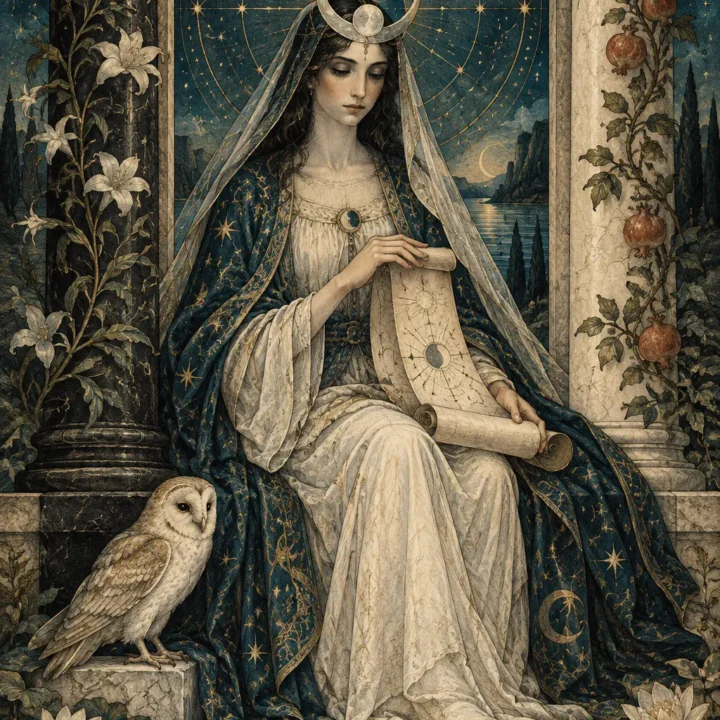
The High Priestess
intuition, contemplation, inner knowledge, privacy

Nine of Swords
worry, sleeplessness, guilt, painful thoughts
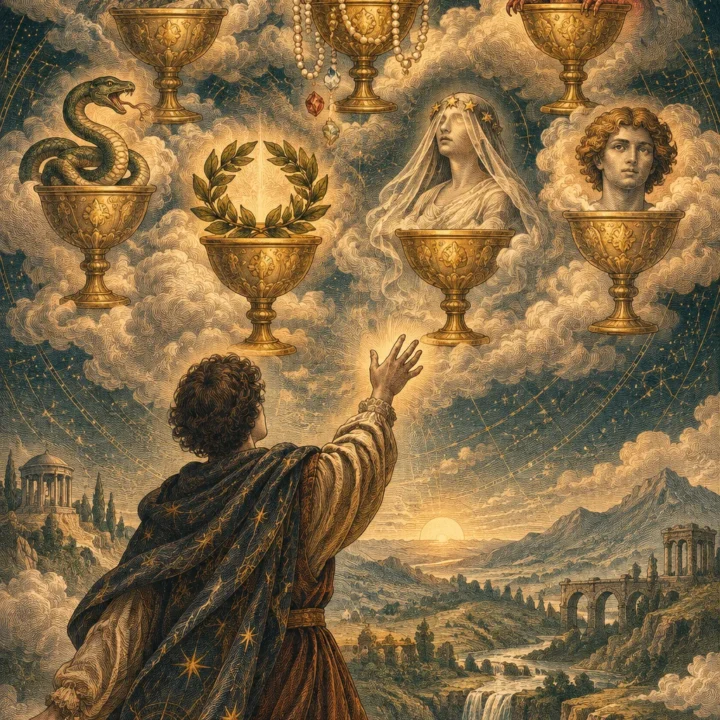
Seven of Cups
imagination, choices, visions, temptation
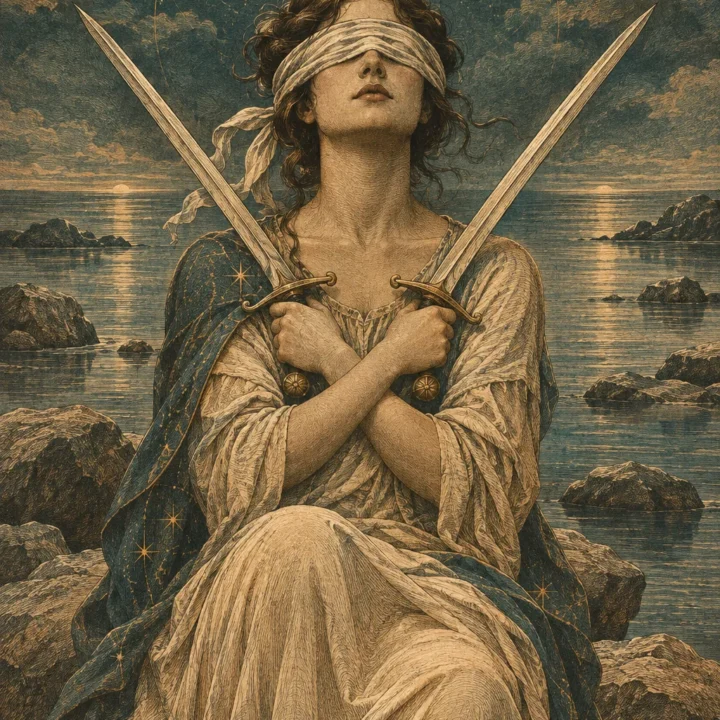
Two of Swords
indecision, guarded peace, boundaries, suspended choice
Sources and further reading
- Arthur Edward Waite, The Pictorial Key to the Tarot, Part II, The Moon Read the text
- Arthur Edward Waite, The Pictorial Key to the Tarot, Part III, divinatory meanings Read the text
- Golden Dawn manuscripts, astrological tarot attributions (The Moon/Pisces) Read the text
- Victoria and Albert Museum, A history of tarot cards Read the text