Six of Cups Tarot Card Meaning
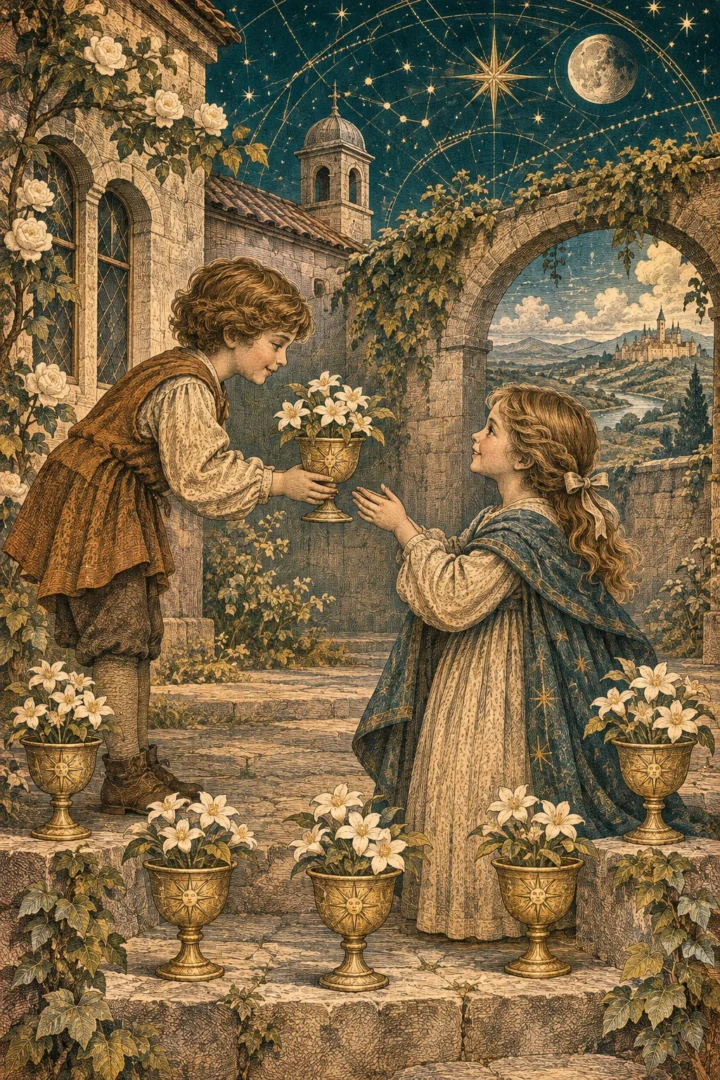
Two children exchange a cup filled with flowers in an old courtyard. The Six of Cups explores nostalgia, kindness, and ways to give cherished memories a place in the present.
- childhood memories
- nostalgia
- kindness
- innocence
- familiar bonds
Card at a glance
- Number
- Six
- Element
- Water
- Astrology
- Lord of Pleasure, associated with the Sun in Scorpio.
- Keywords
- childhood memories, nostalgia, kindness, innocence, familiar bonds, thoughtful gifts, reconnection.
 Six · Six of Cups
Upright meaning
childhood memories, nostalgia, kindness
Upright, the Six often arrives when old memories or relationships ask for attention. You may hear from a longtime friend, return to a place that once mattered, or rediscover an activity that feels strangely familiar even after years away.
- childhood memories
- nostalgia
- kindness
- innocence
- familiar bonds
- thoughtful gifts
Reversed meaning
looking toward the future and renewal in Waite's account; difficulty releasing the past or returning to play in common modern readings.
Contemporary tarot guides frequently interpret the reversed Six of Cups as becoming stuck in nostalgia. You might be comparing every new friendship with someone you knew years ago or wishing that a familiar season could return unchanged.
- looking toward the future and renewal in Waite's account; difficulty releasing the past or returning to play in common modern readings.
Card symbolism
-
A cup of flowers offered between two children
The central gesture is small. One child reaches toward another with a cup full of white flowers. We are shown a gift being offered, with little emphasis on what it cost or what will be given in exchange.
-
Six vessels and the living flowers
Smith places the cups around the courtyard, each holding flowers. Their contents distinguish this scene from cards where cups are spilled, empty, or offered from a cloud.
-
The old garden and stone walls
Waite described the scene as children in an old garden. The surrounding buildings give the moment a sense of history and enclosure, as though generations of ordinary life have passed through the same space.
-
The distant adult figure
A small person appears farther back in the scene. Readers have imagined this figure as a guard, a caretaker, or an adult leaving the children to play.
In depth interpretation
Two children stand in an old courtyard, surrounded by cups holding white flowers. One child leans forward to offer a flowering cup to the other. Behind them are stone buildings, a garden, and a glimpse of the larger world beyond their little exchange.
The Six of Cups represents memory, tenderness, familiar places, kindness, and the joy of giving something simple. Upright, it often invites you to revisit the past or reconnect with an experience that still warms your heart. Reversed, contemporary readers sometimes see nostalgia becoming a place to hide, although Waite's older reversed meaning looks toward the future and renewal.
Something beautiful is happening between the children. An ordinary gift has become the center of their attention. The card invites you to remember what love felt like before it needed to announce itself as something grand.
The spiritual meaning: a memory offered like a flower
There is a special feeling in returning to a place you once loved. The building may be smaller than you remember. The old voices are gone or have changed. Yet a sound, a color, or the smell of food can bring an earlier season of life close enough to touch.
The Six of Cups belongs to that meeting between memory and the present. Pamela Colman Smith's picture gives us an old courtyard, two young figures, and flowers in cups. It feels like a moment that might already have become someone's cherished memory.
The card often appears when you are being drawn toward something familiar: a childhood friendship, a family custom, an old creative interest, or a way of offering care that once came naturally to you.
Memory has its own sacred quality when it helps you remember what you value. You might discover that an old song carries a feeling of safety, or that visiting a familiar place reminds you how much you have grown.
The cup being offered matters as much as the past it evokes. Someone is sharing something in the present moment. The Six can invite you to take a memory and let it become a living act of tenderness.
What the six cups and old courtyard reveal
A cup of flowers offered between two children
The central gesture is small. One child reaches toward another with a cup full of white flowers. We are shown a gift being offered, with little emphasis on what it cost or what will be given in exchange.
That makes this card useful in questions about generosity and affection. A friend might remember the music you love. A family member offers to share a recipe. Someone takes time to tell you a story from before you were born.
The gift can be material, though the meaning is often found in the attention behind it. If you draw the Six, consider the small acts of care that have shaped your sense of belonging.
It is a tender image, and it is not evidence that the figures are siblings, lovers, or specific people from your life. The story remains open.
Six vessels and the living flowers
Smith places the cups around the courtyard, each holding flowers. Their contents distinguish this scene from cards where cups are spilled, empty, or offered from a cloud.
The flowers have been gathered and arranged. This can suggest affection that has found a form, a memory made tangible through a gift or a ritual.
One way to work with the symbol is to ask what small practice still carries meaning for you. Perhaps you return to a garden each spring or prepare the same meal when friends come over. The habit can create continuity without requiring your life to remain unchanged.
The old garden and stone walls
Waite described the scene as children in an old garden. The surrounding buildings give the moment a sense of history and enclosure, as though generations of ordinary life have passed through the same space.
Some modern descriptions see the courtyard as proof of complete protection or safety. The image can feel comforting, but it does not guarantee that every memory of childhood is happy. For readers whose earlier years were difficult, the Six may bring complicated emotions as well as affection.
You are free to explore whichever parts of your history feel meaningful and safe to approach. The card invites gentleness with memory.
The distant adult figure
A small person appears farther back in the scene. Readers have imagined this figure as a guard, a caretaker, or an adult leaving the children to play.
The picture does not identify the person's role, and Waite's short card description does not attach a particular divinatory meaning to them. Treat those interpretations as possibilities rather than established facts.
The distance between the figures can be an interesting detail when you are reflecting on generations, growing up, or changing roles. Perhaps a memory belongs partly to the people who helped make the moment possible.
Six of Cups upright meaning: a tender return
Upright, the Six often arrives when old memories or relationships ask for attention. You may hear from a longtime friend, return to a place that once mattered, or rediscover an activity that feels strangely familiar even after years away.
Imagine finding a box of handwritten letters from a grandparent. You read about everyday worries, favorite recipes, and the jokes people told at family gatherings. The experience awakens affection and curiosity about the people who came before you. You may decide to keep one of their traditions alive in your own way.
This is the Six at its warmest: a past experience begins to nourish something real in the present.
Waite's upright description also contains a less familiar alternative. While he emphasized childhood memories and vanished happiness, he noted another reading that places the children in a new environment, bringing new relations and knowledge. The same image can therefore speak of entering unfamiliar territory with a child's openness.
That historical possibility helps when the card appears during a new chapter. A memory of feeling welcome might encourage you to build a welcoming place for someone else. The past can give you a pattern to work with as your life changes. The Seven of Cups asks a companion question about the futures you imagine, especially when a beautiful memory has become an ideal you hope to recreate.
Does the Six of Cups mean someone from the past is coming back?
The Six is strongly associated with familiar people and old connections. It may appear when you are remembering a former friend, wondering about an old relationship, or considering whether to reconnect.
The card does not guarantee that an ex will contact you. In Waite's main card entry, the upright focus is the past and its memories, with an alternate reading of new relations. The reversed meaning concerns future renewal. None of these describes a reliable timetable for another person's actions.
If you are thinking about reconnecting, consider what you valued in the relationship and what has changed since you last spoke. A gentle, respectful message may be appropriate in some situations. In others, preserving the memory while letting the connection remain in the past may be the kinder choice.
There is a difference between remembering how you felt and knowing what a relationship could be now. The Six invites curiosity about both.
Six of Cups reversed meaning: the future in an unexpected place
Contemporary tarot guides frequently interpret the reversed Six of Cups as becoming stuck in nostalgia. You might be comparing every new friendship with someone you knew years ago or wishing that a familiar season could return unchanged.
Another modern reading sees the reversal as regaining playfulness and a fresh interest in life. This can be especially meaningful if you have spent a long time carrying adult responsibilities and have forgotten the activities that once delighted you.
Waite gave the reversed Six a strikingly forward-looking meaning: the future, renewal, and things approaching. In his separate supplementary meanings, he also listed an inheritance arriving quickly. That older fortune-telling association is a historical detail, not a reliable promise of money. The stronger invitation for a modern reading is to ask which memories are ready to become part of a new chapter.
Suppose you are returning to your hometown after many years. You may discover that the place is different, yet the visit awakens a desire to make a new home elsewhere. The memory becomes part of a future you can choose.
In a reversed reading, ask whether the past is helping you understand your next chapter. Notice what is genuinely possible now. A meaningful memory can guide a new act of kindness without deciding your future for you.
Six of Cups in love and relationships
In love, the Six of Cups often suggests sweetness, familiarity, and affection that has deep roots. A couple may revisit a place connected with their early days together, or discover that a small tradition still brings them close.
If you are single, an old connection might come to mind. The card can help you consider what you loved about that experience, including qualities you hope to find again. The memory need not become a prediction about a particular person.
For an established couple, the Six may invite you to bring back a shared activity that has disappeared under daily responsibilities. Cooking a favorite meal together or spending an evening telling stories can be more meaningful than an elaborate gesture.
A reversed Six can point toward the need to let a relationship grow beyond its early identity. People change, and the ways they express affection may need to change with them.
What does the Six of Cups mean as feelings?
As feelings, this card often symbolizes warmth, familiarity, fond memories, or a gentle wish to reconnect. It does not establish that someone still loves you or will return. Their present communication and choices remain important.
Six of Cups for family, friendship, and childhood memories
A family tradition, an old neighborhood, or a childhood friend may give this card a particularly strong emotional presence. Sometimes you are being invited to remember a relationship that helped shape you.
Perhaps you are teaching a child to bake something your grandmother used to make. The recipe carries memories, but the child brings new questions and their own way of doing things. The tradition remains alive because it is shared and allowed to grow.
The Six can also surface complicated memories. Not everyone associates childhood with safety or uncomplicated happiness. You can work with the card through a moment of care, a chosen family, or a connection you developed later in life.
Its kindness does not require an idealized past. You are free to choose the traditions and relationships that deserve a place in your present world.
Six of Cups for career, creativity, and money
At work, the Six may bring an old skill or interest back into view. You could reconnect with a former collaborator, revisit a creative form you once practiced, or remember the sense of purpose that first drew you to a field.
Imagine a photographer who began taking pictures as a child and now works mainly on commercial assignments. Finding an old album reminds them of the pleasure of noticing light and ordinary people. They begin a personal project with no immediate expectation of earning money.
The Six can support that return to meaningful curiosity. It does not guarantee that an old opportunity will become profitable.
In money readings, themes of gifts and family history sometimes arise, but the card cannot predict inheritance or financial gain. When old agreements or family resources are involved, written details and open conversations matter.
Reversed, reconsider whether an old plan still fits your circumstances. You may be ready to build something fresh from the experience you have gathered.
Sun in Scorpio and the Lord of Pleasure
In the Golden Dawn's Book T, the Six of Cups is the Lord of Pleasure and corresponds to the Sun in Scorpio. Its design depicts six cups beneath lotus flowers that pour water into them. The cups are filling, but they are not yet full.
That detail is especially illuminating after the Five of Cups in the same tradition. The Golden Dawn Five has five empty cups and drooping flowers. In the Six, the flow of water has begun again.
The older symbolic sequence speaks of pleasure returning or beginning to grow. Its description also includes less harmonious possibilities depending on how the card is dignified. The association is part of that named esoteric tradition.
Smith chose a different image for the Six: two children sharing a flower-filled cup in an old courtyard. Read together, the traditions can suggest a gentle renewal of feeling that finds expression in a real gesture of care.
You may find the strongest spiritual meaning in that detail. A small gift can be one way a heart begins to feel alive again.
How to read the Six of Cups with surrounding cards
In a present position, the Six may highlight memories or familiar connections influencing your choices. As advice, it encourages you to learn from the kindness or comfort you have known. As an outcome, it can suggest a return to a familiar theme or a new relationship with something from the past.
Worked reading: should I move back to the place where I grew up?
Imagine receiving an opportunity to return to your hometown. You remember it fondly, but have not lived there for many years. You draw the Six of Cups as the present, The Hermit for what deserves attention, and The Fool as advice.
The Six names the emotional pull of the familiar place. The Hermit invites you to consider which qualities you are truly seeking: quiet, belonging, connection with family, or a way of life that once suited you. The Fool encourages a spirit of discovery, reminding you that returning to a place can still be a new experience.
Together, the cards suggest visiting with open eyes, learning how the town has changed, and examining the practical realities of living there now. Nostalgia can tell you what matters, but a decision about moving needs information from the present.
If the Four of Pentacles replaced The Fool, the reading might place more emphasis on security and the wish to hold on to familiar arrangements. That contrast helps clarify the role memory is playing.
Six of Cups as advice: give a memory a new life
Choose one memory that still feels warm. It might be a song someone used to sing, a place you loved visiting, or a small kindness offered when you needed it.
Ask what made the moment meaningful. You may discover that the answer is connected with being seen, welcomed, encouraged, or allowed to be curious.
Now consider a modest way to bring that quality into your life today. You could share a recipe, offer someone a thoughtful gift, or make time for an interest you have missed.
You do not need to recreate the earlier moment. The memory can become a source of care in the world you are living in now.
Is the Six of Cups a yes or no card?
The Six of Cups generally leans yes to reconnecting with a healthy source of comfort, revisiting an old interest, or approaching someone with a kind gesture. Reversed, Waite's future-facing meaning may be encouraging for renewal, while modern readings invite you to examine whether nostalgia is limiting your choices. The card cannot decide whether a particular relationship or move is right for you.
A brief note on tradition
Pamela Colman Smith illustrated the Rider-Waite-Smith Six of Cups as children in an old garden, with vessels full of flowers. Waite emphasized memories, childhood, and vanished happiness, while also allowing an interpretation involving new surroundings. His reversal points toward future renewal. In the Golden Dawn's earlier Lord of Pleasure, water begins filling cups beneath lotus flowers, with the Sun in Scorpio as its correspondence. Modern readings often describe nostalgia, reconnection, and the challenge of living too much in the past.
Frequently asked questions
What if childhood memories are painful?
The image of a gentle childhood need not resemble yours. You might approach this card through kindness found later in life, a chosen family, or a small memory that feels safe to hold. You can leave difficult memories unopened and seek support if remembering becomes overwhelming.
Does the Six of Cups mean childhood or children?
Childhood is central to the Rider-Waite-Smith image, but the card does not require a literal child or a pregnancy-related interpretation. It often concerns memories, innocence, care, and patterns of giving that began earlier in life.
Why is the reversed Six of Cups sometimes positive?
Waite's main reversal looks toward the future and renewal; his supplementary notes also mention inheritance. Many contemporary readers focus on difficulty releasing the past. Notice which question fits the circumstances, while treating any financial prediction as symbolic rather than certain.
What is the difference between the Five and Six of Cups?
The Five depicts a cloaked figure mourning three spilled cups, with two still standing behind him. The Six shows a gentle exchange of flower-filled cups in an old courtyard. Their images invite reflection on loss and the possibility of connection finding a new form.

Keep reading
Explore the Cups
Every card page names the tradition behind each meaning, so you can compare readings instead of taking one as fixed.
Cards to explore alongside this one
Their symbols reveal useful similarities and differences for your next reading.

Five of Cups
sadness, loss, disappointment, regret

The Sun
joy, openness, clarity, confidence
Page of Cups
imaginative insight, emotional news, kindness, study

Ten of Cups
emotional fulfillment, family and chosen family, shared joy, harmony
Sources and further reading
- A. E. Waite, The Pictorial Key to the Tarot, Part III, Six of Cups Read the text
- Golden Dawn, Book T, Lord of Pleasure, Sun in Scorpio Read the text
- Biddy Tarot, Six of Cups, contemporary meanings Read the text
- Labyrinthos, Six of Cups, contemporary interpretation Read the text