Two of Swords Tarot Card Meaning
A blindfolded figure holds two swords across a quiet sea. The Two of Swords explores guarded peace, difficult choices, and the wisdom of asking what remains unseen.
- indecision
- guarded peace
- boundaries
- suspended choice
- inner listening
Card at a glance
- Number
- Two
- Element
- Air
- Astrology
- Lord of Peace Restored; Moon in Libra (Golden Dawn)
- Keywords
- indecision, guarded peace, boundaries, suspended choice, inner listening, truce
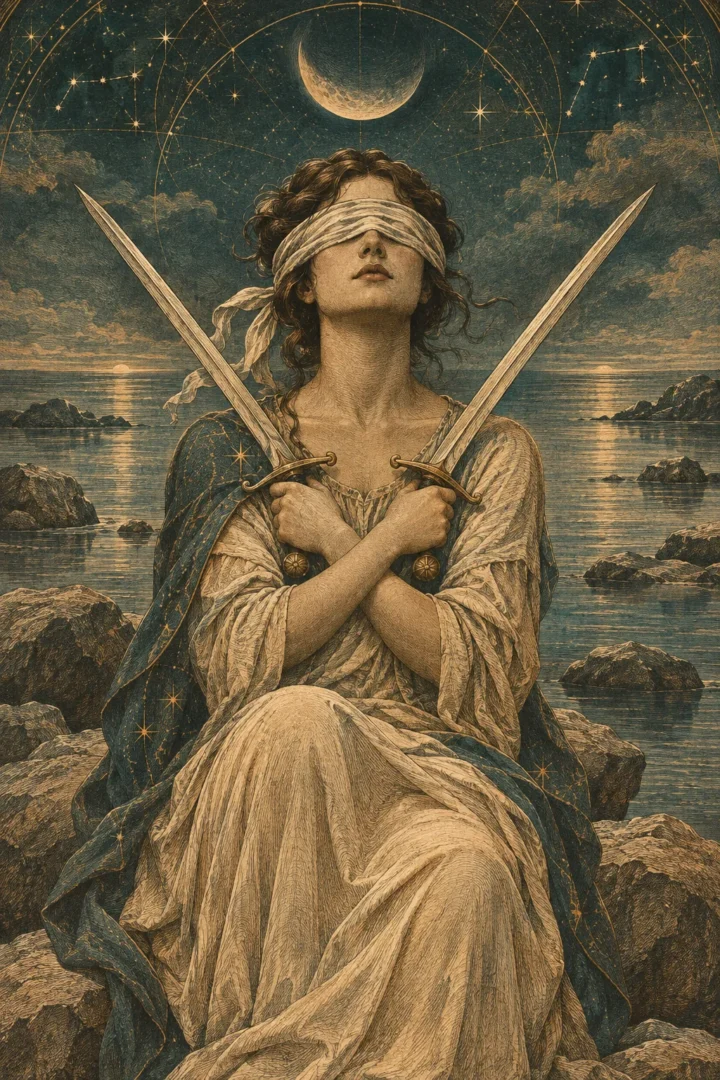 Two · Two of Swords
Upright meaning
guarded peace, a decision held in balance
The upright Two of Swords describes a careful pause, an unresolved choice, or peace maintained while someone searches for enough clarity to move.
- guarded peace
- a decision held in balance
Reversed meaning
avoidance, information overload, a decision pressing forward
Reversed, the Two of Swords suggests that a truce is becoming difficult to sustain or that an avoided choice needs honest attention.
- avoidance
- information overload
- a decision pressing forward
Card symbolism
-
The crossed blades
Two swords lie across the seated figure's chest, forming a barrier and an equilibrium.
-
The blindfold
The figure's sight is covered, drawing attention to what is unseen and how a choice is being approached.
-
The crescent moon and sea
Water, distant rocks, and a crescent moon surround a still figure, placing feeling and uncertainty beside deliberate restraint.
In depth interpretation
A woman sits before the sea with her eyes covered. She holds two swords crossed across her chest, each balanced against the other. Behind her, the water lies quiet among scattered rocks. Nothing seems to move, yet the whole image depends on the effort of holding still.
The Two of Swords is a card of guarded peace, difficult choices, emotional protection, and temporary balance. Upright, it may describe a pause that gives you room to think. Reversed, it often asks whether that pause has become avoidance or whether a decision is beginning to demand attention.
Some silences are wise. Others become difficult to live inside. The card invites you to discover which kind you have entered.
The spiritual meaning: holding a fragile peace
You can know that a decision matters before you know how to make it. Two loyalties may pull you in different directions. A conversation may feel necessary, but you want time to understand your own feelings before inviting another person’s opinions.
The Two belongs to that interval. The crossed swords form a boundary. They also require energy to keep in position. The figure has made space for stillness, though her posture suggests this is not complete ease.
In the Golden Dawn, the card bears the title Lord of Peace Restored. That phrase adds a helpful nuance: the calm may have followed disagreement or turbulence. You can honor a truce without pretending the underlying question has disappeared.
The spiritual work here is discernment. Give yourself permission to listen, then ask what you need in order to choose.
What the Two of Swords symbols reveal
The crossed swords
The blades mirror one another. A reader might see two arguments, two obligations, or two choices that appear equally compelling. Because the swords meet at the figure’s chest, the decision can feel personal even when its surface is practical.
Their balance cannot continue indefinitely without effort. If you are exhausted by deliberation, that exhaustion belongs in the reading.
The blindfold
Blindfolds are often explained as denial. That is one interpretation, though it is not the only one. The figure may lack information, be protecting herself from distraction, or be choosing to attend to an inner sense before responding to outside demands.
Ask what the blindfold is doing in your situation. Is it helping you concentrate? Is it preventing you from seeing evidence you need?
The sea and crescent moon
Behind the stone seat are water, rocks, and a small crescent moon. The environment introduces feeling and uncertainty into an image dominated by swords. Emotional truth exists even when the mind is trying to keep everything orderly.
You do not have to dismiss emotion to make a thoughtful choice. Sometimes feeling tells you what is at stake.
What if the blindfold is protecting your peace?
Suppose a family member demands an immediate answer to a complicated request. You are not ready, and you say you will respond tomorrow. The blindfold can symbolize that chosen boundary: a little silence while you find your own judgment. That reading is different from refusing to open an important letter because you fear what it contains.
In a spread’s obstacle position, the Two might point to information you cannot yet see, a confrontation you are postponing, or pressure to pick a side before you understand the situation. As advice, it can recommend a truce with a defined purpose. In an outcome position, it suggests the possibility of a continued standstill, especially if nobody is willing to name what would move the decision forward.
Compare it with the Seven of Cups. That card often presents an abundance of enticing possibilities. The Two of Swords shows the more intimate difficulty of choosing while protecting yourself from the emotional stakes. If both appear, narrow the options first, then ask what makes the remaining choice feel unsafe.
Two of Swords upright: the value and cost of waiting
Upright, the Two suggests holding a decision in suspension. You may be negotiating a boundary, waiting for information, or trying to preserve a relationship during disagreement.
Imagine receiving two work offers. One is familiar and financially stable; the other promises growth but comes with unanswered questions. Taking a few days to compare terms is wise. Refusing to ask the questions because the answer might be difficult is a different matter.
The card asks you to name the purpose of the pause. What exactly are you waiting to learn? What would make you ready to move?
A temporary truce can also be a compassionate choice. Not every difficult topic has to be settled during a moment of anger. A calm boundary may create better conditions for the eventual conversation.
Two of Swords reversed: when a pause becomes a prison
Reversed, the Two often shows the strain of maintaining a standstill. You may be reading and rereading the same information, asking everyone for advice, or hoping circumstances will decide for you.
The reversal can also describe the opposite moment: a blindfold lifting, new information arriving, or a choice finally becoming possible. Look at surrounding cards before treating reversal as failure.
Waite connected the reversed card to falseness and divided loyalties. Contemporary readers often focus on avoidance and overwhelm. Neither approach justifies accusing someone of deception on the strength of one card.
If your decision involves safety or pressure from another person, seek trustworthy outside support. You deserve enough space and information to choose freely.
Two of Swords in love and relationships
In a relationship, the card can indicate a tender stalemate: two people care about the bond but do not yet know how to approach a difficult subject. It may also show someone holding back while deciding whether a connection is right for them.
If you are single, the Two might describe guardedness after an exhausting experience. You may want companionship while also protecting the quiet you have rebuilt.
Reversed, suppressed needs can emerge awkwardly. An honest conversation may help, but the card cannot establish whether another person secretly loves you or intends to leave.
For mutual exchange, look to the Two of Cups. The Two of Swords is more concerned with the boundary that makes a choice possible.
Two of Swords in career and money
At work, you may be comparing competing priorities or mediating between colleagues. The card is a reminder that indecision often has a hidden cost: deadlines pass, people improvise, and your options change.
List the decision criteria before comparing choices. For finances, include actual costs and contingencies. A tarot reading can help clarify your values while concrete figures guide the commitment.
Reversed, review whether you have been seeking certainty that no decision can provide. You may be able to act responsibly without knowing everything.
Worked reading: is this the right time for a difficult conversation?
Imagine you and a friend have avoided discussing an important disappointment. You draw the Two of Swords for the present, Temperance for guidance, and Three of Swords for what needs acknowledgment.
The Two recognizes the fragile peace you have maintained. Temperance suggests a steady tone, a time when you can both listen, and a willingness to let the conversation develop. The Three asks you to make room for the hurt beneath the silence.
Together, the cards suggest preparing a gentle opening rather than rehearsing a verdict. You might say that the friendship matters and that something has been weighing on you.
If The High Priestess appeared instead of the Three, the focus could shift toward listening to an intuition you have not yet understood. The details of a spread matter.
Peace Restored in the Golden Dawn
The Golden Dawn’s Book T calls this card the Lord of Peace Restored and associates it with the Moon in Libra. This esoteric pattern emphasizes equilibrium and the uncertain feelings that surround it.
Waite’s older account includes courage and concord under arms. Smith’s blindfolded figure makes the effort of maintaining such concord visible. Modern indecision readings grow naturally from that imagery, while remaining interpretations rather than fixed laws.
Two of Swords as advice: give the pause a purpose
Write down the two sides of your choice, then ask a third question: what information or boundary would help me approach either option more freely?
If you need a few days, choose a date to revisit the decision. A thoughtful pause becomes kinder when it has an end point.
Frequently asked questions
Is the Two of Swords a yes or no card?
It usually suggests not yet, especially when facts or feelings remain unexamined. Reversed, the time for avoiding the question may be ending. The card cannot decide for you.
Does the Two of Swords mean a choice between two people?
It can, but the card describes a divided decision more generally. Two jobs, values, plans, or competing needs can all fit the image.
Does the blindfold mean someone is lying?
No. It can represent limited information, deliberate withdrawal, or refusal to look. You need evidence before treating it as a sign of dishonesty.
What is the difference between the Two of Swords and The Lovers?
The Two focuses on suspended judgment and guarded equilibrium. The Lovers explores alignment with values, meaningful connection, and the consequences of a heartfelt choice.
Can the Two of Swords be positive?
Yes. Boundaries and pauses are sometimes exactly what a difficult situation needs. The question is whether the balance is serving you and the people involved.
Tradition note: This interpretation draws on Pamela Colman Smith’s Rider-Waite-Smith illustration, Waite’s account, and the Golden Dawn’s title Peace Restored. Today’s emphasis on indecision and emotional boundaries reflects common modern practice. The image permits more than one honest reading.
Keep reading
Explore the Swords
Every card page names the tradition behind each meaning, so you can compare readings instead of taking one as fixed.
Cards to explore alongside this one
Their symbols reveal useful similarities and differences for your next reading.

The Lovers
love, intimacy, attraction, honest choices
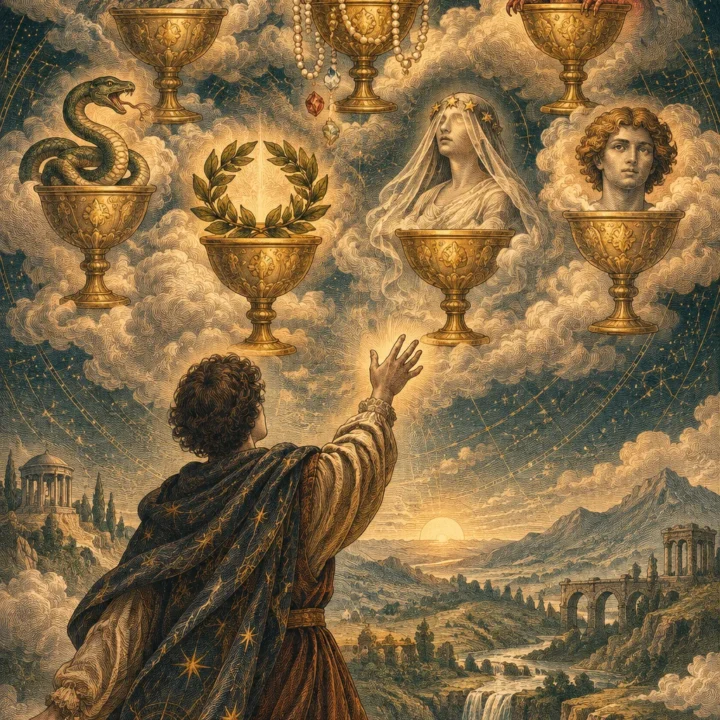
Seven of Cups
imagination, choices, visions, temptation

The Hanged Man
suspension, insight, surrender, reconsideration
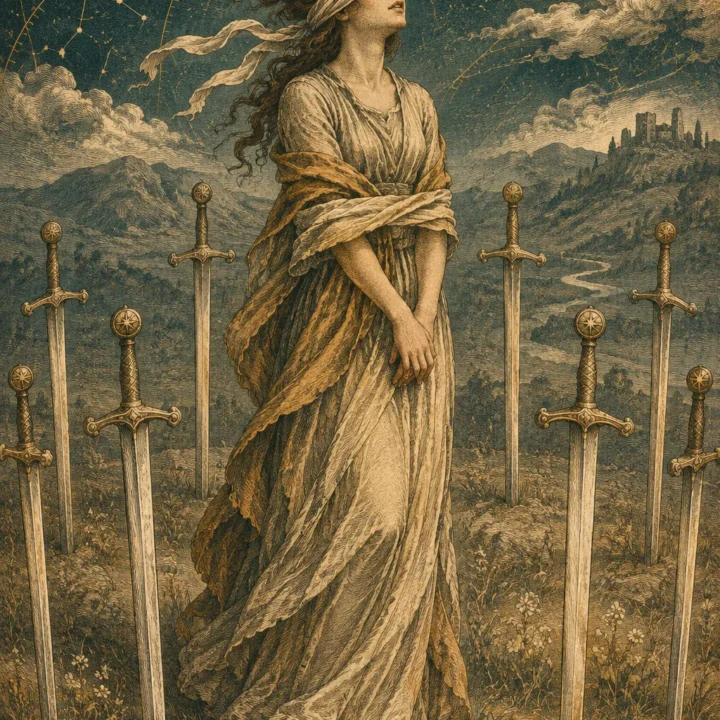
Eight of Swords
restriction, feeling trapped, uncertainty, limited options
Sources and further reading
- A. E. Waite, The Pictorial Key to the Tarot, Part III (Swords, Two of Swords) Read the text
- Golden Dawn, Book T, tarot titles, attributions, and card descriptions Read the text
- The Morgan Library & Museum, Pamela Colman Smith and her tarot art Read the text
- Victoria and Albert Museum, A History of Tarot Cards Read the text