Temperance Tarot Card Meaning
An angel pours liquid between two golden cups, standing with one foot in water and one on land. Explore Temperance’s patient art of blending what matters.
- moderation
- integration
- proportion
- harmony
- patience
Card at a glance
- Number
- XIV
- Element
- Fire
- Astrology
- Sagittarius (Golden Dawn)
- Keywords
- moderation, integration, proportion, harmony, patience
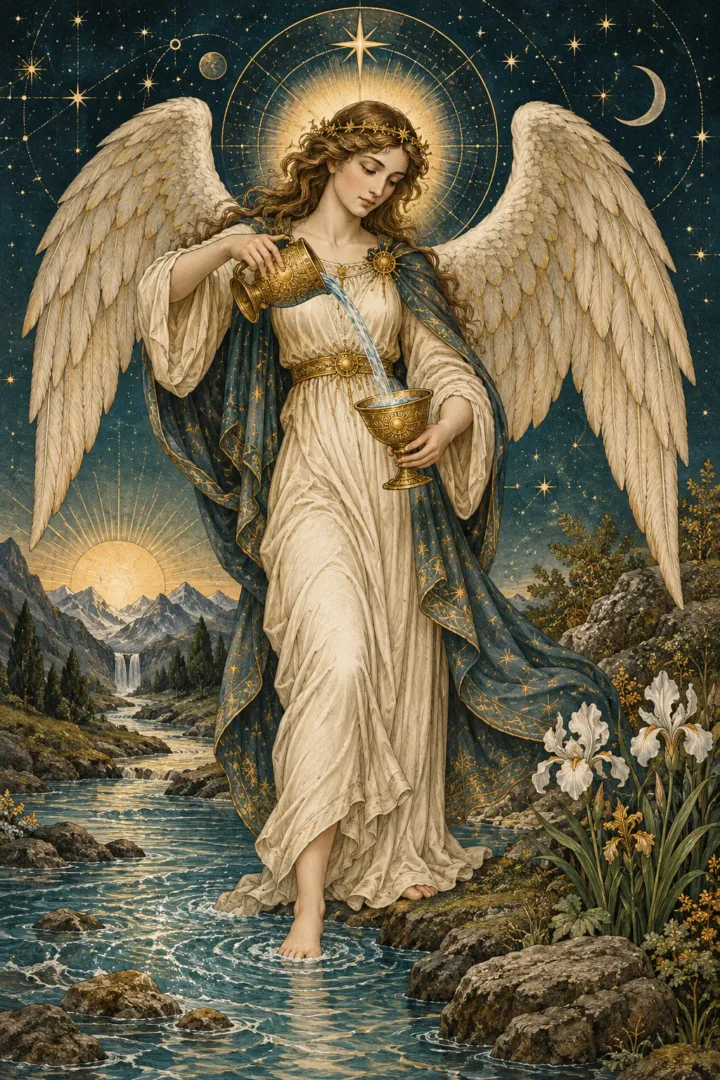 XIV · Temperance
Upright meaning
Moderation, integration and proportion
Upright, Temperance often appears when a thoughtful combination could help a situation flourish. You may be learning to manage a demanding schedule, blending skills from two different fields, or making room for another person’s way of doing things.
- Moderation
- Integration
- Proportion
- Harmony
- Patience
Reversed meaning
Excess, incompatible demands and imbalance
Reversed, the mixture may have become uncomfortable. There is too much of one element and too little of another, or two competing demands have been pushed together in a way that is failing everyone involved.
- Excess
- Incompatible demands
- Imbalance
- Friction
- Ineffective compromise
Card symbolism
-
The two cups and flowing liquid
The angel pours between two golden vessels. The liquid crosses open air, and its path is part of the image’s quiet wonder.
-
One foot in the water and one on land
The figure stands where a pool meets solid ground. One foot is placed on each surface.
-
The triangle within a square
On the angel’s chest appears a triangle enclosed by a square. These forms have occult meanings within the Rider-Waite-Smith tradition, where the design evokes the relationship between spiritual and material life.
-
The path, mountains, and distant crown
A small path leads away from the water toward distant hills. Above the horizon is a bright light containing a crownlike shape.
-
The flowers by the water
Yellow flowers grow near the pool, commonly read as irises in modern descriptions of the card. They add a living softness to a scene filled with sacred signs.
In depth interpretation
An angel stands at the edge of a clear pool, one foot in the water and the other on dry land. Between two golden cups, a slender stream of liquid seems to flow at an impossible angle. Beyond the angel, a path winds toward mountains and a distant light. Everything in the scene is alive with movement, although the angel appears utterly absorbed in the simple act of pouring.
Temperance is the tarot card of moderation, harmony, patience, and learning how different parts of life can work together. Upright, it often suggests a thoughtful adjustment or a process of integration. Reversed, it can reveal excess, competing demands, poor timing, or a balance that has been maintained at too great a personal cost.
When you draw Temperance, take a moment to look at the two cups. What are the two things you’re trying to bring into relationship, and what happens when they meet?
The spiritual art of making room for two truths
You may recognize Temperance in an ordinary moment. A friendship changes when one person’s life becomes busier. A new spiritual practice begins to reshape a familiar routine. You want to devote more time to a creative passion, but the people who depend on you still need your attention.
These situations ask for a living kind of balance. The right arrangement may change as the people and circumstances involved change. Temperance speaks to the patient art of returning to the question until you discover a way of living that feels more whole.
Think about making a cup of tea. The first taste may be too strong. You add a little water, wait for the leaves to settle, and try again. The result comes through attention to the qualities of what you are making. The angel’s pouring vessels can evoke a similar spiritual practice: listening closely to how the elements of your life affect one another.
The card is especially beautiful when you have felt torn between identities. Perhaps you are learning to be both a caregiver and a person with ambitions of your own, or finding a place for a childhood faith within the life you live today. Sometimes a thoughtful new arrangement lets these parts meet with greater kindness.
Temperance also recognizes limits. Certain situations need separation, protection, or an honest refusal. The angel’s composure is useful when it encourages a careful choice. There is no reason to pour something harmful into the cup simply to keep the appearance of harmony.
What the symbols in Temperance reveal
Pamela Colman Smith’s Rider-Waite-Smith Temperance has a luminous simplicity. Its landscape, vessels, and unusual celestial details make the image richer than the familiar idea of moderation.
The two cups and flowing liquid
The angel pours between two golden vessels. The liquid crosses open air, and its path is part of the image’s quiet wonder. Waite described it as the essences of life passing from cup to cup.
In a reading, the vessels can represent two needs that have both been asking for attention. Perhaps one holds rest and the other holds devotion to your work. A useful question is what each brings to the mixture, and how their proportions might change through the week.
The act of pouring also takes care. The angel remains present while the exchange happens. Consider how much attention a relationship, creative project, or new habit needs before it begins to feel natural.
One foot in the water and one on land
The figure stands where a pool meets solid ground. One foot is placed on each surface. Readers often use the image to explore feeling and practical life, imagination and action, or spiritual experience and ordinary responsibility.
Imagine someone who finds great comfort in prayer but has been neglecting an overdue conversation. The card could suggest bringing the compassion felt during prayer into that conversation. The water and earth become a way to remember both parts of the experience.
The triangle within a square
On the angel’s chest appears a triangle enclosed by a square. These forms have occult meanings within the Rider-Waite-Smith tradition, where the design evokes the relationship between spiritual and material life.
If the symbol catches your eye, consider something inward that you would like to express through an everyday action. A value becomes easier to recognize when it has a place in your habits.
The path, mountains, and distant crown
A small path leads away from the water toward distant hills. Above the horizon is a bright light containing a crownlike shape. The picture offers a destination far beyond the delicate work taking place in the foreground.
It can be helpful to remember the path when a gradual change feels too slow. An improved routine, a healing conversation, or a spiritual practice may be built through many small adjustments. Their meaning becomes clearer as the journey unfolds.
The flowers by the water
Yellow flowers grow near the pool, commonly read as irises in modern descriptions of the card. They add a living softness to a scene filled with sacred signs. Plants grow in their own conditions and seasons. They cannot be hurried into blooming by someone else’s expectations.
This detail offers a gentle question: what in your life has begun to thrive because it is receiving the kind of care it actually needs?
Temperance upright meaning
Upright, Temperance often appears when a thoughtful combination could help a situation flourish. You may be learning to manage a demanding schedule, blending skills from two different fields, or making room for another person’s way of doing things.
Imagine two friends who decide to create something together. One loves spontaneous ideas; the other enjoys careful planning. Their early meetings are frustrating until they agree to keep a space for free exploration and a separate time to make decisions. Temperance could describe the collaboration that becomes possible once they stop expecting identical working styles.
The card also favors pacing. You might have begun an exercise routine with great enthusiasm and discovered that your body needs more recovery. Adjusting the plan can help you keep the practice in your life. Its meaning is found in the relationship between effort and the limits that make effort sustainable.
When Temperance appears upright, ask what can be refined through patient attention. You may already have the ingredients you need, even if the proportions are still being discovered.
Temperance reversed meaning
Reversed, the mixture may have become uncomfortable. There is too much of one element and too little of another, or two competing demands have been pushed together in a way that is failing everyone involved.
Perhaps your work takes every spare hour while you tell yourself the pressure is temporary. Or you have been accommodating someone for so long that your own needs have nearly disappeared from the arrangement. The reversal can bring these imbalances into view.
It may also speak of frustration with gradual change. You want results now and keep adjusting the process before you can learn whether any approach works. A little continuity could reveal more than another sudden change.
At times, Temperance reversed suggests that the ingredients themselves need reconsideration. There are choices that do not belong together, and arrangements that remain harmful however carefully they are managed. Give yourself permission to recognize that possibility.
Temperance in love and relationships
In love, Temperance often describes the work of getting to know another person’s rhythms. One partner may need quiet after a long day while the other wants conversation immediately. Small, considerate agreements can make a surprising difference in how supported they both feel.
For someone newly dating, the card can suggest a connection developing at a pace that gives each person time to become familiar. Attraction may be present, with room for curiosity about differences in habits, priorities, or beliefs.
In a longstanding relationship, Temperance can become especially meaningful after a period of conflict. Perhaps both people are trying to rebuild ordinary kindness and learn how to discuss difficult subjects with greater care.
Reversed, the card may reveal resentment from repeated compromise or differences that require a deeper conversation. Mutual adjustment is possible only when both people have a real voice. If you feel pressured, frightened, or controlled, your safety matters more than preserving the appearance of peace.
Temperance as feelings
When asking about another person’s feelings, Temperance may suggest a wish to build trust gradually or understand the connection before making a large commitment. Someone might be drawn to the ease of being together while still discovering how a relationship could fit into their life.
Reversed, the card can evoke uncertainty about compatibility or the pace of the bond. It cannot establish what someone feels in private. Their honesty and behavior offer the clearer picture.
Temperance for career and work
At work, Temperance may be especially relevant to collaboration. A project needs people with different skills, a team has to establish a sustainable pace, or a new role asks you to combine experiences that once seemed unrelated.
Consider a small clinic whose staff are excellent with clients but whose appointment schedule has become chaotic. The team might need a practical system that preserves the personal quality of the service. Temperance can describe the careful blending of warmth and reliable structure.
Reversed, this card can suggest exhausting handoffs, unclear priorities, or an environment where constant accommodation is expected from the same people. A new process will help only if the people involved have the time and authority to use it.
Temperance for money
In a money reading, Temperance can draw attention to proportion. You may be trying to save while still enjoying your life, managing different household priorities, or adapting a budget to new circumstances.
The reversal can highlight spending that has drifted out of alignment with your means or an arrangement that one person experiences as unfair. Work with actual costs and obligations before making decisions. The card’s imagery may help you reflect on what enough looks like for you.
Temperance in spiritual growth
Temperance has long been associated with moderation and the virtues of a well-ordered life. In contemporary spiritual practice, its pouring angel can also inspire reflection on how different experiences become part of a coherent inner world.
Perhaps you have been studying a tradition that places great value on silent contemplation, while your own spiritual life has always included singing and community. You might discover ways for these practices to enrich one another. Respect the differences between the traditions rather than assuming their teachings are interchangeable.
The angel in Waite’s account was understood as neither specifically male nor female. The figure stands with one foot on land and one in water, bringing spiritual and earthly experience into the same scene. For readers using Golden Dawn correspondences, Temperance belongs to Sagittarius, a sign associated with searching and reaching beyond the familiar.
Temperance as advice: experiment with the mixture
Place Temperance before you and imagine the two cups containing parts of life that have been difficult to reconcile. Give each cup a name. One might hold work and the other family time; one might hold ambition and the other rest.
Write down what you value about each. Then think of one small change to try for the next seven days. Perhaps a different meeting time would protect family dinner, or a quiet morning practice would make room for an interest you have neglected.
After the week, ask how the experiment felt in practice. Did it create more ease? Did another need become visible? The angel keeps pouring with careful attention. You are allowed to revise the mixture as you learn.
Is Temperance a yes or no card?
Temperance often leans yes for questions about cooperation, steady improvement, reconciliation, and a plan that can develop through patient effort. Reversed, it may point toward an arrangement whose demands need reconsideration. For questions about medical healing or another person’s choices, the card offers no guaranteed result.
How to read Temperance in a tarot spread
The card’s position shapes the reading. In the past, Temperance may describe a gradual process of adaptation. As a challenge, it can reveal competing needs or an overextended compromise. In an outcome position, it may suggest a more harmonious arrangement that grows through deliberate work.
Imagine asking how to make time for a creative life alongside a demanding job. You draw Temperance in the present, the Two of Pentacles as advice, and the Three of Cups as a possible direction. The story could involve experimenting with a more workable schedule, being realistic about what you can juggle, and finding encouragement in a small creative community. The cards invite you to shape an approach that fits your life.
A brief note on tarot tradition
Temperance is one of the traditional cardinal virtues depicted in European tarot. Its older associations include moderation and measured conduct. Pamela Colman Smith’s Rider-Waite-Smith version, published in 1909, shows a winged angel pouring between vessels, with one foot on land and one in water. Waite gave the scene a mystical dimension concerning the relationship between spiritual and material life. The Golden Dawn system associates Temperance with Sagittarius. Contemporary readers often develop the imagery into interpretations about healing and integration, which should be understood as spiritual themes rather than medical promises.
Frequently asked questions
Does Temperance mean I should compromise?
It can encourage mutual adjustment when the people involved are able to choose freely. The card does not require you to accept mistreatment or erase needs that deserve respect. Sometimes a healthy arrangement requires a clear limit.
Is Temperance a healing card?
Many modern tarot readers associate it with the slow work of restoration, especially after conflict or upheaval. The card cannot diagnose an illness or promise physical recovery. Its imagery can offer a meaningful way to reflect on care and patience.
How is Temperance different from Justice?
Both cards can suggest balance. Justice holds scales and asks how a decision can be made fairly. Temperance’s angel pours between vessels, drawing attention to adjustment and the creation of a workable relationship between different elements.
What does Sagittarius add to Temperance?
In the Golden Dawn’s tarot system, the card corresponds with Sagittarius. Some readers use this to explore vision, spiritual searching, and the desire to move toward a larger purpose. The illustration’s distant path can enrich that reflection.

Keep reading
Explore the Major Arcana
Every card page names the tradition behind each meaning, so you can compare readings instead of taking one as fixed.
Related Major Arcana cards
Temperance is part of the Major Arcana. Cards from the same group often appear together in readings.

The Fool
new beginnings, curiosity, openness, independence

The Magician
resourcefulness, focused will, skill, communication
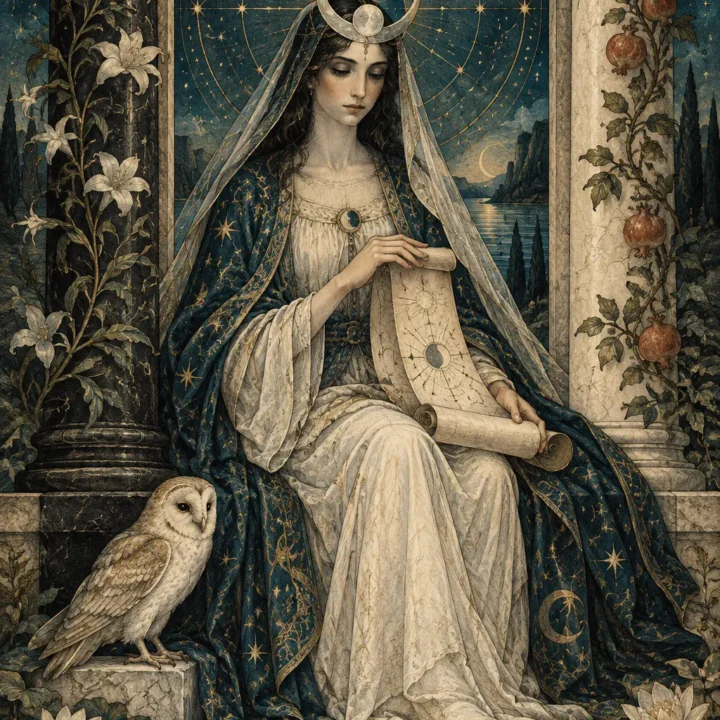
The High Priestess
intuition, contemplation, inner knowledge, privacy
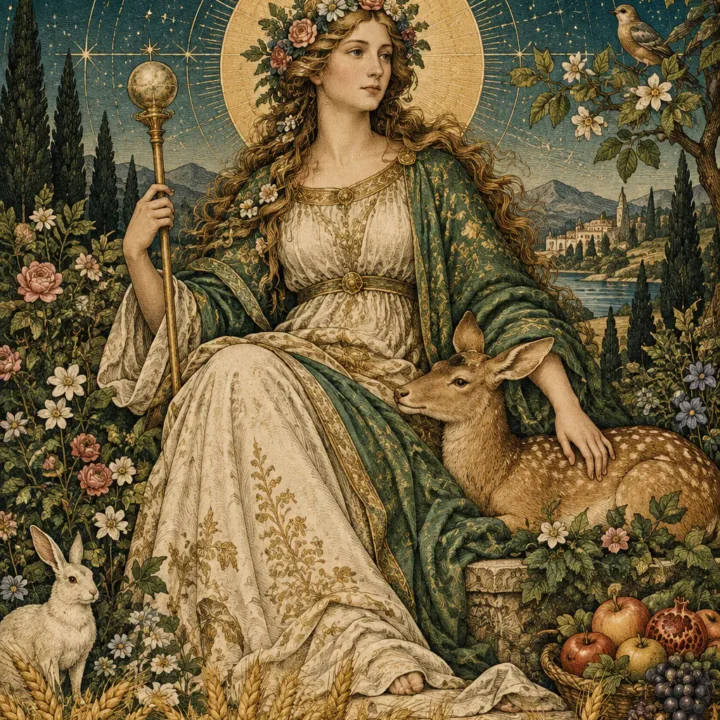
The Empress
creativity, generosity, sensuality, pleasure
Sources and further reading
- Arthur Edward Waite, The Pictorial Key to the Tarot, Part II, Temperance Read the text
- Arthur Edward Waite, The Pictorial Key to the Tarot, Part III, divinatory meanings Read the text
- Golden Dawn, Notes on the Tarot, Temperance/Sagittarius Read the text
- Victoria and Albert Museum, A history of tarot cards Read the text