Two of Cups Tarot Card Meaning
Two people exchange cups beneath a winged caduceus. The Two of Cups asks how affection becomes a mutual pledge and what helps a connection grow.
- attraction
- partnership
- mutual respect
- friendship
- reconciliation
Card at a glance
- Number
- Two
- Element
- Water
- Astrology
- Lord of Love, associated with Venus in Cancer.
- Keywords
- attraction, partnership, mutual respect, friendship, reconciliation, affection, shared agreement.
 Two · Two of Cups
Upright meaning
attraction, partnership, mutual respect
Upright, the Two of Cups often marks mutual warmth or a partnership developing through trust. You could be getting to know someone whose presence feels easy, making peace after a disagreement, or recognizing that a friendship has become more important than you expected.
- attraction
- partnership
- mutual respect
- friendship
- reconciliation
- affection
Reversed meaning
disconnection, misunderstanding, uneven effort
The reversed Two of Cups is usually read today as disharmony, distrust, or the feeling that two people are no longer meeting one another as freely as before. A connection may be important to both of you while everyday misunderstandings make it difficult to express that care.
- disconnection
- misunderstanding
- uneven effort
- difficulty meeting one another openly.
Card symbolism
-
The exchanged cups
Both figures stand with a vessel. They face each other, and their gestures suggest a pledge. Waite described this meeting as a mutual promise between a young man and woman.
-
The caduceus of Hermes
Between the figures rises a winged staff with intertwined serpents, traditionally recognized as the caduceus of Hermes. In classical iconography the caduceus is associated with the messenger-god and with exchange, negotiation, and commerce.
-
The winged lion's head
Above the snakes is a winged lion-like head, a detail that can be missed in small reproductions. Its fierce appearance adds intensity to an otherwise gentle encounter.
-
The landscape and distant home
A quiet countryside and house appear behind the two figures. The meeting seems to happen in the ordinary world, with a place to return to afterward.
In depth interpretation
Two people stand facing each other with a cup in each hand. They have come close enough to exchange a pledge. Above the small space between them rises a winged staff entwined with serpents, crowned by a lion's head. A house sits in the landscape behind them. There is an almost ceremonial stillness to the encounter.
The Two of Cups represents mutual affection, connection, friendship, partnership, and the choice to meet another person with openness. Upright, it often signals a meaningful exchange or a relationship in which both people recognize something valuable. Reversed, many contemporary readers explore misunderstanding or an imbalance in giving and receiving.
The beautiful part of this card is that each person arrives carrying a cup of their own. The bond begins in what they are willing to share.
The spiritual meaning: the courage to meet another person
Imagine being in a conversation where you suddenly feel that you are being heard. The other person does not have to agree with everything you say. They listen closely and offer something of themselves in return. As you speak, the world seems a little less lonely.
The Two of Cups holds that kind of encounter. It gives the suit's flowing emotion a human relationship. In the Ace of Cups, a single chalice receives water from a mysterious source. Here two people hold their own vessels and turn toward one another. The Three of Cups widens that exchange into a circle of friends or companions who share in one another's joy.
The card's tenderness is easy to recognize in romantic love. Yet the picture also belongs to close friendships, compassionate reconciliation, and the rare pleasure of finding a collaborator who respects what you bring to a shared undertaking.
You may draw the Two when an important relationship is just beginning. It can also appear after a difficult conversation in an existing bond, when you are discovering whether you can truly meet again.
What would it feel like to share a cup without needing the other person to become exactly like you?
Compare this mutual exchange with the Two of Swords. The crossed blades often describe a pause, a boundary, or a decision not yet made. If the cards appear together, one person may be ready for conversation while an important question still needs time and care. The reading cannot decide on either person’s behalf.
The symbols: two cups, one pledge, and a curious emblem
The exchanged cups
Both figures stand with a vessel. They face each other, and their gestures suggest a pledge. Waite described this meeting as a mutual promise between a young man and woman.
Each cup carries the possibility of an emotional life that can be shared. The image offers a useful way to think about partnership: both people have something to contribute, and the relationship is shaped by what they actually exchange over time.
The moment looks balanced, although a picture of two cups cannot tell us whether a real relationship is fair. If your reading concerns trust, consider how affection becomes visible in actions, listening, and the willingness to take responsibility.
The caduceus of Hermes
Between the figures rises a winged staff with intertwined serpents, traditionally recognized as the caduceus of Hermes. In classical iconography the caduceus is associated with the messenger-god and with exchange, negotiation, and commerce.
Its presence makes this a compelling image for more than romantic attraction. Two people are making contact, possibly entering a bond that will require ongoing communication and goodwill. A friendship or business partnership can have its own sacred feeling when the participants keep faith with one another.
Waite noted that a version of this emblem appears in a few older cards. He did not provide a fixed explanation of every symbolic detail in his card entry. The connection to fair exchange is a useful interpretation, especially in questions about mutual agreements, while the historical description itself stops short of making it a compulsory rule.
The winged lion's head
Above the snakes is a winged lion-like head, a detail that can be missed in small reproductions. Its fierce appearance adds intensity to an otherwise gentle encounter.
Some modern readers connect it with desire, passion, and powerful emotional energy. Those readings can enrich the scene, but the symbol should not be treated as proof that two people have a supernatural bond or that sexual attraction is present.
If this detail catches your attention, consider what strong feeling is entering an important relationship. Is it giving the encounter warmth and vitality? Does it make careful communication more necessary?
The landscape and distant home
A quiet countryside and house appear behind the two figures. The meeting seems to happen in the ordinary world, with a place to return to afterward.
This background can invite you to consider what a connection will mean beyond its first beautiful exchange. A friendship develops through ordinary days. A romantic partnership must find room for routines and responsibilities. Even a sincere collaboration needs the practical structure of meetings, time, and clear expectations.
The card shows a pledge taking shape. Life will reveal how it is lived.
Two of Cups upright: a bond that both people are helping to form
Upright, the Two of Cups often marks mutual warmth or a partnership developing through trust. You could be getting to know someone whose presence feels easy, making peace after a disagreement, or recognizing that a friendship has become more important than you expected.
Imagine two neighbors who have greeted one another for years without really talking. After helping each other during a difficult week, they begin meeting for tea. The connection grows because both keep showing up. Their cups are small, everyday gestures that become meaningful over time.
This is also a card of affinity, a sense that another person understands something about you. That recognition can be powerful. It is worth honoring without requiring the relationship to become permanent before it has had time to grow.
If the Two appears as advice, consider what you are offering and what you are receiving. A sincere invitation can begin with an honest question or a willingness to hear an answer that surprises you.
Does the Two of Cups always mean romantic love?
No. The Two of Cups is strongly associated with romance, yet Waite's meanings also include friendship, affinity, sympathy, and concord. The card can describe a close friend, a reconciled family relationship, a supportive colleague, or a collaboration built through mutual trust.
Its scene shows two people meeting, with the form of their bond left open. The question you asked and the surrounding cards help determine what kind of exchange is most relevant.
For a dating question, the image naturally raises themes of attraction and emotional recognition. In a workplace spread, it may concern an agreement that benefits both parties. In a reading about an old friendship, the Two could invite you to consider how reconnection might begin.
Reading every Two of Cups as a soulmate announcement can make you overlook the relationships already nourishing your life.
Two of Cups reversed: when the exchange becomes difficult
The reversed Two of Cups is usually read today as disharmony, distrust, or the feeling that two people are no longer meeting one another as freely as before. A connection may be important to both of you while everyday misunderstandings make it difficult to express that care.
Some modern guides emphasize self-love in the reversal. That interpretation can be useful when you have been ignoring your own needs to preserve an appearance of closeness. Its value depends on the actual situation; self-love alone cannot repair an agreement that requires effort from two people.
Waite's main entry for the Two of Cups gives no reversed meaning. Elsewhere in The Pictorial Key to the Tarot, however, his additional divinatory meanings assign the reversed Two a single word: passion. The familiar modern themes of imbalance and strained communication belong to a different interpretive layer. Rather than forcing them together, let the question show whether passion, friction, or a need for clearer understanding matters most.
Suppose you and a close friend have stopped reaching out because each believes the other needs space. A reversed Two could give you language for the quiet distance. A simple invitation to talk may reveal something neither of you understood.
If a relationship involves coercion or repeated disrespect, the card is no reason to keep trying to make a perfect picture of harmony. Care for your safety and dignity belongs in the reading.
Two of Cups in love and relationships
In love, the Two of Cups often marks a moment of attraction that feels mutual. You might be discovering a shared interest, moving from flirtation into a more honest conversation, or enjoying the sense that someone wants to know you as you are.
For established partners, the card may represent a renewed promise. Sometimes the most meaningful exchange happens after a difficult month, when both people choose to listen and find their way toward one another.
It can also appear around commitments such as moving in together or planning a ceremony. Those are possible contexts for its imagery, though the card itself does not guarantee marriage.
Reversed, explore what has changed in the exchange. Are responsibilities distributed fairly? Can both people say what they need? Are you mistaking a lack of communication for a lack of care, or have actions made trust difficult?
What does the Two of Cups mean as feelings?
As feelings, the Two often suggests attraction, affection, admiration, or a wish for connection. It is a strong symbol of reciprocity within the reading, but it cannot confirm that another person feels exactly as you do.
Where you can, look for real signs of mutual attention. Does the other person initiate conversation, respect your wishes, and make room for your needs? Those details give the symbolism its grounding.
Two of Cups for friendship, reconciliation, and community
The Two is especially moving in questions about friendship. You may be wondering whether to reach out after a period of distance, or discovering that a casual acquaintance has become someone you trust.
Its picture invites you to consider what both people are willing to bring to the conversation. Reconciliation can begin with honesty about what happened. It also requires room for the other person's experience, which may differ from yours.
In spiritual communities, the card can suggest a relationship in which shared values create a sense of belonging. A trusted teacher, a prayer partner, or a person who supports your practice may bring this energy into your life.
Pay attention to the ordinary exchanges that sustain the connection. A promise becomes meaningful as it is lived.
Two of Cups at work and in financial decisions
In a career reading, the Two can describe an encouraging partnership. You might meet someone whose skills complement yours, find a colleague willing to help with a difficult project, or enter a collaboration that feels respectful and energizing.
Imagine two craftspeople planning to share a studio. One brings experience with customers, the other knows how to maintain the equipment. They are excited about what they can create together. The Two reflects the goodwill at the beginning of the arrangement.
It also invites attention to clear expectations. A partnership becomes easier to sustain when responsibilities, costs, and decisions are discussed openly. The card cannot replace written terms or establish whether a business arrangement is financially sound.
Reversed, a productive question is whether the exchange still feels fair to everyone involved. An honest review of workload and resources may reveal what needs to change.
Venus in Cancer: the Lord of Love
In the Golden Dawn's Book T, the Two of Cups is called the Lord of Love and associated with Venus in Cancer. Its meanings include harmony, pleasure, and unity, with less favorable qualities when poorly dignified within that system.
The Golden Dawn's illustration differs noticeably from Pamela Colman Smith's. Instead of two people exchanging vessels beneath a caduceus, the earlier esoteric design features an angelic hand, lotuses, two dolphins, and water flowing into a pair of cups.
These two visual traditions offer complementary experiences of the card. One shows harmony through the movement of water. Smith's scene places affection in a human encounter where a promise can be offered and received.
If you work with astrological tarot, the Venus-in-Cancer attribution can deepen a meditation on tenderness and emotional belonging. It belongs to that named esoteric system and should not be treated as an ancient universal meaning for every Two of Cups.
How does the Two of Cups differ from The Lovers?
Both cards can appear in relationship readings, but they have different scales of meaning.
The Two of Cups shows two people exchanging an intimate pledge. Its focus is the bond being created or renewed through their encounter. The Lovers is a Major Arcana card that brings a wider spiritual image of union, vulnerability, values, and meaningful choice.
In a reading about a new connection, the Two may direct you toward what is genuinely being shared right now. The Lovers could invite you to examine how the relationship aligns with the way you want to live.
Neither image proves that two people are destined to remain together. They offer different ways to explore the importance of connection.
Worked reading: can an old friendship be repaired?
Imagine that you and a close friend have drifted apart after a misunderstanding. You miss the friendship but are uncertain whether reaching out would be welcome. You draw the Two of Cups for what you hope to restore, Justice for the challenge, and the Six of Pentacles as advice.
The Two gives a name to what matters: you value the bond and want an honest exchange again. Justice asks for accountability, including what each person needs to understand about the hurt that occurred. The Six of Pentacles turns attention toward balanced effort and whether both people are willing to contribute to repair.
Together, the cards suggest a respectful opening. You might send a message acknowledging your part in the misunderstanding and asking whether your friend would like to talk. Their response will tell you more than the spread about whether reconciliation is possible.
If the Two appeared beside the Three of Pentacles instead, the question might shift toward rebuilding trust through working on something together. The cards help you think more precisely about the kind of connection you are seeking.
Two of Cups as advice: honor the exchange
Look at the two figures and imagine the moment just before they lift their cups. What does each person need to feel safe making this pledge?
Think of one relationship in your life that matters. Write down what you appreciate about it, what you have offered recently, and something you would like to understand better about the other person's experience.
If it feels appropriate, reach out with a simple, sincere question. Give the person room to answer in their own time. You are participating in an exchange that belongs to both of you.
Is the Two of Cups a yes or no card?
The Two of Cups generally leans yes for a respectful connection, reconciliation, or a partnership in which both people are genuinely participating. Reversed, it invites a closer look at communication and mutual effort before assuming the agreement is secure. It cannot answer on behalf of someone who has not been asked.
A note on tradition
This reading centers on Pamela Colman Smith's Rider-Waite-Smith image, first published in 1909. Waite described the pledge beneath the caduceus and included friendship alongside love. He omitted a reversal from the main entry, but supplied passion in his supplementary meanings. The Golden Dawn's Lord of Love adds the Venus-in-Cancer correspondence and a different two-cup design. Modern readings also explore imbalance and repair.
Frequently asked questions
Does the Two of Cups mean a soulmate or twin flame?
Some contemporary readers use those terms for a powerful connection, but the card cannot establish a destined or supernatural identity for another person. The image is a meaningful symbol of shared affection and a pledge.
Does the Two of Cups mean marriage?
It can appear around partnership commitments, including marriage, because its imagery depicts an exchange of cups. Its meaning also encompasses friendship and concord. A specific ceremony or future commitment cannot be predicted from this card alone.
Why is there a caduceus above the figures?
The caduceus is the winged staff of Hermes, whose historical associations include messages and exchange. Waite noted the emblem without assigning its details a single fixed meaning in his card entry. It can be a useful symbol when the relationship involves negotiation, communication, or mutual promises.
Why do modern guides give a reversed meaning when Waite does not?
Waite left the reversed line blank in his main Two of Cups entry but added passion as a reversed meaning in the book's supplementary divinatory notes. Contemporary readers often explore discord or emotional imbalance. Both approaches can illuminate a reading when their origins are kept clear.

Keep reading
Explore the Cups
Every card page names the tradition behind each meaning, so you can compare readings instead of taking one as fixed.
Cards to explore alongside this one
Their symbols reveal useful similarities and differences for your next reading.

The Lovers
love, intimacy, attraction, honest choices

Three of Cups
friendship, reunion, celebration, community
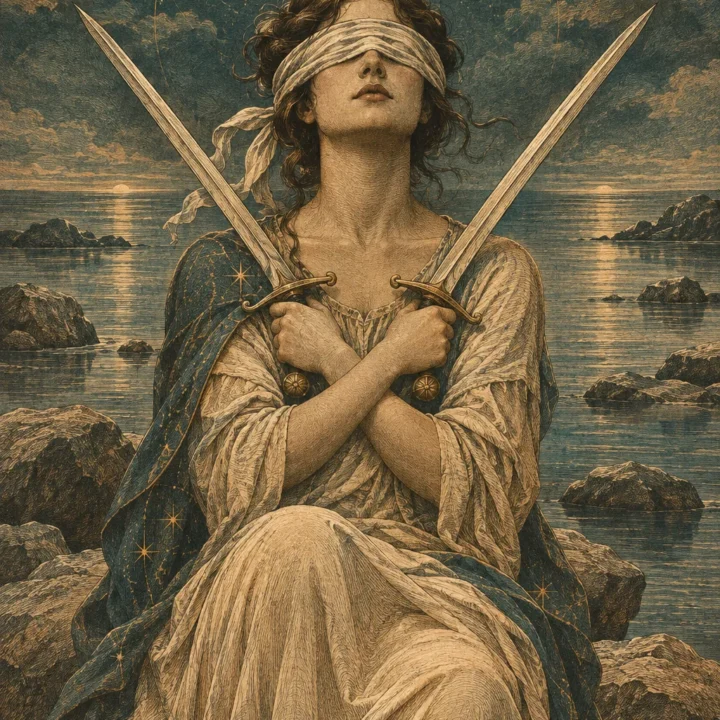
Two of Swords
indecision, guarded peace, boundaries, suspended choice
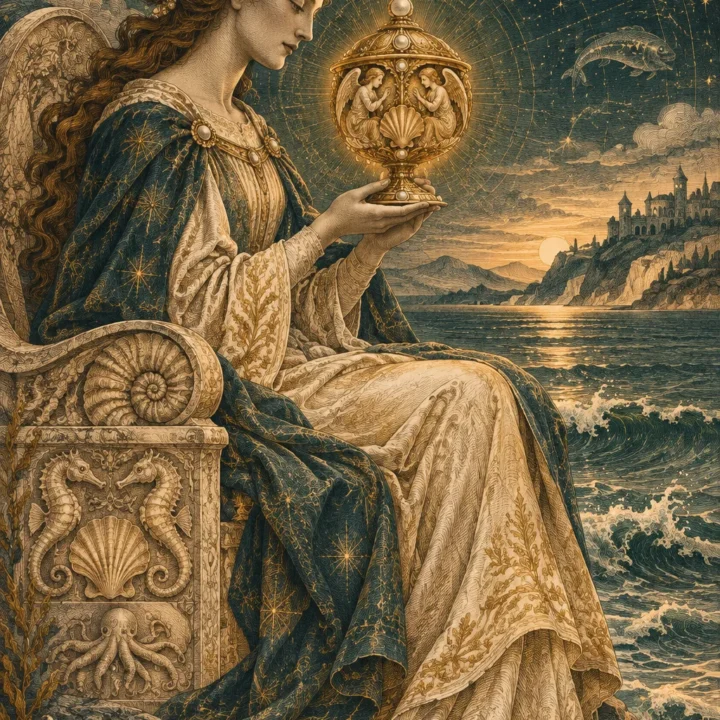
Queen of Cups
compassion, emotional understanding, imagination, intuition
Sources and further reading
- A. E. Waite, The Pictorial Key to the Tarot, Part III (Cups: Two) Read the text
- S. L. MacGregor Mathers and Harriet Felkin, Golden Dawn Book T, Lord of Love and Venus in Cancer Read the text
- The Morgan Library & Museum, Pamela Colman Smith and the Rider-Waite-Smith tarot Read the text
- Biddy Tarot, Two of Cups, contemporary romantic and reversed meanings Read the text
- Labyrinthos, Two of Cups, contemporary relationships and collaborations Read the text