Page of Wands Tarot Card Meaning
A young herald studies a growing wand beneath an open sky. The Page of Wands carries the spark of discovery and the possibility of news worth hearing.
- curiosity
- enthusiasm
- discovery
- messages
- fresh ideas
Card at a glance
- Number
- Page
- Element
- Fire
- Astrology
- Associations vary by tradition
- Keywords
- curiosity, enthusiasm, discovery, messages, fresh ideas, willingness to explore
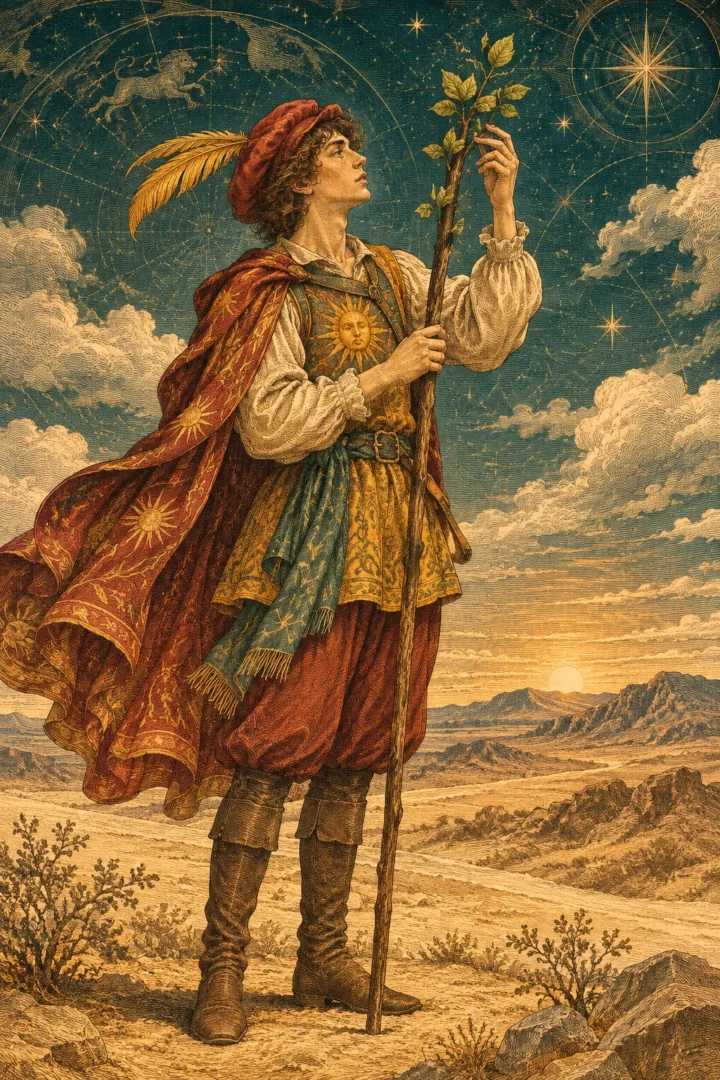 Page · Page of Wands
Upright meaning
Curiosity, enthusiasm and discovery
Upright, this Page often appears when news awakens your interest or when you feel ready to explore something unfamiliar. A course, friendship, creative assignment, or unexpected invitation may give you the sense that your world has become a little larger. Imagine finding a note from a local community theater asking for volunteers. You have never worked backstage, but you remember how much you loved theater when you were younger. You reply to learn more. The Page appears in the curiosity of that response and in the message that first opened the door. This card is favorable for learning, experimenting, and sharing early ideas. You might feel drawn to make an introduction, ask a sincere question, or begin a conversation about a project. There is no requirement to know the entire route before taking a modest first step. If you are waiting for news, the Page invites attention to what the news could actually change. A response may be welcome, surprising, or simply the beginning of another choice.
- Curiosity
- Enthusiasm
- Discovery
- Messages
- Fresh ideas
- Willingness to explore
Reversed meaning
Indecision, mixed messages and discouraging news
Reversed, the Page can reflect a message that confuses you or enthusiasm that has become difficult to express. Perhaps you received an invitation, but the details remain vague. You have an idea you care about and keep postponing the moment of telling someone. In modern practice, the reversal is frequently associated with scattered energy, false starts, or fear of being inexperienced. That reading fits the picture of a young learner who has not yet found direction. Waite's older meanings include announcements, anecdotes, bad news, indecision, and instability. They do not always match the familiar modern description of a blocked creative spark. The historical language brings communication back into the center of the card. In a personal reading, the reversal is a reason to look carefully at a message or hesitation, never a guarantee that something unpleasant will happen. If an opportunity sounds promising, ask for the details. If your enthusiasm has faded, find out whether the interest itself has changed.
- Indecision
- Mixed messages
- Discouraging news
- Scattered energy
Card symbolism
-
The living wand and his attentive gaze
Pamela Colman Smith drew the Page looking toward the upper part of a staff that bears green shoots.
-
The empty, sandy landscape
Behind the Page lies a bare landscape with low, pyramid-like hills.
-
His patterned tunic
The Page wears a decorated garment with salamander-like shapes, a motif repeated in the Wands court cards.
In depth interpretation
A young figure stands alone in an open, sandy landscape. He holds a tall wand upright and studies the green leaves growing near its tip. His colorful clothes suggest he has come prepared to be seen, yet he appears absorbed in something that has caught his attention. The sky is spacious. Whatever he has discovered, he is still deciding how to share it.
The Page of Wands represents curiosity, enthusiasm, adventurous beginnings, and the arrival or sharing of news that sparks possibility. Upright, it often brings an invitation to explore, a message worth considering, or a fresh desire to learn. Reversed, it can describe uncertainty, unreliable communication, or excitement that has lost its direction.
There is a reason this Page feels different from the Ace of Wands. The Ace offers a living staff with no one shown receiving it. Here a person has taken hold of the wand. The first creative fire has found someone willing to look closely.
The spiritual meaning: a spark becomes a message
Think about an unexpected conversation that stays with you long after it ends. Someone mentions a place you have never visited, a creative practice, or a way of living you had never considered. Nothing has changed outwardly. Yet a possibility keeps returning to your thoughts, as though it is asking you to give it a little room.
The Page of Wands lives in that moment. He is often imagined as a beginner with bright ideas, and there is truth in that interpretation. His attention is awakened. He looks at his wand as though it contains a story waiting to be understood.
But he also belongs to the tarot's family of messengers. In A. E. Waite's account of this particular card, the Page is poised to make a proclamation. His tidings are described as strange. The Page can therefore speak to the experience of receiving something unfamiliar and to the courage of bringing your own message into the world.
Sometimes a calling first reaches you through someone else's words. You notice what stirs in your chest as you hear it. The Page invites you to keep listening long enough to find out why.
The Page of Swords offers a useful contrast in a learning spread. This Page follows the spark of a new venture, while the Swords Page asks what should be understood before the idea grows. Both can help you begin without demanding mastery on the first day.
What the Page's image reveals
The living wand and his attentive gaze
Pamela Colman Smith drew the Page looking toward the upper part of a staff that bears green shoots. His feet remain planted on the ground. The image makes room for curiosity before travel or accomplishment.
A useful reading begins with the direction of his attention. What has captured yours? Are you hearing a new possibility, studying the first signs of growth, or preparing to speak about something you care about?
Because the card depicts a person holding the wand, it often points toward your relationship with inspiration. The idea has been noticed. What it will become is still open.
The empty, sandy landscape
Behind the Page lies a bare landscape with low, pyramid-like hills. There is little vegetation around him, which makes the living leaves on his staff especially striking.
The contrast can suggest that creativity appears even when your circumstances feel unpromising. You may be learning in a new environment, or discovering a subject for which you have no map yet.
This is an interpretation of Smith's imagery, not a fixed historical teaching that every desert in tarot means the same thing. If the emptiness catches your eye, ask what practical support would help the interest grow.
His patterned tunic
The Page wears a decorated garment with salamander-like shapes, a motif repeated in the Wands court cards. Fire associations have a place in later Western esoteric symbolism, and modern readers often connect these creatures with the suit's vital energy.
The detail also makes the Page feel lively and expressive. He has something of his own to bring to the scene. You can imagine him as the person who tells a friend about an exciting discovery before knowing whether anyone else will share the fascination.
Why is the Page of Wands a messenger?
Pages can represent people, qualities, or developments in a reading. In older European court traditions they are often understood as attendants and messengers. Waite makes that role explicit for the Page of Wands: he describes a faithful figure bearing unusual news and includes an envoy, a postman, and family intelligence among the card's meanings.
That is a useful distinction from the contemporary tendency to describe the Page only as someone with a new hobby or a burst of enthusiasm. A Page of Wands in a question about an application might reflect the arrival of a response. In a question about your own work, he might be the urge to share a project before it feels completely finished.
How do you choose between these readings? Start with the question you asked.
If you asked what is happening around you, a message or invitation may be relevant. If you asked what you need to develop in yourself, the Page's curiosity and willingness to speak could be the central theme. In a position representing another person's role, he might suggest someone bringing information or contributing enthusiastic beginner energy.
The Page cannot confirm that a particular message will arrive. His value is in giving you a clear set of possibilities to examine.
Page of Wands upright meaning
Upright, this Page often appears when news awakens your interest or when you feel ready to explore something unfamiliar. A course, friendship, creative assignment, or unexpected invitation may give you the sense that your world has become a little larger.
Imagine finding a note from a local community theater asking for volunteers. You have never worked backstage, but you remember how much you loved theater when you were younger. You reply to learn more. The Page appears in the curiosity of that response and in the message that first opened the door.
This card is favorable for learning, experimenting, and sharing early ideas. You might feel drawn to make an introduction, ask a sincere question, or begin a conversation about a project. There is no requirement to know the entire route before taking a modest first step.
If you are waiting for news, the Page invites attention to what the news could actually change. A response may be welcome, surprising, or simply the beginning of another choice.
Page of Wands reversed meaning: mixed messages and lost confidence
Reversed, the Page can reflect a message that confuses you or enthusiasm that has become difficult to express. Perhaps you received an invitation, but the details remain vague. You have an idea you care about and keep postponing the moment of telling someone.
In modern practice, the reversal is frequently associated with scattered energy, false starts, or fear of being inexperienced. That reading fits the picture of a young learner who has not yet found direction.
Waite's older meanings include announcements, anecdotes, bad news, indecision, and instability. They do not always match the familiar modern description of a blocked creative spark. The historical language brings communication back into the center of the card.
In a personal reading, the reversal is a reason to look carefully at a message or hesitation, never a guarantee that something unpleasant will happen. If an opportunity sounds promising, ask for the details. If your enthusiasm has faded, find out whether the interest itself has changed.
Page of Wands in love and relationships
In love, this Page often brings lightness and curiosity. You may be enjoying a lively exchange with someone new, feeling brave enough to say hello, or discovering fresh things about a partner you already know well.
A connection marked by Page energy can feel delightful precisely because so much is still being discovered. You might be sharing music, stories, invitations, and plans for a first meeting.
For established partners, the card can encourage the return of wonder. Perhaps you have forgotten to ask what has been exciting the other person lately. A small, genuine question may open a conversation that feels surprisingly fresh.
Reversed, communication deserves attention. Plans might be vague, someone could feel unsure how to express interest, or a message may have landed differently than intended. Avoid reading hesitation as a secret confession. What matters is whether both people can speak openly and respect one another's pace.
Page of Wands as feelings
As feelings, the Page may suggest curiosity, flirtation, admiration, or the desire to get to know someone. Its historical messenger role can also highlight the wish to communicate. This is an interpretive lens, not a window into another person's private thoughts.
The Page of Wands as a person or court role
The Page can represent someone enthusiastic, attentive to new possibilities, or eager to share what they have learned. They might be an apprentice, a friend carrying news, a creative newcomer, or an experienced person rediscovering the pleasure of beginning.
The figure is traditionally depicted as young and masculine, but the reading does not require the person to match that appearance. Court cards can describe an attitude or role that anyone may occupy for a particular season.
One shadow of the Page is promising more than you understand. A cheerful invitation may be sincere while lacking the practical detail needed to make it real. The best expression of this card includes a willingness to ask questions.
Page of Wands for career, study, and money
The Page often appears at the beginning of learning or professional exploration. A new position, course, collaboration, or offer might awaken an interest you had set aside. Sometimes the message comes from outside; sometimes you are preparing to send one yourself.
You could be considering a workshop that would help you develop a skill. The Page suggests that curiosity is a legitimate reason to investigate. Before paying for the course, find out what it teaches, who leads it, and what you will be able to practice.
In money readings, the Page is particularly suited to exploring an idea rather than treating it as a finished opportunity. An income proposal that excites you still needs realistic numbers and clear terms. Reversed, check whether promises have become vague or whether you have lost interest after discovering what the work requires.
Worked tarot reading: should I respond to an unexpected invitation?
Imagine receiving an invitation to help develop a neighborhood art project. You draw the Page of Wands as the present, the Three of Pentacles as advice, and The Magician as the possibility to explore.
The Page fits the message itself and the creative excitement it awakens. The Three of Pentacles brings the practical world into view: who will collaborate, what skills are needed, and how will the work be organized? The Magician asks how you might use abilities already within your reach to make the invitation meaningful.
Together, the cards suggest responding with interest and asking thoughtful questions about the work. You could agree to a small first meeting before deciding on a larger commitment. The invitation may open a promising experience, but the reading cannot establish that it will succeed.
Now imagine the Page appeared alongside the Page of Pentacles. The pairing might place greater emphasis on learning, materials, and the step from lively curiosity into careful practice. That is an example of how a neighboring card adds specificity to a familiar keyword.
How is the Page different from the Ace and Knight of Wands?
The Ace of Wands depicts a hand offering living wood, a symbol of inspiration before anyone in the picture has claimed it. The Page holds his own wand and looks toward it. An idea now has a witness and a potential messenger.
The Knight of Wands is already mounted for a journey. His horse adds outward movement and urgency. When these cards appear together, ask what stage the situation has reached. Has a possibility only just appeared? Are you exploring or communicating it? Has someone begun acting on it?
This helps avoid giving the same interpretation to three neighboring cards. It also makes a reading more useful when the question concerns a real project or relationship.
Page of Wands as advice: carry the message carefully
Sit with the Page's attentive gaze. Think about something that has recently sparked your interest. Ask what you have actually learned about it, and what you are still imagining.
If there is a message you want to send, write it in plain language. Say what matters to you, what you hope to discover, and what you would like to know next. Let the recipient have room to respond freely.
If you are waiting for news, notice whether you have enough information to make a choice once it arrives. Curiosity grows stronger when it has the patience to listen.
Is the Page of Wands a yes or no card?
The Page of Wands generally leans toward exploring, learning, or opening a conversation. It favors an appropriate first step more than an irreversible commitment. Reversed, clarify confusing messages and check whether enthusiasm has enough support to develop.
A note on tradition
This article centers Pamela Colman Smith's Rider-Waite-Smith image, first published in 1909, alongside Waite's written meanings. Waite emphasized the Page's role as herald, envoy, and bearer of news. Contemporary readings often emphasize creativity, curiosity, and beginner energy.
Court ranks differ between tarot systems. Golden Dawn literature uses a Princess rank where many readers of the Rider-Waite-Smith deck encounter a Page. Those titles and symbolic correspondences should be understood within their respective systems, rather than treated as one universal chart.
Frequently asked questions
How should I respond to surprising news in a Page of Wands reading?
Make space for curiosity before you commit. Ask what the invitation involves, who will participate, and what first step feels exciting. The Page's wand is still growing; a message can open a door without requiring you to walk through it immediately.
Does the Page of Wands mean bad news when reversed?
Waite included unfavorable news among his reversed meanings, along with indecision. Modern readers also explore creative frustration and mixed signals. A reversed Page is not a reliable prediction of an unpleasant announcement.
Does the Page of Wands mean a rival in love?
Waite mentioned rivalry when this Page is followed by the Page of Cups in a particular older cartomantic reading. That conditional tradition does not establish that a third party exists in a real relationship. Avoid assigning motives to someone without evidence.
Is the Page of Wands a child?
A Page can represent a younger person in some readings, but the card can also symbolize a messenger, a beginner, or an attitude of curiosity at any age. The question and the surrounding cards help determine the role.

Keep reading
Explore the Wands
Every card page names the tradition behind each meaning, so you can compare readings instead of taking one as fixed.
Cards to explore alongside this one
Their symbols reveal useful similarities and differences for your next reading.
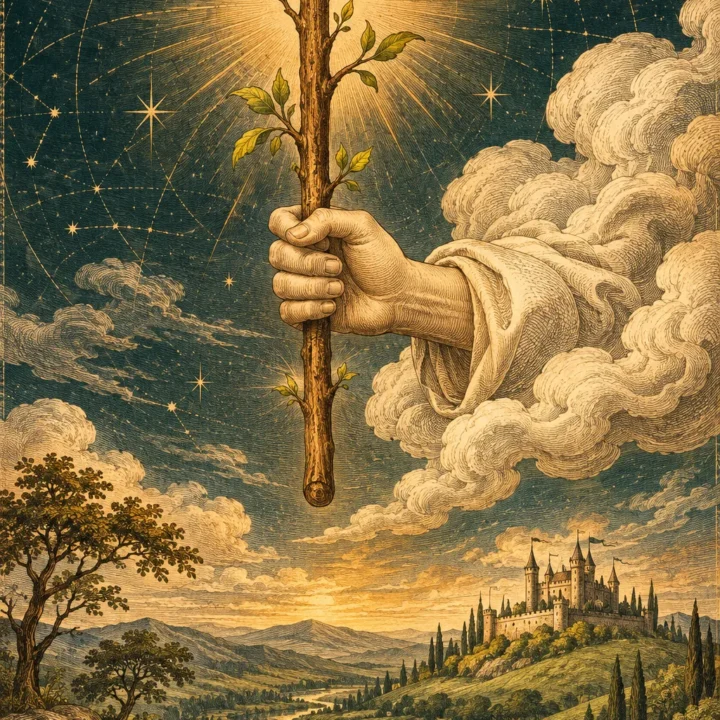
Ace of Wands
inspiration, creative force, desire, beginnings
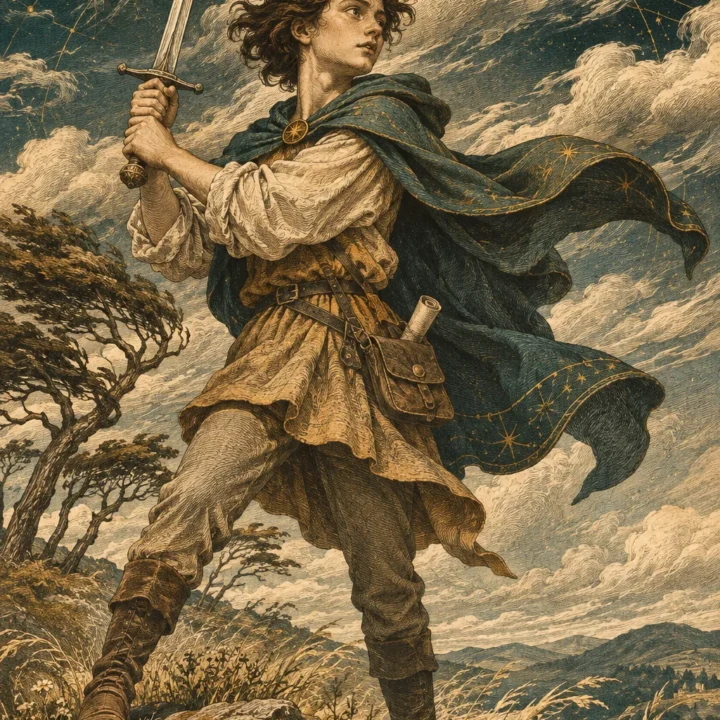
Page of Swords
curiosity, learning, questions, vigilance

The Fool
new beginnings, curiosity, openness, independence
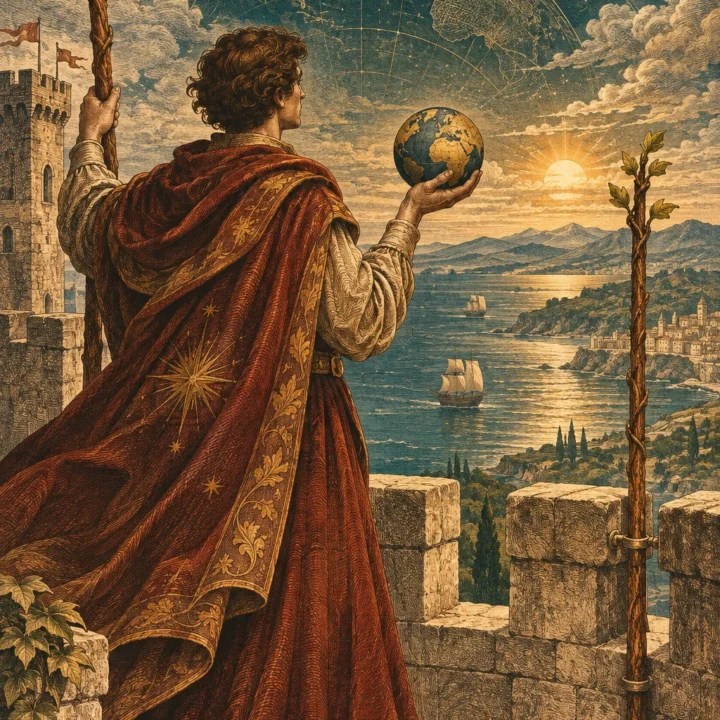
Two of Wands
vision, established power, longing, ambition
Sources and further reading
- A. E. Waite, The Pictorial Key to the Tarot, Page of Wands (historical description and meanings) Read the text
- Pamela Colman Smith and the Rider-Waite-Smith deck, The Morgan Library & Museum Read the text
- Biddy Tarot, Page of Wands, contemporary practitioner interpretation Read the text
- Labyrinthos, Page of Wands, contemporary contexts and alternate decks Read the text