
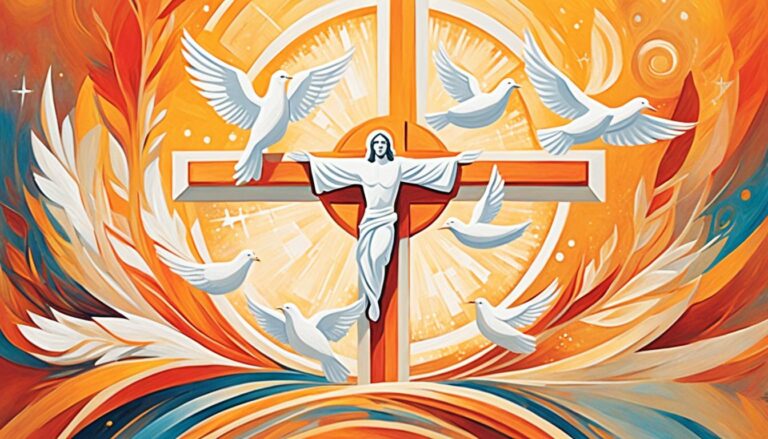
What Does It Mean When You Dream About Jesus?
Quick answer
Dreaming about Jesus most often signals that your mind is processing themes of forgiveness, moral authority, or a need for guidance you haven't found elsewhere. It doesn't require religious belief to carry weight — the figure functions as a powerful symbol of unconditional acceptance, sacrifice, and conscience that most people in Western cultures absorb from childhood.
Had a different dream? Describe it and get a reading.
Interpret my dream →Why this dream sticks
Dreams featuring a figure this emotionally loaded tend to surface during specific conditions: unresolved guilt, a decision that cuts against your deepest values, or a season of grief where ordinary comfort has run out. The brain reaches for its most potent stored symbol of mercy.
Unlike most dream characters, this one rarely behaves randomly. People almost universally report that Jesus in their dream was calm, spoke simply or not at all, and that the emotional residue on waking was either profound peace or a sharp sense of being seen through. Both reactions carry real information about your current inner state.
If you want a framework for reading dreams like this one, the guide at how to interpret your dreams covers the core method we use across the site.
What the common variations mean
| Dream variation | What it tends to reflect |
|---|---|
| Jesus speaks directly to you | A part of you already knows the answer to something you’re avoiding. The message is usually your own clearest thinking, not external revelation. |
| Jesus is silent but present | You’re craving witness — someone to acknowledge what you’re carrying. This often appears when people feel invisible or unheard in waking life. |
| Jesus is on the cross | You may be identifying with sacrifice, suffering for others, or a situation where you’re paying a price you didn’t earn. Also appears in grief processing. |
| Jesus is glowing or radiant | Associated with a search for hope during a dark period. The light is your psyche generating its own counter-image to despair. |
| Jesus looks at you with disappointment | Almost always a conscience dream — unresolved guilt or a value you’ve compromised. The feeling on waking is more diagnostic than the image itself. |
| Jesus heals you or someone else | Wish-fulfillment around recovery — your own health, a relationship, or someone you’re worried about. Also appears when people feel helpless in a caregiving role. |
| You are Jesus, or become him | Often a burden dream: you’re carrying responsibility that feels messianic or unsustainable. Can also reflect a calling you’re resisting. |
| Jesus appears threatening or wrong | Your instincts are flagging someone in waking life who claims authority but doesn’t feel trustworthy. The dream is a check on false authority, not a religious statement. |
For a related symbol that often appears in the same dream cluster, see the guide on dreaming about churches and sacred spaces.
What this dream is not
A Jesus dream is not a prophecy, a divine command, or evidence of anything about your spiritual standing. People of every background — atheists, agnostics, practitioners of other faiths — dream about Jesus because he is one of the most culturally saturated symbols in existence, not because the dream is a theological event.
It is also not a sign that something is wrong with you. The guilt or weight you feel on waking isn’t confirmation that you’ve done something unforgivable — it’s evidence that your conscience is working. That’s worth distinguishing from shame, which the dream doesn’t produce on its own.
This dream rarely needs professional interpretation. If recurring versions are disrupting your sleep or accompanied by significant distress, that’s worth discussing with a therapist — but for most people, one clear look at what the dream was responding to in waking life is enough.
A short practice
Within an hour of waking from this dream, write down three things:
- The one word that best captures how you felt on waking (peace, dread, longing, relief, shame — be specific).
- The last thing Jesus did or said in the dream, even if it was only a gesture or a look.
- One situation in your current life where you most need whatever that action or quality represents.
That third item is usually where the dream is pointing. Naming it clearly is often enough to let the dream release its charge. A fuller version of this structured reflection lives in the dream library, under the journaling section.
Frequently asked questions
Does dreaming about Jesus mean I’m religious, or becoming religious?
Not necessarily. The figure appears as a symbol the way any powerful archetype does — across belief systems and regardless of practice. If you’re having this dream repeatedly and it’s stirring genuine spiritual curiosity, that’s worth paying attention to on its own terms. The dream surfaces what’s already active in you; it doesn’t install new convictions.
I’m not Christian. Why would I dream about Jesus?
Cultural saturation is enough. If you grew up in or around Western media, attended school in a predominantly Christian society, or have had significant relationships with Christians, the symbol is present in your stored imagery. Dreams use available material. A person raised in a Hindu household might dream of Vishnu under similar emotional conditions — the archetypal role is the same even when the figure differs.
The dream felt more real than normal. Does that mean it was different?
High-vividness dreams are more common during REM rebound (after sleep deprivation), high emotional stress, or fever. The intensity is a neurological quality of the sleep state, not a measure of the dream’s origin or significance. That said, vivid dreams are easier to remember and interpret precisely because the emotional data is cleaner. Use the clarity as a tool, not as evidence of something supernatural — unless that framing is meaningful to you, in which case both readings can coexist. The guide on the meaning of unusually vivid dreams covers the neuroscience and interpretive approach together.
This content is for reflective and informational purposes only and is not a substitute for medical, psychological, or pastoral advice.
Author

Before you read a fixed meaning, ask:
What happened — the central image or event, in one plain sentence.
How it happened — calm or violent, easy or forced, sudden or slow.
Who was watching — alone, one person, or a crowd.
Those three usually matter more than the symbol name alone.
Meanings reflect widely shared symbolism; your own context comes first.
Explore the next dream



Dreams are not medical, legal, or financial advice. The Dream Symbolist offers symbolic interpretation to support reflection, not diagnosis.