Ace of Wands Tarot Card Meaning
A living wand appears from a mysterious cloud. The Ace of Wands asks what has awakened in you and how to tell an exciting spark from a beginning ready to take form.
- inspiration
- creative force
- desire
- beginnings
- initiative
Card at a glance
- Number
- Ace
- Element
- Fire
- Astrology
- Root of the Powers of Fire (Golden Dawn)
- Keywords
- inspiration, creative force, desire, beginnings, initiative, possibility
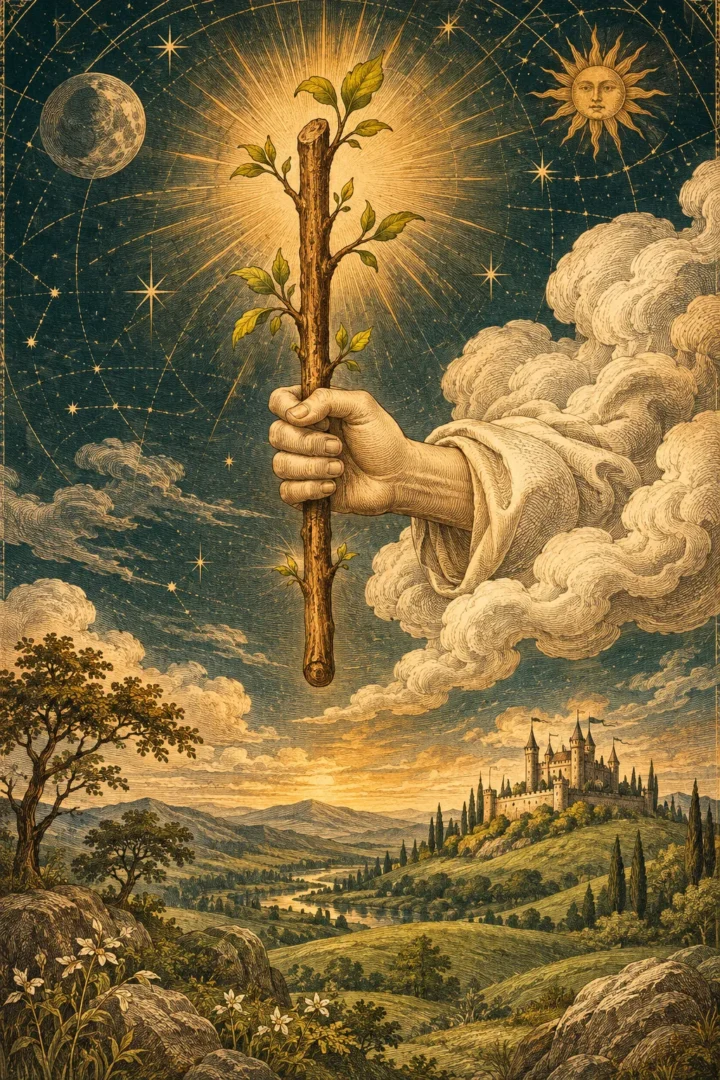 Ace · Ace of Wands
Upright meaning
Inspiration, creative force and desire
Upright, the Ace of Wands often arrives when an interest feels newly alive. You may want to begin a project, express attraction, learn a skill, travel, or return to something you once loved. The energy can feel like a small inward yes. Imagine finding your grandmother's handwritten recipes and suddenly wanting to learn how she cooked. You are still far from making the dishes well, yet you can already picture the kitchen and the people you would invite to dinner. The Ace belongs to the warm desire that sends you looking for the first ingredients. The card encourages an honest response to that desire. Give it a little time, speak about it with someone you trust, or make a first attempt. You need no certainty about the final outcome to discover whether the experience nourishes you. If you are already working hard on a project, the Ace can also ask you to remember its living source. Have you become so focused on finishing that you have lost touch with what first made the work matter?
- Inspiration
- Creative force
- Desire
- Beginnings
- Initiative
- Possibility
Reversed meaning
Stalled energy, loss of enthusiasm and false starts
Reversed, the Ace can speak of desire without an outlet. Perhaps you have several ideas and no space to begin. You may feel worn down after a demanding season, or discover that an opportunity looks better from a distance than it feels up close. A reversal is not automatically a warning to give up. Ask which part of the process is struggling. Has your energy faded? Are the conditions wrong? Does the idea need more time, or have you quietly stopped wanting it? Older divinatory traditions can sound more severe. In The Pictorial Key to the Tarot, A. E. Waite associated the reversed Ace with decline and ruin as well as clouded joy. Many contemporary readers explore these darker associations through the failure of a promising start or the loss of creative vitality. In a personal reading, this is an interpretive possibility, never a prediction of disaster. If you have been trying to force a beginning, rest may reveal whether the wish is still yours.
- Stalled energy
- Loss of enthusiasm
- False starts
- A spark without room to grow
Card symbolism
-
A hand from a cloud: the gift has no owner yet
Like the other three Aces in this deck, the Ace of Wands contains a mysterious hand coming through a cloud.
-
The green shoots and falling leaves
The wand is wood with new growth.
-
The castle beyond the hills
A small castle sits far from the offered wand.
In depth interpretation
A hand emerges from a cloud, gripping a wand that is already putting out fresh leaves. Far below, a castle rests among green hills. No one has come forward to receive the branch. For one suspended moment, the gift exists before anybody knows what it will become.
The Ace of Wands represents creative fire, desire, initiative, and the beginning of something that makes you feel vividly alive. Upright, it often marks the arrival of inspiration or an urge to begin. Reversed, the energy may be blocked, fading, or difficult to direct. In either position, this card asks you to notice what has awakened and how you want to meet it.
The Ace is the first flame. You get to decide what deserves its warmth.
The spiritual meaning: fire before it has a name
Sometimes an idea arrives so quietly that you almost miss it. You hear a piece of music and want to make something. A conversation leaves you unusually awake. An old dream returns, surprising you with how much it still matters.
That first stirring belongs to the Ace of Wands. The card does not show a person creating, choosing, or succeeding. Pamela Colman Smith drew an offered branch. Its living energy comes before any visible response. This distinction is useful in a reading: an Ace can show that potential is present without telling you who will take it up or what it will produce.
In the Golden Dawn's esoteric system, the Ace bears the title Root of the Powers of Fire. Fire is associated with will, vitality, and the force that sets things moving. The title places this card at the source of the suit's energy. It is a description from a particular occult tradition, not a rule that every tarot deck shares.
If you feel drawn to an idea, give it some attention before asking whether it is useful or impressive. A beginning deserves to be met on its own terms.
What the symbols in the Ace of Wands reveal
A hand from a cloud: the gift has no owner yet
Like the other three Aces in this deck, the Ace of Wands contains a mysterious hand coming through a cloud. We see the offering clearly, while the giver and the person who might receive it remain outside the picture.
That absence matters. Readers sometimes treat the Ace as proof that a job offer, new partner, or successful venture is on the way. The picture promises no such outcome. It is a powerful image of an opening, a desire, or an available current of energy. What happens after the offering belongs to the rest of the reading and to the choices made in life.
If the hand catches your attention, ask where an invitation has appeared and what receiving it would actually require.
The green shoots and falling leaves
The wand is wood with new growth. Small leaves also seem to drift through the air. There is vitality here, with movement that the hand does not entirely control.
One way to read the shoots is as potential already alive within an imperfect beginning. A neglected creative practice, a friendship just forming, or an unfamiliar way of praying may be growing before you have found words for it.
Pay attention to the difference between the impulse itself and the care that will sustain it. A flame lights easily under the right conditions. Keeping it alive is another part of the story.
The castle beyond the hills
A small castle sits far from the offered wand. The image places a possible destination on the horizon without showing a path being traveled.
You may be imagining an exhibition, a business, a new home, or a life changed by a decision. The castle invites you to enjoy that vision. It also reminds you that the first sign of possibility and its eventual destination are separated by time, effort, and circumstances you have yet to discover.
Ace of Wands upright: when inspiration asks for a beginning
Upright, the Ace of Wands often arrives when an interest feels newly alive. You may want to begin a project, express attraction, learn a skill, travel, or return to something you once loved. The energy can feel like a small inward yes.
Imagine finding your grandmother's handwritten recipes and suddenly wanting to learn how she cooked. You are still far from making the dishes well, yet you can already picture the kitchen and the people you would invite to dinner. The Ace belongs to the warm desire that sends you looking for the first ingredients.
The card encourages an honest response to that desire. Give it a little time, speak about it with someone you trust, or make a first attempt. You need no certainty about the final outcome to discover whether the experience nourishes you.
If you are already working hard on a project, the Ace can also ask you to remember its living source. Have you become so focused on finishing that you have lost touch with what first made the work matter?
Ace of Wands reversed: when the fire cannot catch
Reversed, the Ace can speak of desire without an outlet. Perhaps you have several ideas and no space to begin. You may feel worn down after a demanding season, or discover that an opportunity looks better from a distance than it feels up close.
A reversal is not automatically a warning to give up. Ask which part of the process is struggling. Has your energy faded? Are the conditions wrong? Does the idea need more time, or have you quietly stopped wanting it?
Older divinatory traditions can sound more severe. In The Pictorial Key to the Tarot, A. E. Waite associated the reversed Ace with decline and ruin as well as clouded joy. Many contemporary readers explore these darker associations through the failure of a promising start or the loss of creative vitality. In a personal reading, this is an interpretive possibility, never a prediction of disaster.
If you have been trying to force a beginning, rest may reveal whether the wish is still yours.
Does the Ace of Wands promise an opportunity?
The Ace of Wands points most strongly to the energy of a beginning. It does not, by itself, confirm that an external offer will arrive or that a venture will succeed. The cloud-borne hand presents a living wand, while the future remains beyond the scene.
To distinguish a compelling idea from a practical opening, look at the question, the card's position, and its neighbors. The Ace of Pentacles emphasizes a tangible resource or material chance. The Ace of Wands is often felt first as creative urgency, attraction, or an inner calling. Both can be present in the same situation, and neither removes the need to consider real-world conditions.
This is why an Ace makes an interesting beginning to a spread. It opens a question that the other cards can help you explore.
Ace of Wands in love and relationships
In love, the Ace of Wands often carries the warmth of attraction. You might be meeting someone who awakens your curiosity, or feeling desire return to a relationship that has become too predictable. There is room here for flirtation, passion, play, and discovering what excites you together.
For an established couple, the spark may have little to do with grand gestures. You could find new energy in making time for each other, speaking honestly about desire, or sharing an experience that makes both of you feel present.
Reversed, the card may describe mismatched desire, tiredness, hesitation, or a connection that moves intensely at first and then loses momentum. Give each person's pace and wishes a place in the conversation.
What does the Ace of Wands mean as feelings?
As feelings, the Ace suggests excitement, physical attraction, or an urge to explore a connection. It says little about whether that energy will become steady affection. The person's communication and behavior matter more than an imagined promise hidden inside a card.
Ace of Wands for career, creativity, and money
At work, the Ace often appears when you sense a project or direction that could bring renewed energy. Perhaps an idea for a class, a small business, or a different way of working has begun visiting you repeatedly. Write it down, speak with people who understand the field, and test something on a scale your life can accommodate.
In creative work, the Ace can be especially tender. You might be returning to drawing after years away or trying a form that feels unfamiliar. Resist the urge to judge the first attempt as though it were a finished work. The experience of making is part of what the card celebrates.
Financial questions call for care. The Ace can reflect excitement about an idea, though enthusiasm is not evidence that the numbers will work. If the possibility would require money, examine the cost and consequences before acting. Reversed, slow down when the pressure to spend is stronger than your understanding of what you would receive.
How to read the Ace of Wands in a tarot spread
A card changes emphasis with the role it plays. In a present-position reading, the Ace may be the energy you are noticing right now. In a challenge position, the issue could be how to direct that energy. As an outcome, it suggests a possible new beginning, with its form still developing.
Worked reading: should I turn a creative hobby into a business?
Imagine asking this question and drawing the Ace of Wands as the present, the Four of Pentacles as the obstacle, and the Eight of Pentacles as advice.
The Ace of Wands shows why the idea matters: it is waking up your enthusiasm. The Four of Pentacles raises the question of security, including what you might be afraid of risking. The Eight of Pentacles points toward craft, repetition, and learning through the work itself.
Read together, the cards suggest a small test: keep your existing responsibilities in view while building skill and discovering whether you enjoy the practical side of the idea. That conclusion comes from the relationship among the three symbols. The Ace alone would not justify quitting a job or investing savings.
Notice how different this spread feels from an Ace appearing beside The Fool. In that pairing, curiosity and openness could take center stage. The neighboring cards change the kind of beginning you are being invited to consider.
The Ace of Wands as advice: give the spark a vessel
Place the Ace in front of you and make two short notes. Under Spark, name the idea or desire that feels alive. Under Vessel, name what would allow it to exist in your ordinary life: twenty minutes, a conversation, a borrowed tool, a place to practice, or help from someone with experience.
Look again at the green leaves on the wand. They are small, yet undeniably present. What is the equivalent first sign of growth in your situation?
Choose an experiment you are willing to learn from. Let yourself discover whether the energy grows warmer when you meet it in the real world.
Is the Ace of Wands a yes or no card?
For creative exploration, expressing interest, and trying something new, the Ace of Wands usually leans yes. Its message concerns initiative and potential. Where the decision involves another person's consent, substantial financial risk, or an irreversible commitment, use the card for reflection while relying on the facts of the situation. Reversed, the question is often whether the conditions are ready for a beginning.
A note on the deck and its traditions
This article interprets the Rider-Waite-Smith image illustrated by Pamela Colman Smith for the deck first published in 1909. Waite's older meanings emphasize creation, enterprise, origin, and birth; his reversed list includes harsher possibilities than today's familiar language of creative blocks. In the Golden Dawn's Book T, the Ace is the Root of the Powers of Fire. That attribution belongs to a specific Western esoteric system.
These layers offer different ways to approach the card. None should erase the living experience of the person asking the question.
Frequently asked questions
Does the Ace of Wands mean pregnancy?
Waite's traditional upright meanings include birth and family origins, which helps explain the card's association with fertility in some readings. It cannot establish whether someone is pregnant or predict a medical outcome. The imagery can be read as the beginning of a life chapter without making a literal claim.
How is the Ace of Wands different from the Page of Wands?
The Ace represents the arrival of a creative or passionate force. The Page shows a figure responding to the living wand with interest and attention. That distinction helps separate the presence of a spark from a person's readiness to explore it. In the Two of Wands, the first enthusiasm meets the larger question of what to do with the life you have already built.
What if the Ace of Wands keeps appearing?
Look for the question you keep bringing to the cards. Perhaps a particular idea deserves attention, or perhaps you are asking for certainty before allowing yourself to try. Repetition can become a prompt for reflection without obliging you to take action.

Keep reading
Explore the Wands
Every card page names the tradition behind each meaning, so you can compare readings instead of taking one as fixed.
Cards to explore alongside this one
Their symbols reveal useful similarities and differences for your next reading.
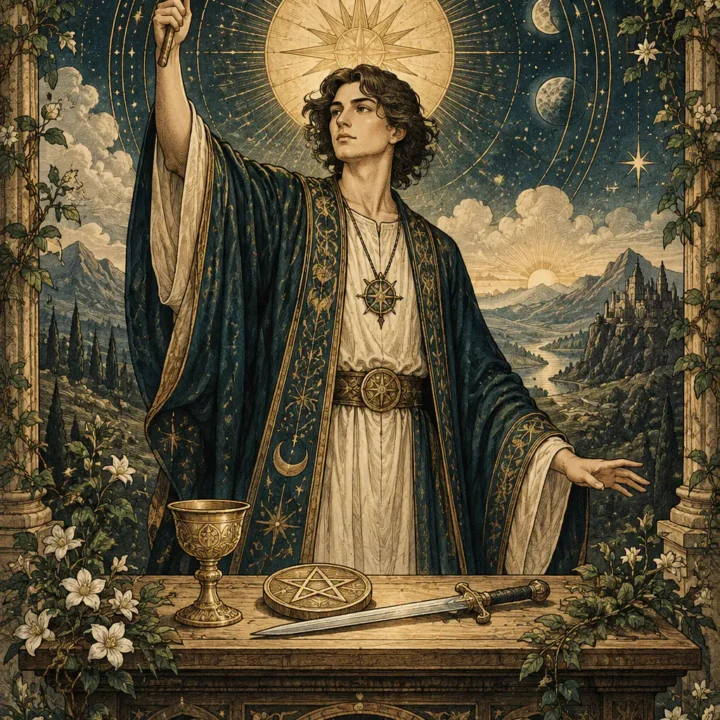
The Magician
resourcefulness, focused will, skill, communication
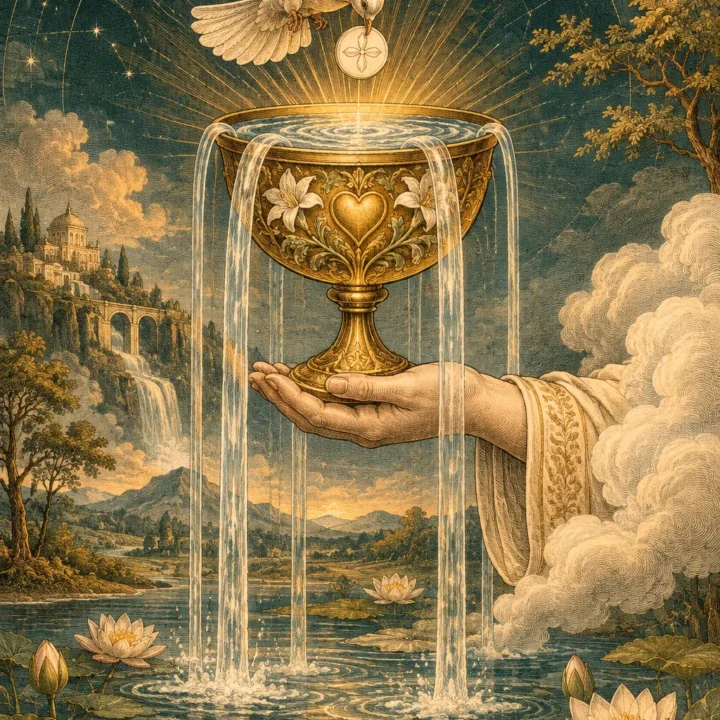
Ace of Cups
new feelings, love, compassion, emotional renewal
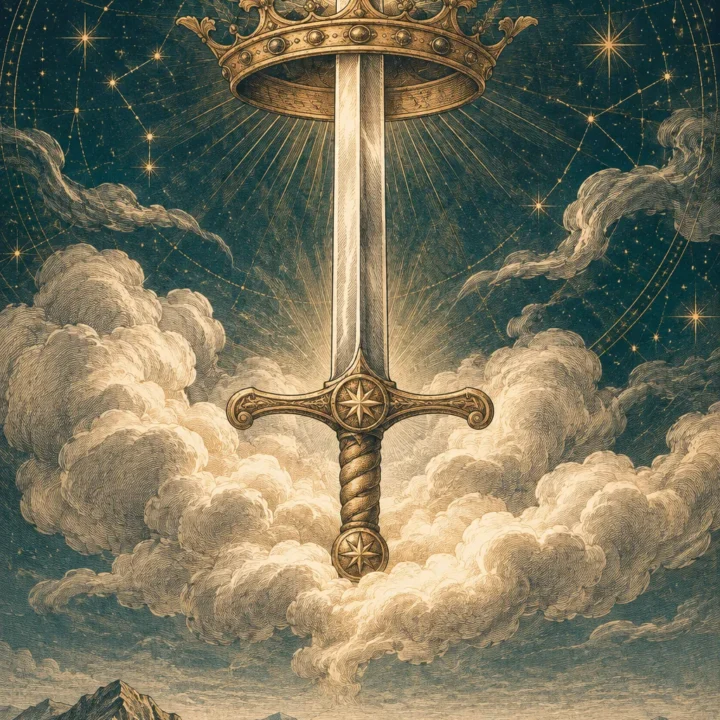
Ace of Swords
clarity, breakthrough, truth, discernment
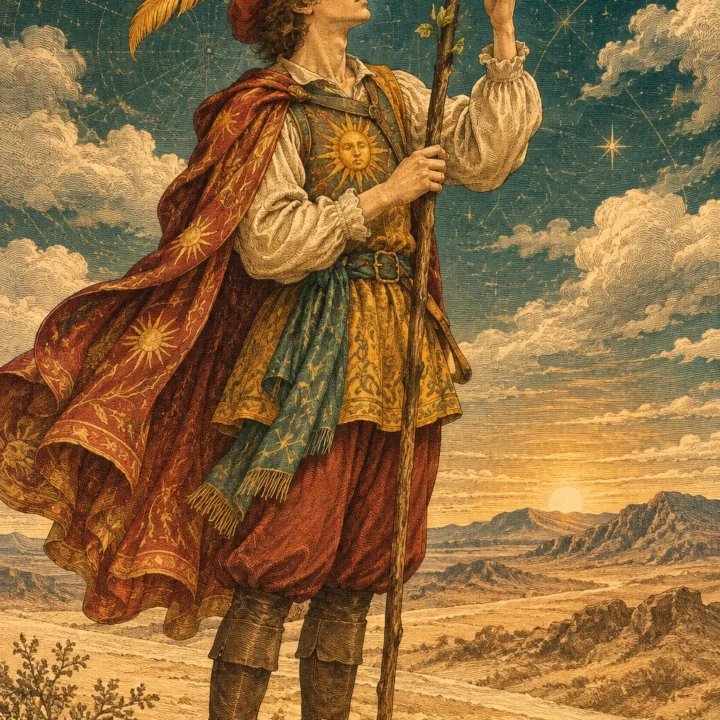
Page of Wands
curiosity, enthusiasm, discovery, messages
Sources and further reading
- Arthur Edward Waite, The Pictorial Key to the Tarot, Part III, Wands Read the text
- Book T, A Description of the Cards of the Tarot, The Equinox, Volume I, Number 8 (1912) Read the text
- The Morgan Library & Museum, Pamela Colman Smith and the 1909 tarot deck Read the text