The Hierophant Tarot Card Meaning
Crossed keys rest at the feet of a ceremonial teacher. Explore the Hierophant’s wisdom about inherited beliefs, sacred practices, and finding your place in a community.
- spiritual teaching
- tradition
- mentorship
- belonging
- ceremony
Card at a glance
- Number
- V
- Element
- Earth
- Astrology
- Taurus (Golden Dawn)
- Keywords
- spiritual teaching, tradition, mentorship, belonging, ceremony
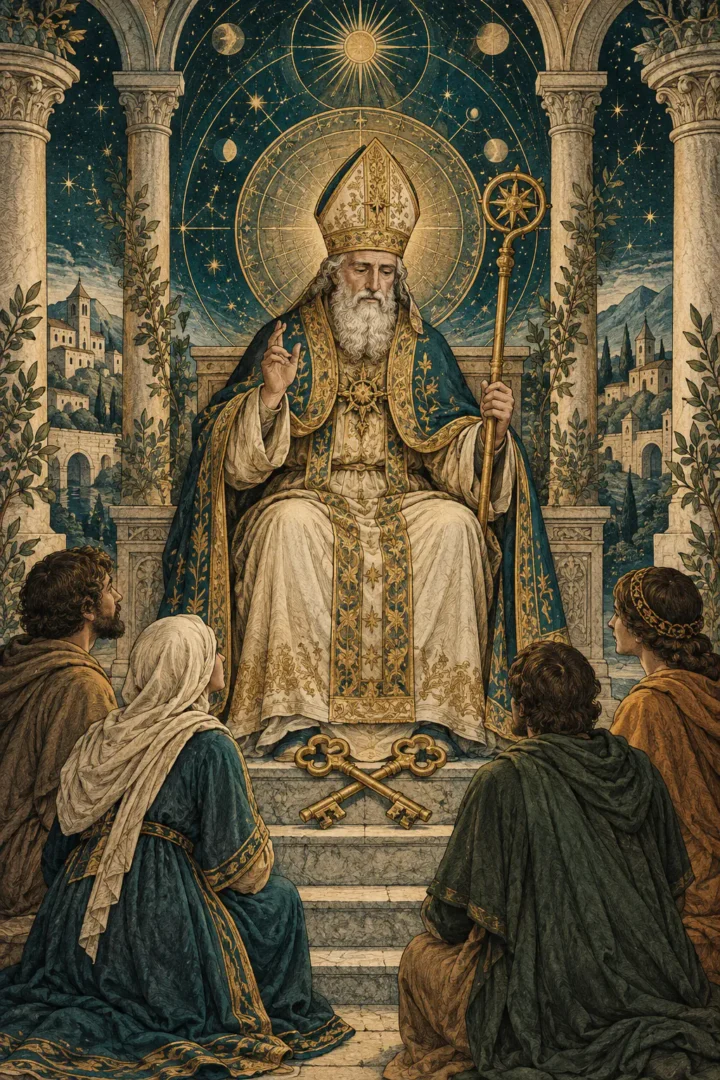 V · The Hierophant
Upright meaning
Spiritual teaching, tradition and mentorship
Upright, The Hierophant often appears when a teacher or an established path could help you grow. You might be considering formal study, seeking a spiritual community, entering a profession with a long apprenticeship, or preparing for a ceremony that matters deeply to you.
- Spiritual teaching
- Tradition
- Mentorship
- Belonging
- Ceremony
Reversed meaning
Dogma, exclusion and unconventional paths
Reversed, the card may bring you into a difficult conversation with something you were taught. A family expectation no longer fits. A teacher’s certainty leaves you uneasy. A rule you once accepted now seems to harm the people it was meant to help.
- Dogma
- Exclusion
- Unconventional paths
- Questioning authority
- Inherited beliefs under review
Card symbolism
-
The two keys
At the foot of the throne lie two crossed keys, echoing a familiar symbol of ecclesiastical authority. They bring the question of access into the picture.
-
The two kneeling students
The students are easy to miss beside the imposing teacher, though they may be the most human part of the image. They have come hoping someone can help them understand.
-
The raised hand
His right hand makes a gesture of blessing. In Waite’s account, the gesture also suggests the distinction between publicly expressed teaching and what remains hidden.
-
The triple crown and staff
The Hierophant wears a layered crown and holds a staff topped by a triple cross. Both belong to the language of religious office and ceremony.
-
The stone pillars
He sits between two pillars, but the setting feels different from the veiled sanctuary of The High Priestess. Here, teaching takes place in the presence of others.
In depth interpretation
Two figures kneel before a richly dressed spiritual teacher. Behind him rise stone pillars; at his feet, two keys cross like a promise that a locked door can be opened. The Hierophant raises one hand in blessing. He seems to be passing on something he received long before these students arrived.
The Hierophant is the tarot card of shared wisdom, sacred teaching, tradition, and commitments that connect us to other people. Upright, he may signal a time to learn from a trusted guide or deepen your place in a community. Reversed, he often appears when inherited beliefs are being questioned or the expectations around you feel too narrow.
If you have drawn him, imagine sitting among the students. What would you hope to learn? Whose voice would you trust enough to listen?
The spiritual meaning of The Hierophant
Think of a ritual that has stayed with you. Perhaps someone lit a candle at the same hour each week, sang a prayer you learned by heart, or gathered your family around a table for a meal whose meaning went deeper than food. One day you may have discovered that other people had been doing something similar for generations.
The Hierophant lives in that discovery. Spiritual life can be held in gestures, stories, ceremonies, and relationships. Someone teaches us the words. Someone shows us how to begin. We receive a practice and decide what place it will have in our lives.
There is comfort in learning from those who walked before us, especially when we feel uncertain of our own understanding. The card also draws our attention to the people who carry a teaching. A wise guide leaves room for questions. A community can offer belonging and remain answerable for how it treats its members.
The Hierophant may touch a tender place if you have felt excluded by a tradition, or if you are returning to one you once left behind. Your relationship with what you inherited can continue to unfold throughout your life.
Symbols in The Hierophant card
Pamela Colman Smith gives this figure the clothing and setting of a ceremonial religious leader. The details speak of authority and the responsibility that comes with passing knowledge to someone else.
The two keys
At the foot of the throne lie two crossed keys, echoing a familiar symbol of ecclesiastical authority. They bring the question of access into the picture. Who can approach a sacred teaching? In a reading, the keys can represent an opportunity to study or enter a community with its own way of opening doors.
The two kneeling students
The students are easy to miss beside the imposing teacher, though they may be the most human part of the image. They have come hoping someone can help them understand. If your eyes go to them, remember what it felt like to ask for guidance. Perhaps you are ready to be a beginner again, or perhaps you have learned enough to teach someone else with care.
The raised hand
His right hand makes a gesture of blessing. In Waite’s account, the gesture also suggests the distinction between publicly expressed teaching and what remains hidden. You might read it as a moment of transmission, when another person’s words give shape to something you have only begun to sense.
The triple crown and staff
The Hierophant wears a layered crown and holds a staff topped by a triple cross. Both belong to the language of religious office and ceremony. They suggest an authority that stretches beyond the individual. Consider what makes a role worthy of respect, and how someone earns the trust placed in them.
The stone pillars
He sits between two pillars, but the setting feels different from the veiled sanctuary of The High Priestess. Here, teaching takes place in the presence of others. There is a visible community, a shared language, and an established practice. The scene asks what becomes possible when spiritual insight finds a home in collective life.
The Hierophant upright meaning
Upright, The Hierophant often appears when a teacher or an established path could help you grow. You might be considering formal study, seeking a spiritual community, entering a profession with a long apprenticeship, or preparing for a ceremony that matters deeply to you.
Imagine being new to meditation and feeling discouraged because your mind wanders. A patient teacher shows you how to sit comfortably and return to your breath. Suddenly the practice feels more welcoming. The Hierophant can describe the quiet gift of instruction that meets you where you are.
He also represents commitments made publicly or within a group. A wedding, an initiation, or a vow can give a personal intention a form other people recognize. Think about what such a commitment asks of you, and whether it reflects the life you want to live.
The Hierophant reversed meaning
Reversed, the card may bring you into a difficult conversation with something you were taught. A family expectation no longer fits. A teacher’s certainty leaves you uneasy. A rule you once accepted now seems to harm the people it was meant to help.
You may feel drawn toward an independent practice, an unusual course of study, or a community where your questions are welcome. That search can be meaningful in its own right. It helps to know which parts of a tradition still nourish you, even as other parts lose their hold.
Sometimes frustration hardens into distrust of every guide. You can examine advice on its merits and choose your teachers carefully. Experience will help you recognize the people whose knowledge has been deepened by humility.
The Hierophant in love and relationships
In love, this card often brings up commitment and the place a relationship occupies within a wider world. Partners may be discussing marriage, family traditions, shared faith, or the values they hope to pass on.
For someone newly dating, the card can suggest a desire for a relationship with an understood direction. A conversation about future plans or family involvement might reveal compatibility that attraction alone cannot show.
Reversed, it can point to expectations that feel uncomfortable or a relationship taking an unconventional form. Perhaps two people love each other but disagree about the place their families should have in their lives. Their ability to speak freely and choose together matters.
The Hierophant as feelings
When asked about someone’s feelings, the Hierophant can suggest respect, seriousness, loyalty, or an interest in commitment. Sometimes it highlights the importance a person places on shared beliefs or approval from their community.
It cannot reveal an unspoken promise. If the connection matters, ask how the person imagines a relationship fitting into their life. Their answer may be more revealing than an attempt to interpret their silence.
The Hierophant for career and work
At work, this card describes the value of learning a craft through people who know it well. A qualification, mentor, training program, professional code, or well-run institution may offer knowledge that takes years to develop.
Picture a new nurse working alongside an experienced colleague who explains the reasons behind a careful procedure. The lesson moves through shared responsibility and practiced attention. That is an especially grounded expression of the Hierophant.
Reversed, he can point to outdated processes or a workplace where questioning the method is treated as disloyalty. You may be ready to suggest an improvement or find another route toward the same skill.
The Hierophant for money
In money readings, the Hierophant may suggest learning from someone qualified, examining a conventional plan, or understanding an agreement before signing it. He encourages careful attention to knowledge preserved within established systems.
A familiar approach may be suitable, but its popularity cannot establish that it fits your needs. Check qualifications, costs, terms, and your circumstances independently. The card can help you notice how much trust you place in an institution or a respected voice.
The Hierophant in spiritual growth
The Hierophant sometimes arrives when a solitary practice is ready for company. You may want to join a study circle, attend a service, speak with an elder, or learn how a ceremony is practiced within its living tradition.
There is a particular beauty in hearing a prayer spoken by many voices. Each person arrives with a different history, and the words create a moment of shared attention. If you feel drawn toward an unfamiliar tradition, learn from those who belong to it and respect its boundaries.
Spiritual authority is also part of this card. If a teacher demands secrecy, obedience, or money in ways that make you uneasy, you are free to question the relationship and seek support. Your spiritual life deserves care and room to breathe.
The Hierophant as advice: an inheritance exercise
Write down one teaching you inherited. It could be a religious practice, a family saying, or a way of marking an important day. Beneath it, describe a time when the teaching gave your life meaning.
Consider how you live with it now. You might want to return to the practice, ask someone older about its origins, or adapt a custom so that it welcomes the people around you today. Choose one small action to explore the idea.
This is one way to work with the Hierophant’s keys. You are discovering which parts of a tradition you wish to carry forward.
Is The Hierophant a yes or no card?
The Hierophant often leans yes when you are asking about studying with a reputable teacher, making a considered commitment, or taking a formal next step. Reversed, the expectations or rules involved may need closer attention. Questions about institutional approval or another person’s intentions still require real-world confirmation.
How to read The Hierophant in a tarot spread
Start with the position. In the past, the Hierophant may describe an influential teacher or belief system. As a challenge, it could bring attention to exclusion or confusion about whom to trust. As advice, it may invite you to learn how a tradition works before making a lasting decision about it.
Suppose you are wondering whether to enter a course of spiritual study. You draw the Hierophant in the present, the Page of Pentacles as advice, and Justice as a possible outcome. The story might be about finding a serious teacher, approaching the material as a beginner, and examining the commitments carefully. The spread helps you consider the choice without promising that the course will meet your hopes.
A brief note on tarot tradition
The Rider-Waite-Smith card illustrated by Pamela Colman Smith, first published in 1909, grew from the older Pope card. Its triple crown, crossed keys, blessing gesture, and kneeling ministers draw on Catholic ecclesiastical imagery. Arthur Edward Waite emphasized the public, institutional side of religion in his account of the figure. The Golden Dawn system associated the Hierophant with Taurus, a correspondence influential in modern occult tarot.
Frequently asked questions
Does The Hierophant always mean marriage?
Marriage is a traditional association, especially when the question already concerns commitment. The card also belongs to learning, ceremony, religious life, and formal membership. The other cards help show which meaning is active.
What if I am spiritual but not religious?
The Hierophant can still speak to you through a study group, mentor, ethical code, or custom that brings people together. He may encourage you to consider how your beliefs are lived and shared.
How does The Hierophant differ from The High Priestess?
The High Priestess sits beside a veiled sanctuary and invites contemplation of hidden knowledge. The Hierophant is pictured teaching in a shared religious setting. Together, they may prompt a reading about how private insight finds expression in community.
Can The Hierophant represent a teacher?
Yes. He can refer to a teacher, spiritual elder, adviser, or institution with the power to pass on knowledge. Notice whether their influence helps you become more capable and discerning.

Keep reading
Explore the Major Arcana
Every card page names the tradition behind each meaning, so you can compare readings instead of taking one as fixed.
Cards to explore alongside this one
Their symbols reveal useful similarities and differences for your next reading.
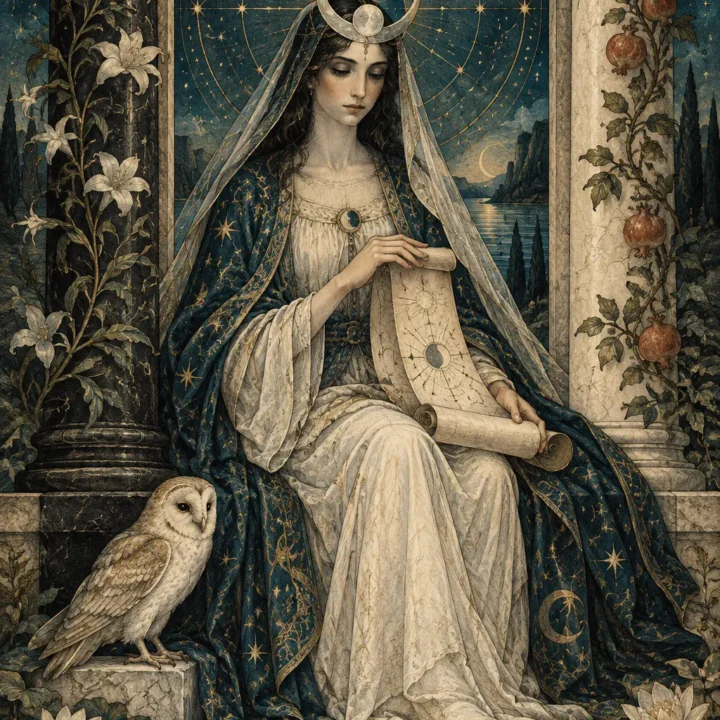
The High Priestess
intuition, contemplation, inner knowledge, privacy
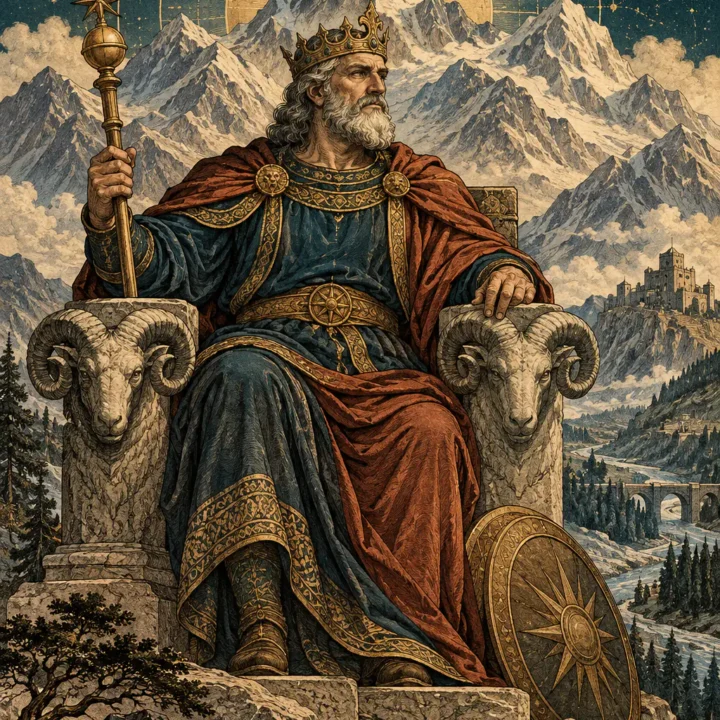
The Emperor
structure, reliability, discipline, leadership
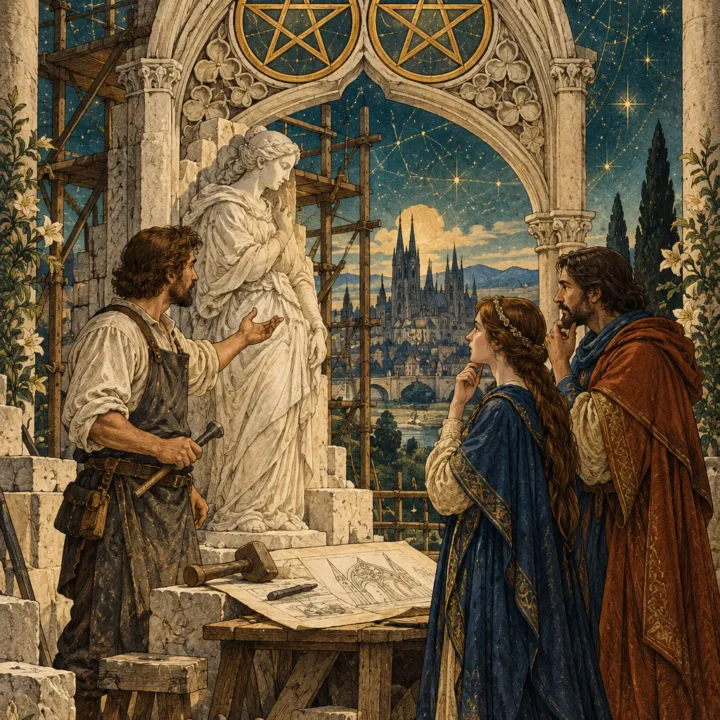
Three of Pentacles
skill, collaboration, apprenticeship, useful feedback

Page of Pentacles
study, careful observation, apprenticeship, practical news
Sources and further reading
- Arthur Edward Waite, The Pictorial Key to the Tarot, Part II, The Hierophant Read the text
- S. L. MacGregor Mathers and Harriet Felkin, Book T, Golden Dawn attributions (Hierophant, Taurus) Read the text
- Victoria and Albert Museum, A history of tarot cards Read the text