The Emperor Tarot Card Meaning
A ruler sits on a ram-headed stone throne beneath bare mountains. The Emperor asks what makes power trustworthy and which boundaries can give a life stability.
- structure
- reliability
- discipline
- leadership
- boundaries
Card at a glance
- Number
- IV
- Element
- Fire
- Astrology
- Aries (Golden Dawn)
- Keywords
- structure, reliability, discipline, leadership, boundaries
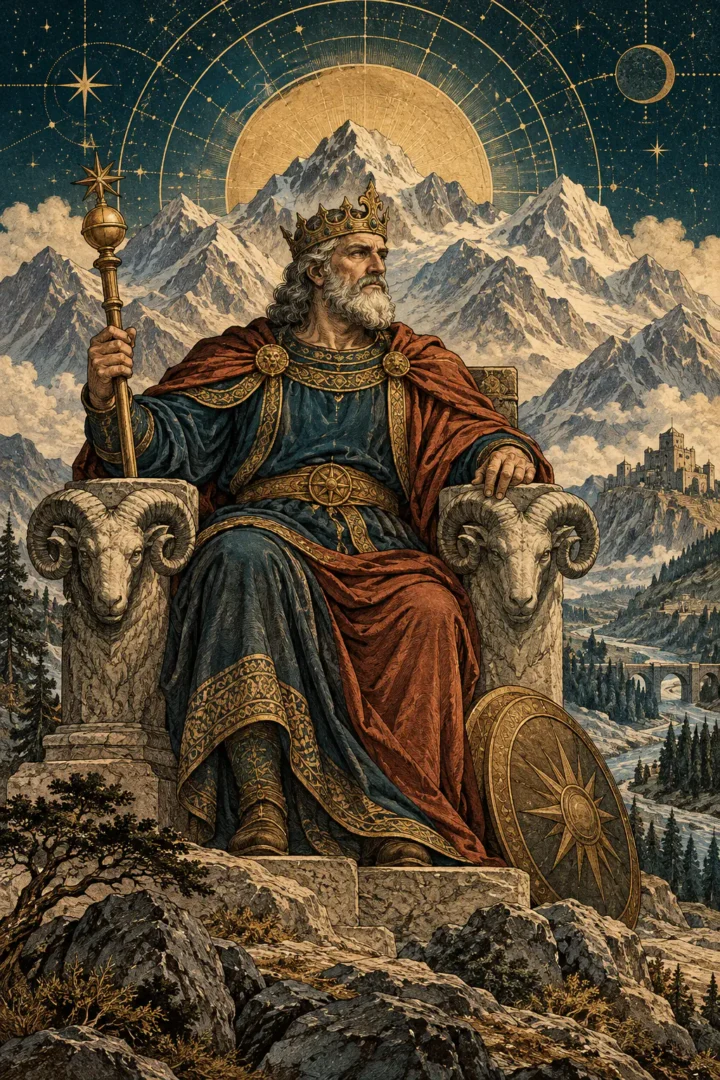 IV · The Emperor
Upright meaning
Structure, reliability and discipline
Upright, The Emperor often appears when it is time to make a plan someone can rely on. A project may need a clear owner. A household might need an agreement about responsibilities. You may be ready to set a boundary you have avoided because it could disappoint somebody.
- Structure
- Reliability
- Discipline
- Leadership
- Boundaries
Reversed meaning
Domination, rigidity and poor leadership
Reversed, The Emperor can point toward a troubling imbalance of power. Someone may insist on being obeyed while refusing to explain their decisions. Rules may change whenever the person in charge feels challenged. If that pattern appears in your life, your lived experience matters more than the card’s symbolism.
- Domination
- Rigidity
- Poor leadership
- Disorder
- Fear of responsibility
Card symbolism
-
The stone throne and ram heads
The throne looks built to last. Four rams’ heads decorate it, echoing the astrological association with Aries in Golden Dawn tarot.
-
The armor beneath his robes
His armor is visible at the edges of the red clothing. Even on his throne, he is prepared for conflict.
-
The sceptre and globe
The Emperor carries an ankh-shaped sceptre and a globe. They give his authority weight in the world beyond the throne.
-
The barren mountains
Bare peaks rise behind him. Few green things interrupt the rocky landscape.
-
The red robe and white beard
The red garment brings warmth, force, and determination to a severe image. His white beard suggests age and experience, though the card itself cannot guarantee that an authority figure is wise.
In depth interpretation
The Emperor sits on a stone throne beneath bare mountains. Rams’ heads are carved into its arms; his red robes partly conceal a suit of armor. He holds a sceptre and an orb, signs of a ruler whose decisions reach beyond himself. The landscape is stern, and the throne looks cold. Yet he sits as though he has spent years learning how to remain there.
The Emperor speaks of order, authority, responsibility, and the foundations that make a life dependable. Upright, he often appears when a decision calls for clear limits, patient planning, or the courage to take charge. Reversed, he can expose rigid control, unreliable leadership, or your own uncertainty about the right to make a decision.
When you draw this card, imagine taking the Emperor’s seat for a moment. What would you feel responsible for? Who would be affected by the choices you made?
The spiritual meaning of The Emperor
There are seasons when freedom feels like a wide-open field. At other times, what you long for is a strong door, a promise kept, or a place where you know what to expect. The Emperor belongs to those moments when a reliable structure becomes a kind of care.
In spiritual readings, he represents the person who accepts the weight of shaping a life. Perhaps you have inherited responsibilities that once belonged to somebody else. Perhaps you are ready to decide what you believe and live by those convictions. His throne invites you to consider the authority that comes from keeping faith with yourself.
His shadow deserves equal attention. Rules become painful when they exist only to maintain someone’s position. You can admire the Emperor’s steadiness while questioning the way power is being used. A wise ruler needs the courage to hear that a law is causing harm.
The symbols in The Emperor card
Pamela Colman Smith’s Rider-Waite-Smith image is filled with sharp edges, stone, and symbols of rulership. The Emperor seems rooted in a place where little can survive without preparation. Look beyond his stern expression and ask what his kingdom requires.
The stone throne and ram heads
The throne looks built to last. Four rams’ heads decorate it, echoing the astrological association with Aries in Golden Dawn tarot. Rams can suggest drive, initiative, and the will to face resistance. The stone adds a different quality: endurance. In a reading, this detail can point to a decision that needs to hold firm over time.
The armor beneath his robes
His armor is visible at the edges of the red clothing. Even on his throne, he is prepared for conflict. That image can be reassuring when you need protection, though it also raises a tender question. What happens to someone who has grown so accustomed to defending themselves that they struggle to set the armor aside?
The sceptre and globe
The Emperor carries an ankh-shaped sceptre and a globe. They give his authority weight in the world beyond the throne. You might read the objects as a reminder that leadership has consequences for living people. Promises, resources, and rules all reach farther than the person who makes them.
The barren mountains
Bare peaks rise behind him. Few green things interrupt the rocky landscape. The picture conveys strength gained through difficult terrain, and perhaps a life shaped by necessity. When the mountains draw your eye, consider whether your present situation calls for endurance, or whether you have been living in a state of defense long after the danger passed.
The red robe and white beard
The red garment brings warmth, force, and determination to a severe image. His white beard suggests age and experience, though the card itself cannot guarantee that an authority figure is wise. You may have learned the difference by meeting people who hold impressive titles and people whose judgment has genuinely earned your trust.
The Emperor upright meaning
Upright, The Emperor often appears when it is time to make a plan someone can rely on. A project may need a clear owner. A household might need an agreement about responsibilities. You may be ready to set a boundary you have avoided because it could disappoint somebody.
Imagine taking over a community group that has survived on good intentions and last-minute favors. Everyone cares, yet important tasks keep falling through the cracks. The Emperor could describe the moment you create a simple schedule, share responsibilities, and make it possible for the group to keep serving people.
He also reminds you to honor your own commitments. A boundary becomes more believable when you respect it yourself. Steady effort is especially powerful in situations where promises have been made too freely.
The Emperor reversed meaning
Reversed, The Emperor can point toward a troubling imbalance of power. Someone may insist on being obeyed while refusing to explain their decisions. Rules may change whenever the person in charge feels challenged. If that pattern appears in your life, your lived experience matters more than the card’s symbolism.
There is another possibility: a situation has been left without enough guidance. Decisions drift, responsibilities remain vague, and nobody knows what will happen next. The reversal can encourage you to name what is missing and consider which responsibilities are yours to claim.
On a personal level, this card sometimes speaks to a difficult history with authority. If control has hurt you before, even a reasonable plan may feel like confinement. You can develop a structure that answers your current needs and change it when life changes.
The Emperor in love and relationships
In love, The Emperor often suggests seriousness and a desire for stability. Someone may express affection by showing up when promised, remembering commitments, or taking a practical problem off your shoulders. For a couple building a home or raising children, that reliability can feel deeply loving.
The relationship still needs room for both people to make choices. If one partner decides what the other should wear, whom they can see, or how they should spend their money, those behaviors deserve attention in their own right. A tarot reading cannot make controlling behavior safe.
For an established couple, the card might suggest revisiting the rules you have quietly built together. Are they agreements you both chose? Do they leave space for changing circumstances and honest disagreement?
The Emperor as feelings
As a feelings card, The Emperor may suggest respect, protectiveness, seriousness, or a wish to build a lasting connection. The emotional expression can be reserved. Some people show affection through planning and practical help.
The shadow is a desire to manage the relationship’s terms too tightly. The card cannot tell you what someone privately feels. Notice whether the person listens to your wishes and respects the boundaries you state.
The Emperor for career and work
Career readings bring the Emperor’s relationship with authority into focus. He can symbolize a manager, business owner, mentor, institution, or the part of you that is ready for a leadership role. A promotion may ask you to make difficult decisions instead of being the person who simply carries them out.
Imagine leading a team with talented people and unclear expectations. The Emperor may suggest defining what success looks like, deciding who owns each task, and creating a way to resolve disagreements. The test of a useful system is whether it makes people more capable of doing their work.
Reversed, this card can point toward micromanagement, inconsistent rules, or a leader who avoids accountability. If you are in charge, ask where your team needs greater clarity and whether people feel free to question your reasoning.
The Emperor for money
With money, The Emperor often emphasizes planning and knowing the limits of your resources. A budget, emergency reserve, or written agreement may matter more than a sudden burst of optimism. The card can be especially relevant when your decisions affect a household or business.
Reversed, examine the costs of excessive rigidity or decisions made to prove that you are in control. The right financial choice requires current information and an understanding of your obligations. Use the reading to explore the role security plays in your thinking.
The Emperor and spiritual practice
The Emperor has a place in spiritual life that is easy to miss. A quiet practice often depends on ordinary arrangements. You set aside a time to pray, protect a few minutes for meditation, or keep a weekly promise to study a sacred text. Returning to the practice gives it depth.
He can also invite you to examine whose authority you trust in spiritual matters. A teacher or tradition may offer valuable guidance. There is room for questions, discernment, and the freedom to step away from a relationship that asks for harmful obedience.
The Emperor as advice: define one boundary
If The Emperor appears as advice, think of a place where your life feels unsettled. Instead of attempting to control the entire situation, choose one responsibility or boundary you can name clearly.
Write three sentences in a journal. Begin with ‘What I am responsible for is…’ Continue with ‘What belongs to someone else is…’ Finish with ‘One promise I can keep this week is…’ You may find that the third sentence is the hardest to answer.
Look back at the throne. Its strength comes from having a foundation. A small, realistic promise is a useful place to start building one.
Is The Emperor a yes or no card?
The Emperor tends toward yes when you are asking about making a firm commitment, formalizing an agreement, creating a plan, or taking responsible leadership. Reversed, he may suggest a problem with the current arrangement of power or the reliability of the plan. The card cannot guarantee that an authority figure will be fair or that an institution will approve your request.
How to read The Emperor in a tarot spread
Notice the card’s position. As an opportunity, it can indicate dependable support, an invitation to lead, or a chance to put something on firmer ground. As a challenge, it may reveal rigid expectations or difficulty claiming responsibility. In an outcome position, it suggests a more structured phase of life, with the surrounding cards showing how that structure may feel.
Suppose you ask about becoming a team leader and draw The Emperor in the present, the Two of Wands as advice, and Justice as a possible outcome. This could suggest that you are ready to take responsibility, need to think beyond the next task, and will be judged partly by how fairly you make decisions. The reading offers a way to consider the role before accepting it.
A brief note on tarot tradition
This article reads the Rider-Waite-Smith Emperor illustrated by Pamela Colman Smith and first published in 1909. Waite described his ankh-shaped sceptre, globe, and ram-headed throne, and connected the figure with worldly authority and realization. The Emperor’s Aries correspondence comes from the Golden Dawn’s Book T. Older tarot decks pictured a sovereign ruler without necessarily using this later occult framework.
Frequently asked questions
Can The Emperor represent a father or authority figure?
Yes. Depending on the question, he can represent a father, mentor, manager, official, or anyone whose decisions shape the situation. The card can also describe qualities you are learning to develop within yourself.
How is The Emperor different from The Hierophant?
The Emperor centers on worldly rule, responsibility, and the structures that govern daily life. The Hierophant traditionally concerns teaching, established spiritual authority, and the transmission of beliefs. A spread containing both may invite questions about the institutions or traditions guiding your choices.
Does The Emperor always mean a man?
No. The figure is masculine in the Rider-Waite-Smith image, and traditional interpretations often connect him with fatherhood. His themes of authority, boundaries, and leadership can apply to a person of any gender.
What if The Emperor appears as an obstacle?
It may point to inflexible rules, a power struggle, an overbearing authority figure, or uncertainty about your own responsibility. The surrounding cards and the real situation can help you see which possibility deserves attention.

Keep reading
Explore the Major Arcana
Every card page names the tradition behind each meaning, so you can compare readings instead of taking one as fixed.
Cards to explore alongside this one
Their symbols reveal useful similarities and differences for your next reading.
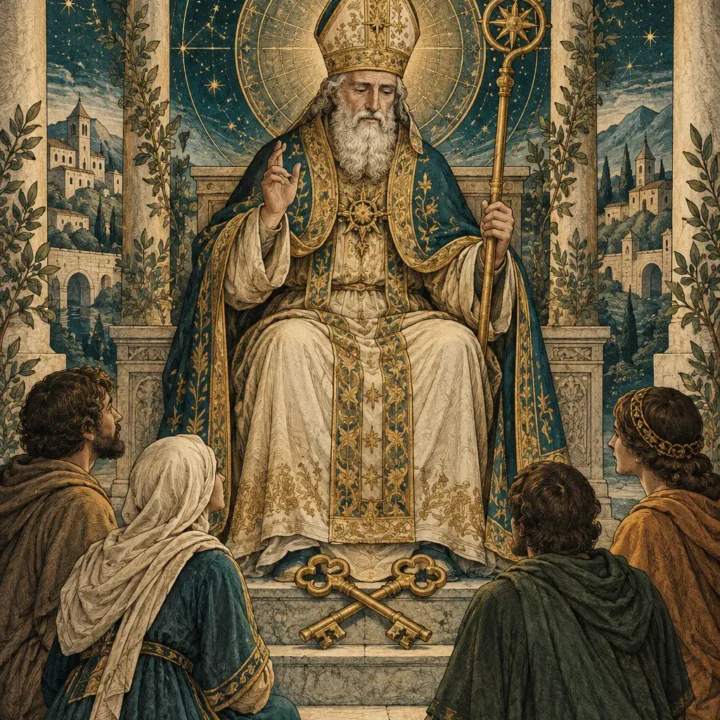
The Hierophant
spiritual teaching, tradition, mentorship, belonging
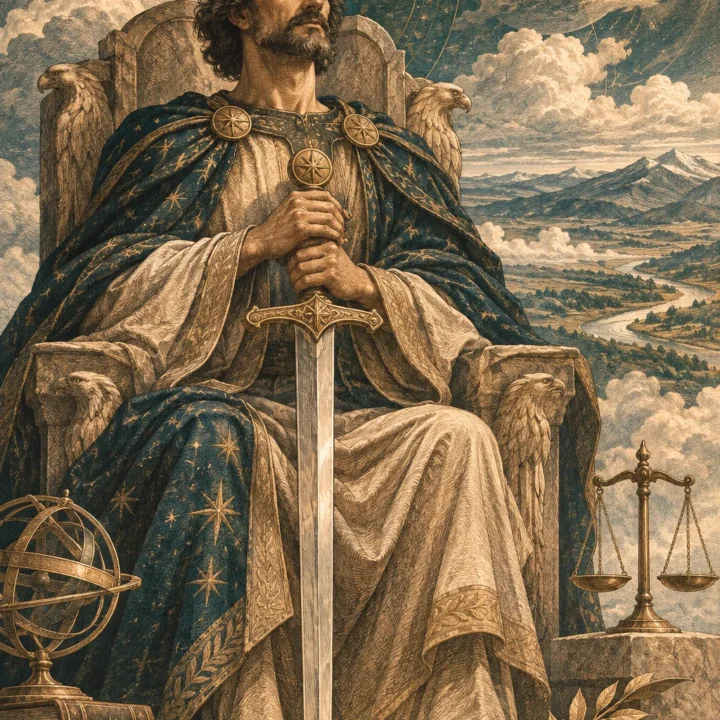
King of Swords
authority, judgment, clear thinking, responsibility
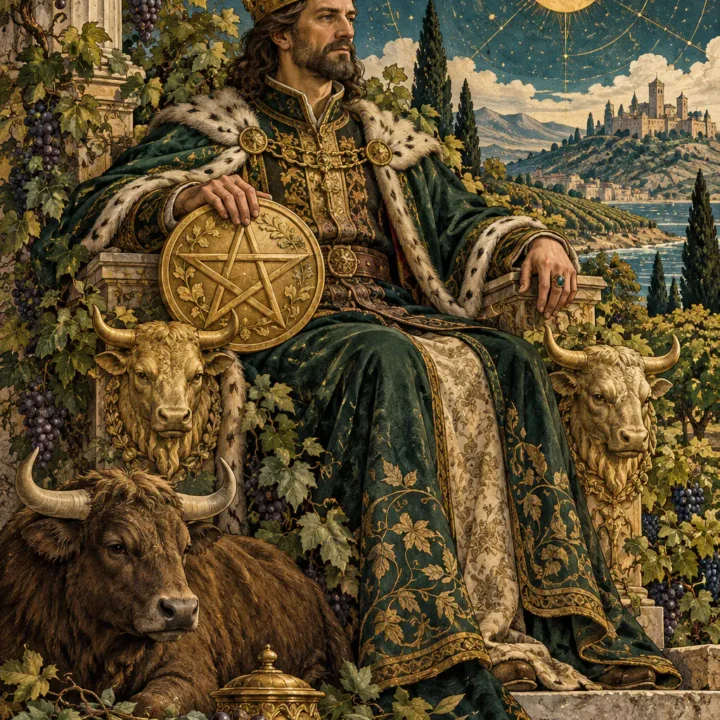
King of Pentacles
stewardship, experience, material security, sound judgment
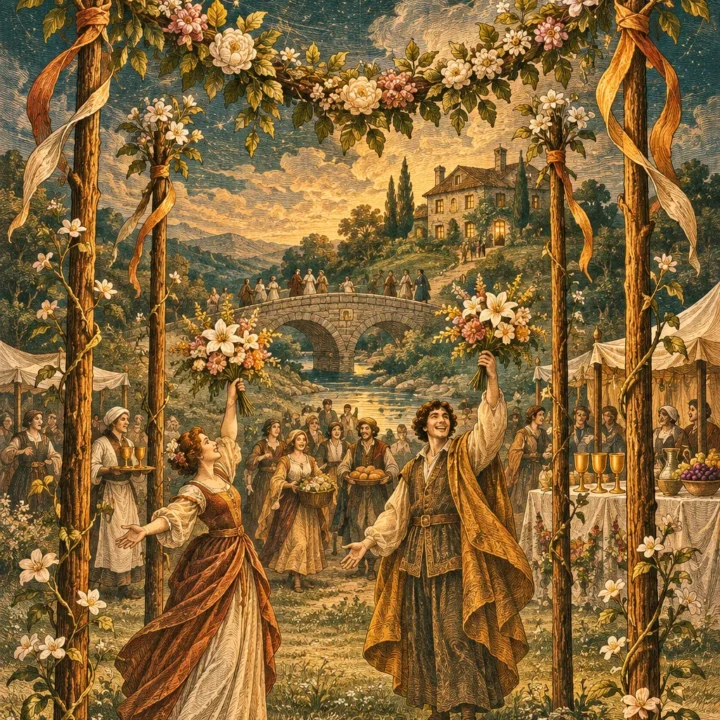
Four of Wands
welcome, celebration, peace, refuge
Sources and further reading
- Arthur Edward Waite, The Pictorial Key to the Tarot, Part II, The Emperor Read the text
- Golden Dawn tarot attributions, Book T as printed in The Equinox I(8), Emperor/Aries Read the text
- Victoria and Albert Museum, A history of tarot cards Read the text