Six of Wands Tarot Card Meaning
A rider crowned with laurel passes through a crowd. The Six of Wands speaks of recognized victory, important news, and the courage to be seen.
- victory
- recognition
- good news
- encouragement
- public progress
Card at a glance
- Number
- Six
- Element
- Fire
- Astrology
- Lord of Victory, Jupiter in Leo (Golden Dawn)
- Keywords
- victory, recognition, good news, encouragement, public progress, confidence
 Six · Six of Wands
Upright meaning
Victory, recognition and good news
Upright, the Six of Wands often appears when persistence is beginning to receive recognition. Your application has advanced, colleagues praise a successful project, or you finally see evidence that a difficult effort has brought real progress. Imagine finishing a demanding community performance. You have spent weeks rehearsing with others, sometimes unsure the whole thing would come together. Afterward the audience stands and applauds. The Six captures the joy of that moment, especially because the performance depended on people working together. There is a second historical thread worth preserving. In The Pictorial Key to the Tarot, A. E. Waite associated the Six with great news, such as something carried by a king's courier, and with the expectation that hope will be fulfilled. That older messenger meaning can be useful when the question is about an awaited result or announcement. It does not establish that a message will arrive on a particular day. When reading for news, ask what result has been sought, whether a response is realistically expected, and what the surrounding cards suggest about the character of that news. The card is encouraging. Let it also remind you that recognition is most meaningful when it reflects a genuine effort or value.
- Victory
- Recognition
- Good news
- Encouragement
- Public progress
- Confidence
Reversed meaning
Fear, apprehension and disloyalty
Many contemporary readings interpret the reversed Six as praise withheld, embarrassment after a setback, or confidence made fragile by comparison. Someone may be working hard without acknowledgment. Another person may be more concerned with looking successful than with the quality of the work. Waite's reversed list takes a different turn. It includes apprehension and fear, along with treachery and disloyalty. His example of gates being opened to the enemy gives the reversal a much darker, more specific atmosphere than simple disappointment over missing applause. These meanings should not be blended into a prediction that somebody will betray you. If you are anxious about an awaited announcement, the card may help you name that fear. If trust in a team has actually been damaged, the historical wording may offer a symbolic way to examine that experience. There is a third possibility: the difficulty is your relationship with being seen. Perhaps you have achieved something meaningful but cannot enjoy it without comparing yourself to everyone else. Ask whose recognition you are seeking, and what would help you value your effort while the outcome remains uncertain.
- Fear
- Apprehension
- Disloyalty
- Overlooked achievement
- Insecurity or approval-seeking
Card symbolism
-
The two laurel wreaths
One wreath crowns the rider; another hangs from the wand he carries.
-
The horse and its rider
The rider sits visibly above the walking figures.
-
The crowd with staffs
People walk beside the horse, their staffs rising through the scene.
In depth interpretation
A rider passes through a gathered crowd, a laurel wreath around his head. He carries another wreath high on his wand, and the horse beneath him moves with steady ceremony. People on foot hold their own staffs nearby. We seem to have arrived just in time to witness a welcome, though the picture never tells us who first declared this person victorious.
The Six of Wands represents victory, recognition, encouraging news, and the confidence that comes when effort is seen. Upright, it often suggests a meaningful achievement becoming visible to others. Reversed, it can reveal the vulnerability of recognition, anxiety about a result, or fears of disloyalty. The historical interpretation includes important messages as well as triumph, making the card more varied than a simple promise of applause.
This rider has a moment in the sun. What will happen to the victory when the procession ends?
The spiritual meaning: allowing your victory to be witnessed
There are achievements that change how you feel about yourself before anyone else notices them. You finish a piece of work that once seemed beyond you. You learn to speak in public after years of hesitation. You make a difficult promise to yourself and keep it. Then somebody sees what it took.
The Six of Wands holds the warmth of being witnessed. The rider is elevated above the people walking alongside him, and the laurel marks his success. His victory belongs to a community that has gathered to acknowledge it.
This can feel wonderful. It can also leave you strangely exposed. Praise brings attention to a part of you that matters. You may wonder whether you deserve it or feel pressure to prove the achievement was no accident.
Receive encouragement without placing your whole identity in other people's hands. The Five of Wands depicts a crowd whose energy has not yet found agreement; the Six shows a rider welcomed by a crowd. The Seven of Wands asks what it takes to defend a position after the cheering ends. Praise feels more nourishing when it can rest on your own recognition of the effort.
If this image appears in a reading, think about the victory you are hoping for. Is it a private change, a result you are waiting to hear, or the moment when others finally understand the work you have done?
What the symbols in the Six of Wands reveal
The two laurel wreaths
One wreath crowns the rider; another hangs from the wand he carries. Laurel has long served as an emblem of victory and honor in European art. Smith repeats the motif so that achievement becomes unmistakable.
The wreaths can help distinguish a completed milestone from the wish to achieve one. In an outcome position, they may suggest recognition is part of the story. In a present position, they can point to progress you are ready to acknowledge.
The laurel does not identify a specific award, promotion, or competition result. Let the question and surrounding cards give the victory its scale.
The horse and its rider
The rider sits visibly above the walking figures. His horse moves through the gathering as though taking part in a procession. The animal's covered body and the rider's posture make the scene look ceremonial rather than like a charge into battle.
This is not the solitary authority of a king. The rider is being seen by a group, and his status exists in relation to them. In a reading about leadership, the card can ask how a person's achievements are made visible and what they do with the attention they receive.
The crowd with staffs
People walk beside the horse, their staffs rising through the scene. We do not know whether they are fellow participants, supporters, or simply witnesses. Smith leaves their individual reactions open.
Their presence matters because triumph is social here. A victory can gather a community, especially when several people worked toward a shared goal. It can also raise questions about who receives credit and whose contributions remain less visible.
If you draw this card after a collective achievement, remember the people whose work supported the outcome.
Six of Wands upright meaning: victory and important news
Upright, the Six of Wands often appears when persistence is beginning to receive recognition. Your application has advanced, colleagues praise a successful project, or you finally see evidence that a difficult effort has brought real progress.
Imagine finishing a demanding community performance. You have spent weeks rehearsing with others, sometimes unsure the whole thing would come together. Afterward the audience stands and applauds. The Six captures the joy of that moment, especially because the performance depended on people working together.
There is a second historical thread worth preserving. In The Pictorial Key to the Tarot, A. E. Waite associated the Six with great news, such as something carried by a king's courier, and with the expectation that hope will be fulfilled. That older messenger meaning can be useful when the question is about an awaited result or announcement.
It does not establish that a message will arrive on a particular day. When reading for news, ask what result has been sought, whether a response is realistically expected, and what the surrounding cards suggest about the character of that news.
The card is encouraging. Let it also remind you that recognition is most meaningful when it reflects a genuine effort or value.
Six of Wands reversed meaning: fear, disloyalty, and the need for approval
Many contemporary readings interpret the reversed Six as praise withheld, embarrassment after a setback, or confidence made fragile by comparison. Someone may be working hard without acknowledgment. Another person may be more concerned with looking successful than with the quality of the work.
Waite's reversed list takes a different turn. It includes apprehension and fear, along with treachery and disloyalty. His example of gates being opened to the enemy gives the reversal a much darker, more specific atmosphere than simple disappointment over missing applause.
These meanings should not be blended into a prediction that somebody will betray you. If you are anxious about an awaited announcement, the card may help you name that fear. If trust in a team has actually been damaged, the historical wording may offer a symbolic way to examine that experience.
There is a third possibility: the difficulty is your relationship with being seen. Perhaps you have achieved something meaningful but cannot enjoy it without comparing yourself to everyone else. Ask whose recognition you are seeking, and what would help you value your effort while the outcome remains uncertain.
Does the Six of Wands mean fame or a victory announcement?
The Six of Wands is strongly associated with visible success and favorable news. Fame is only one possible scale of recognition. A small community celebration, a positive message after an application, or a teacher acknowledging progress may express the card more naturally.
The symbolism offers three related possibilities: an achievement, other people's recognition of it, or news that carries the result. The question determines which is relevant.
In a reading about whether someone will win a competition, the laurel emphasizes the idea of victory, but no card can guarantee the result. In a reading about a delayed reply, Waite's courier association makes communication particularly relevant. In a question about self-confidence, the crowd may draw attention to how public approval affects your sense of worth.
This distinction prevents the card from becoming a blanket promise that the world is about to applaud you.
Six of Wands in love and relationships
In love, the Six of Wands often suggests appreciation and the pleasure of feeling openly valued. A partner might acknowledge your effort, celebrate an achievement with you, or introduce you warmly to important people in their life.
For someone dating, the card can reflect growing confidence or a wish to be chosen and appreciated. Notice what the other person shows through consistent action. Public attention can feel exciting while still leaving questions about the relationship's quieter moments.
For an established couple, the Six may mark a shared victory after a challenging period. Perhaps you have completed a demanding move, helped each other through a difficult season, or reached a milestone neither of you could have managed alone.
Reversed, the reading might concern feeling overlooked, measuring affection through social approval, or being anxious about what other people think of the connection. Waite's disloyalty theme should never be treated as evidence that a partner has betrayed you. Address actual behavior with care.
Six of Wands as feelings
As feelings, this card can suggest admiration, pride, attraction, or the pleasure of being associated with someone. It may also symbolize a desire for acknowledgment. A tarot reading cannot establish another person's private motives or commitment; communication gives the symbolism a real-world context.
Six of Wands for career, work, and money
At work, the Six of Wands is particularly relevant to recognition. It can accompany positive feedback, an accepted proposal, a professional milestone, or a leadership role that makes your contribution visible.
Imagine a team whose careful work has helped a community center reopen after repairs. A local newspaper writes about the reopening and praises the project leader. The achievement is genuine, but the team may need the leader to share the recognition. The Six asks how success is acknowledged and what happens to a group when credit becomes concentrated in one person.
In a money reading, the card can reflect satisfaction after reaching a practical goal or receiving favorable news about work. The laurel should not be used to predict investment returns or justify spending to maintain an impressive appearance.
Reversed, a lack of acknowledgment may deserve a specific conversation about expectations and contribution. If anxiety about status is driving financial decisions, return to the facts and to the values the money is meant to support.
Jupiter in Leo and the Lord of Victory
In the Golden Dawn's Book T, the Six of Wands is the Lord of Victory, associated with Jupiter in Leo. The tradition emphasizes triumph following strife, while its treatment of dignity leaves room for self-importance and pride as shadows of the same force.
The Golden Dawn's symbolic design differs from Smith's laurelled horseman. The correspondence belongs to that particular system rather than to every historical tarot deck.
For a spiritual reading, the title deepens a question already visible in Smith's scene. When you receive a gift of success, can you use the attention to encourage others as well? Victory can become a moment of gratitude and renewed responsibility.
How to read the Six of Wands in a spread
In the present position, the Six may describe recognized progress or an important result that has become visible. As advice, it can encourage you to acknowledge good work and share credit. As an outcome, it often introduces the possibility of success or news, while leaving the actual decision and timing uncertain.
Worked reading: will my team's project receive the recognition it deserves?
Imagine drawing the Six of Wands for the possible outcome, the Three of Pentacles for the effort behind it, and The Sun for the wider lesson.
The Six brings the theme of public recognition into focus. The Three of Pentacles shows craftsmanship and collaboration, inviting you to examine who has contributed to the work. The Sun adds openness, clarity, and shared joy.
Together, the cards support celebrating the team's contribution and making the work visible. They do not promise a prize. If recognition comes, the reading suggests keeping the collaboration in view rather than allowing one name to stand for everyone's efforts.
Now imagine drawing the Six beside the Seven of Pentacles instead of The Sun. The question might shift toward patient evaluation: which results demonstrate progress, and what recognition is still too early to expect? The same laurel wreaths take on a different meaning when the surrounding card concerns waiting for the harvest.
Six of Wands as advice: receive the laurel, remember the crowd
Sit with the image for a moment. Name one accomplishment you have been tempted to minimize. What did you do that made the result possible? Who supported you, taught you, or trusted you along the way?
Write the names down and acknowledge what each person contributed. Then allow yourself to enjoy your part in the work. You can take pleasure in being recognized without needing to be the only person in the procession.
If the card appears reversed, consider where praise has become a burden. You are allowed to be proud of an honest effort while still learning.
Is the Six of Wands a yes or no card?
The Six of Wands generally leans yes for questions about recognition, a promising result, or completing a goal after effort. Its historical news association may also be relevant to an awaited response. Reversed, look at fear, trust, and the possibility that public acknowledgment will not match the work done. Neither orientation promises a specific outcome.
A note on tradition
Pamela Colman Smith illustrated the Six of Wands as a rider bearing laurel and moving among people on foot. Waite described victory and important news in the upright meaning, with fear and disloyalty among his reversed associations. In the Golden Dawn tradition, the Six is titled Lord of Victory and associated with Jupiter in Leo. Modern readers frequently emphasize recognition, confidence, and the pressures of approval.
These strands of interpretation help readers choose an approach suited to their question without turning the card into an unquestionable prediction.
Frequently asked questions
Does the Six of Wands mean a message is coming?
Waite associated it with important news, so a message can be relevant when the question is already about a result or announcement. The card cannot guarantee contact or reveal when someone will write.
Is the Six of Wands the same as The Sun?
Both cards can feel positive. The Six of Wands centers a recognized achievement and the people who witness it. The Sun reaches toward joy, illumination, and a fuller sense of openness. Their relationship in a spread can help distinguish public success from the wider feeling of vitality.
Does a reversed Six of Wands mean betrayal?
Disloyalty is a documented historical reversed association. The card does not prove deception by a partner, colleague, or friend. Interpret it alongside real circumstances and the method you use for reversals.
Does the Six of Wands always mean fame?
No. The rider's procession can describe recognition at many scales. A teacher's encouragement or a team's well-earned celebration may hold the same essential symbolism.

Keep reading
Explore the Wands
Every card page names the tradition behind each meaning, so you can compare readings instead of taking one as fixed.
Cards to explore alongside this one
Their symbols reveal useful similarities and differences for your next reading.

The Chariot
resolve, direction, self-command, movement

The Sun
joy, openness, clarity, confidence
Five of Wands
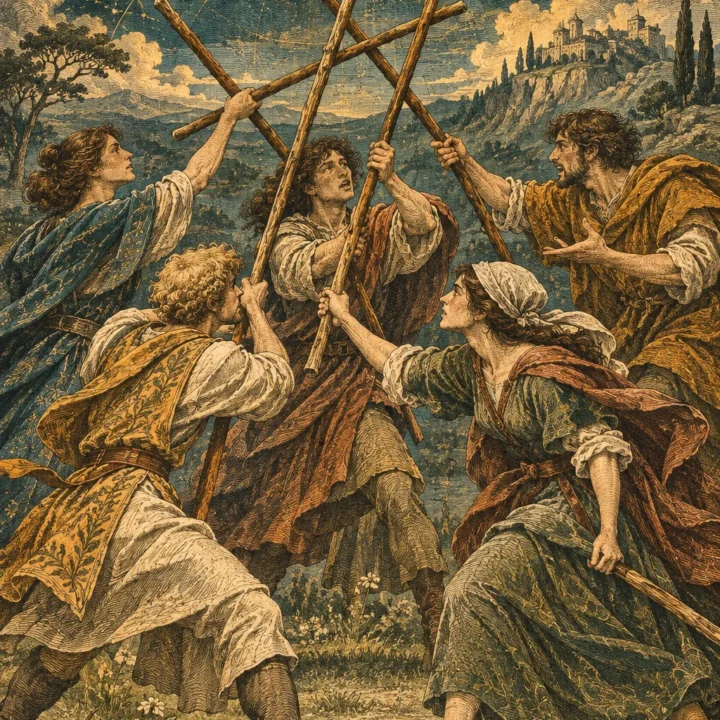
rivalry, strife, competition, disagreement

Six of Pentacles
generosity, assistance, reciprocity, shared resources
Sources and further reading
- Arthur Edward Waite, The Pictorial Key to the Tarot, Suit of Wands (Six) Read the text
- Golden Dawn, Book T, Lord of Victory and Jupiter in Leo Read the text
- The Morgan Library & Museum, Pamela Colman Smith and the 1909 deck Read the text
- Biddy Tarot, Six of Wands contemporary interpretive baseline Read the text