Four of Swords Tarot Card Meaning
A stone knight lies in stillness beneath stained glass. The Four of Swords asks where rest, reflection, and the quiet work of recovery are needed.
- rest
- retreat
- contemplation
- recovery
- sanctuary
Card at a glance
- Number
- Four
- Element
- Air
- Astrology
- Lord of Rest from Strife; Jupiter in Libra (Golden Dawn)
- Keywords
- rest, retreat, contemplation, recovery, sanctuary, mental quiet
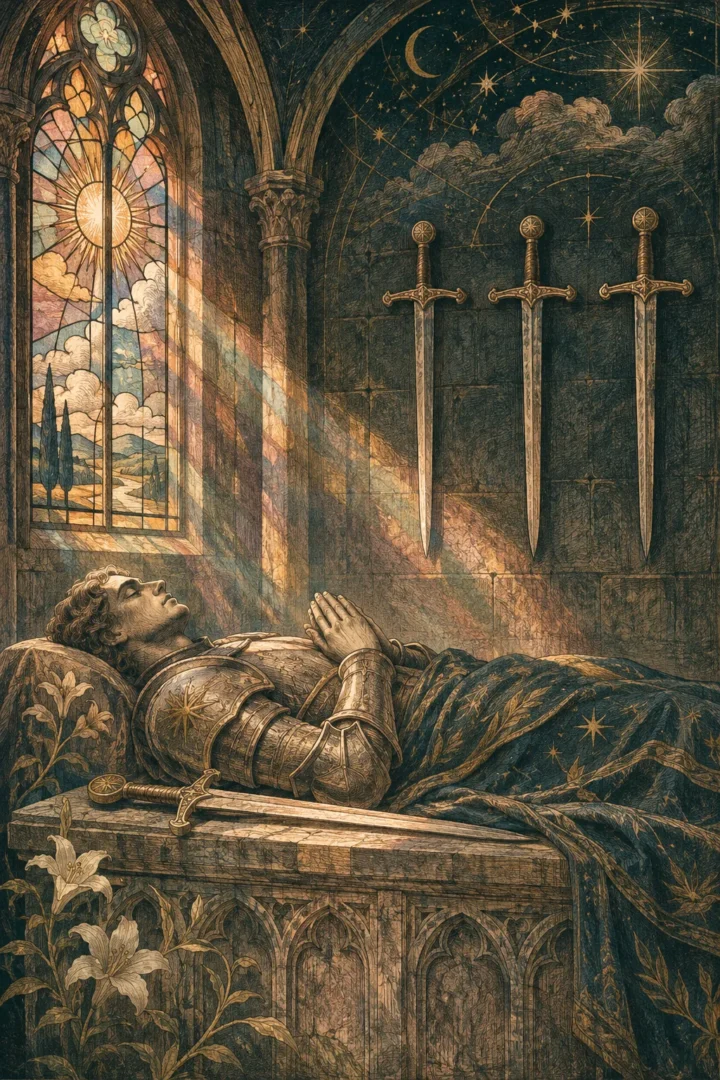 Four · Four of Swords
Upright meaning
rest, retreat, thoughtful recovery
Upright, the Four of Swords invites rest, contemplation, and a deliberate pause after conflict or mental strain.
- rest
- retreat
- thoughtful recovery
Reversed meaning
restlessness, returning too soon, difficulty finding quiet
Reversed, the card may reveal that rest is being interrupted or that a period of retreat is coming to an end.
- restlessness
- returning too soon
- difficulty finding quiet
Card symbolism
-
The resting effigy
Smith's figure is a sculpted knight on a tomb, with hands joined in prayer, giving the scene a contemplative rather than sleeping quality.
-
The three wall swords and the fourth below
Three blades hang above while a fourth lies along the resting figure's base, visually setting conflict aside.
-
The stained-glass window
Colored glass and a religious interior evoke sanctuary, devotion, and a protected interval.
In depth interpretation
A knight lies motionless in a chapel, hands joined as if in prayer. Three swords hang on the wall; a fourth rests beside the stone figure. Colored light enters through a stained-glass window. After the sharp weather of the Three of Swords, the scene has become quiet.
The Four of Swords represents rest, retreat, contemplation, recovery, and temporary withdrawal from conflict. Upright, it asks you to make room for stillness. Reversed, it may point to rest that has been interrupted or to the careful return to activity after a needed pause.
The card has a simple question for you: where are you asking yourself to keep fighting when you need time to recover?
The spiritual meaning: making a sanctuary
There are seasons when action is necessary and seasons when the bravest act is to stop. The Four belongs to the second kind. It does not demand permanent withdrawal. It creates a protected interval in which your thoughts can settle.
You may have had a difficult conversation, finished a demanding project, or lived through uncertainty for longer than expected. Even when the immediate problem is over, your mind may continue rehearsing what happened.
The card invites you to notice the difference between being physically away from a situation and truly stepping out of its grip. Stillness takes many forms: prayer, quiet music, a walk without your phone, a short holiday, or an evening when no decision is required.
Spiritual rest is not a performance of perfect calm. It can begin by allowing yourself to be tired.
What the Four of Swords symbols reveal
The knight is an effigy
The central figure in Smith’s Rider-Waite-Smith image is a stone knight lying upon a tomb, not simply someone asleep in bed. The hands are folded in an attitude of prayer. Waite describes a funeral monument and solitude among the card’s associations.
Modern readers often focus on restorative rest. The tomb imagery gives the pause greater depth: it is a moment for considering what matters when ordinary striving is set aside.
The image should not be read as a prediction of death. Its visible stillness is the subject.
Three swords above, one below
The three upright blades hang on the wall, while a fourth rests along the figure’s base. The swords remain present, but nobody holds them.
This is a useful picture of laying down a conflict without pretending it has vanished. You may return to the issue later. For now, it can remain outside the space in which you are resting.
The stained-glass window
A small stained-glass scene brightens the wall. Its religious setting suggests a place in which quiet has purpose. Prayer is one possible response, but the invitation can also be understood as contemplation according to your own practice.
What would a sanctuary look like in your everyday life? It might be far simpler than a chapel.
Four of Swords upright: a pause that actually restores
Upright, the card is often an invitation to reduce demands and step back from conflict. If you have been holding several responsibilities at once, it can remind you that attention and energy are finite.
Imagine returning from a family visit that involved several difficult conversations. You have ideas about what to do next, yet every attempt to write the perfect response leaves you more agitated. The Four suggests waiting until you have slept and given yourself a quiet day.
Rest does not solve every problem. It may help you approach one with more perspective.
In a decision spread, the card can suggest that more urgent action is not necessarily more useful. Ask whether the matter genuinely requires an answer now.
Four of Swords reversed: what keeps interrupting the quiet?
Reversed, the Four may reveal a retreat that has lost its restoring quality. Perhaps you are lying on the sofa while mentally answering messages, or trying to relax under a growing burden of guilt.
It can also describe emerging from a necessary period of withdrawal. You may feel ready to rejoin a community, resume work, or open a conversation that once felt overwhelming.
The surrounding cards help distinguish these possibilities. With Nine of Swords, intrusive worries may be occupying the pause. With The Sun, the emphasis might fall on returning to ordinary pleasures.
If persistent exhaustion or sleep difficulties affect daily life, practical care and professional support may be valuable. A tarot card cannot diagnose the cause.
Four of Swords in love and relationships
In love, the Four may suggest taking space after a disagreement, especially when both people need time to reflect before speaking again. That pause works best when its purpose is clear and it is not used to punish someone through silence.
If you are single, the card can describe a period when dating is not your priority. You may prefer to regain your own rhythm before investing in a new connection.
Reversed, ask whether distance has become avoidance or whether you are ready to reconnect. It cannot tell you whether someone else will return. Their words and choices matter.
The Four of Cups describes emotional disengagement in a different way. The Four of Swords is more about conscious retreat and mental recovery.
Career and money: rest is part of a sound plan
The card often appears around overwork, demanding study, and decision fatigue. A brief pause can help you review priorities, but it is not an instruction to abandon your responsibilities.
At work, consider what can wait, what can be delegated, and what needs a clear boundary. A quiet planning session may offer more than another frantic hour.
For financial questions, this card favors slowing down to understand a commitment. It cannot promise that waiting will improve a price or prevent a loss.
Four of Swords, Four of Cups, and the Hermit: three kinds of stillness
These cards can all appear when someone has withdrawn, but their silences feel different. The Four of Swords lays the sword down after strain: quiet is restorative. The Four of Cups sits before an offered vessel and may be questioning whether life still nourishes it. The Hermit goes into solitude in search of understanding.
Imagine a friend who has stopped responding to invitations. The Four of Swords might invite you to respect a need for rest. The Four of Cups raises the possibility that something about the relationship no longer feels engaging. The Hermit emphasizes a personal search that may not be about you at all. A card cannot tell you which explanation is true; a respectful question can.
In an advice position, the Four of Swords may suggest a defined break from a problem. As an obstacle, it can show withdrawal that has gone on so long that necessary action is being postponed. As an outcome, it often favors a calmer interval rather than a dramatic resolution.
Worked reading: how can I recover from a difficult week?
Imagine that work pressure and family obligations have left you irritable. You draw the Four of Swords for your immediate need, The Hermit for a helpful resource, and Six of Pentacles for the practical adjustment.
The Four asks for a genuine pause. The Hermit suggests time alone with your thoughts, away from outside opinions. The Six of Pentacles introduces the question of support and fair exchange: have you been taking responsibility for things other people could help carry?
Together, the cards invite a smaller, kinder plan. You might reserve one quiet evening, ask someone to take a task, and postpone a non-urgent decision.
If Eight of Wands appeared instead of the Hermit, the reading would need to consider genuinely urgent communication. Stillness is meaningful partly because it is chosen with awareness of real obligations.
Rest from Strife in the Golden Dawn
Book T calls the Four of Swords the Lord of Rest from Strife and associates it with Jupiter in Libra. The title evokes the space made after opposition. Waite’s account includes retreat, solitude, and sepulchral imagery.
Smith’s chapel scene bridges these older motifs with today’s language of recovery. The history does not require treating the tomb as a literal omen.
Four of Swords as advice: set one thing down
Pick one problem that you can responsibly put aside for a short, defined period. Write the next action on a note, then leave it there. If prayer or meditation belongs to your practice, spend a few minutes sitting with the image of the resting knight.
The aim is to offer your attention somewhere safe to land.
Frequently asked questions
Is the Four of Swords a yes or no card?
It frequently suggests wait, rest, or reconsider the timing. For a choice that does not require immediate action, give yourself room to think. It does not promise that delay will produce a particular outcome.
Does the Four of Swords mean illness?
It has historical associations with convalescence and withdrawal, but a tarot card cannot identify illness or replace medical advice.
Does it mean someone wants to be alone?
It may symbolize a need for space in a relationship reading. Only the person involved can confirm what they want.
Why is there a tomb on the Four of Swords?
Smith depicts a recumbent knight effigy, drawing on the visual language of remembrance, devotion, and stillness. The image deepens the theme of retreat without predicting death.
How is it different from The Hermit?
The Hermit seeks guidance through intentional solitude. The Four of Swords emphasizes a restorative pause after mental or emotional strain.
Tradition note: The Rider-Waite-Smith scene was illustrated by Pamela Colman Smith. Waite’s description foregrounds retreat and tomb imagery, while the Golden Dawn title Rest from Strife frames it as a pause after conflict. Modern language about burnout and recovery is an application, not a diagnosis or a fixed prediction.

Keep reading
Explore the Swords
Every card page names the tradition behind each meaning, so you can compare readings instead of taking one as fixed.
Cards to explore alongside this one
Their symbols reveal useful similarities and differences for your next reading.

The Hermit
reflection, solitude, discernment, inner guidance
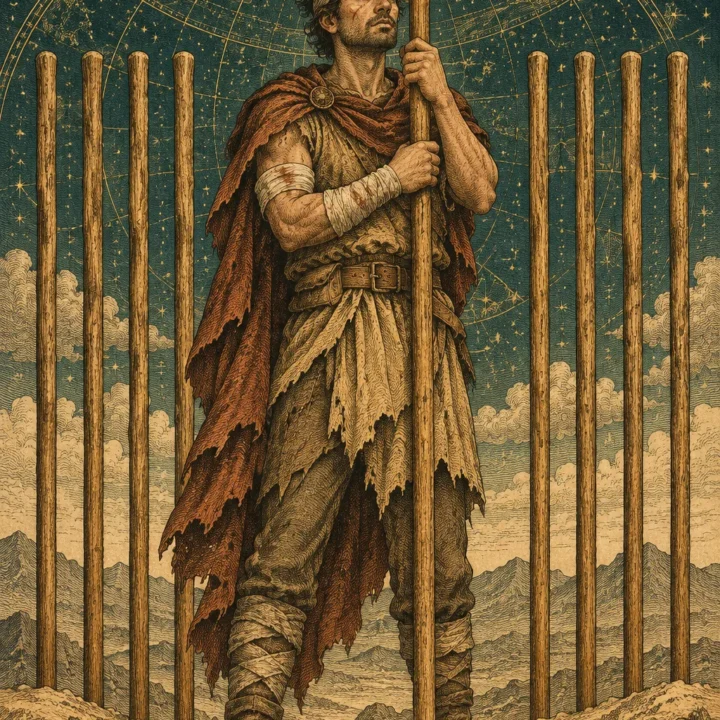
Nine of Wands
strength under pressure, vigilance, perseverance, resilience
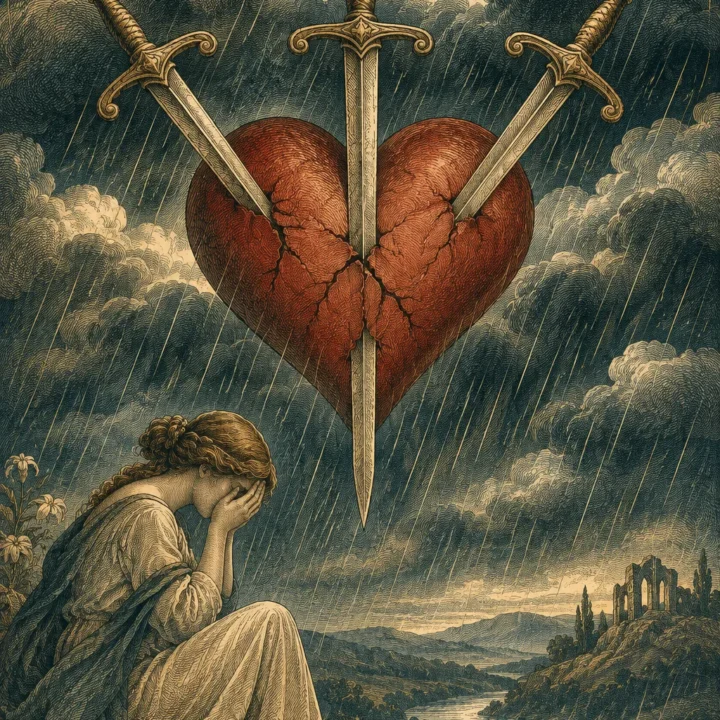
Three of Swords
heartbreak, grief, separation, painful truth
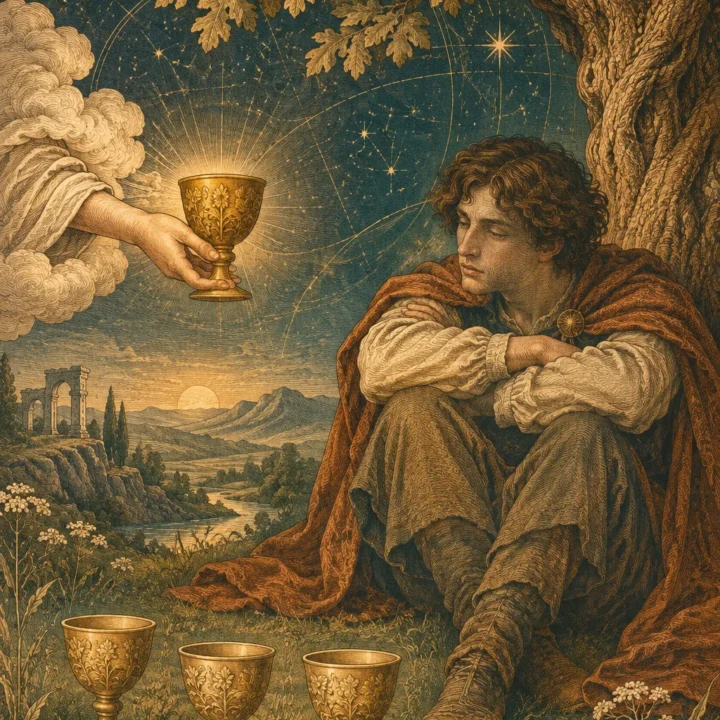
Four of Cups
emotional weariness, discontent, boredom, introspection
Sources and further reading
- A. E. Waite, The Pictorial Key to the Tarot, Part III (Swords, Four of Swords) Read the text
- Golden Dawn, Book T, tarot titles, attributions, and card descriptions Read the text
- The Morgan Library & Museum, Pamela Colman Smith and her tarot art Read the text
- Victoria and Albert Museum, A History of Tarot Cards Read the text