Two of Wands Tarot Card Meaning
A figure holds the world in his palm and looks beyond his castle. The Two of Wands invites you to ask why outward success can still leave you longing for another horizon.
- vision
- established power
- longing
- ambition
- choices
Card at a glance
- Number
- Two
- Element
- Fire
- Astrology
- Lord of Dominion, Mars in Aries (Golden Dawn)
- Keywords
- vision, established power, longing, ambition, choices, wider possibilities
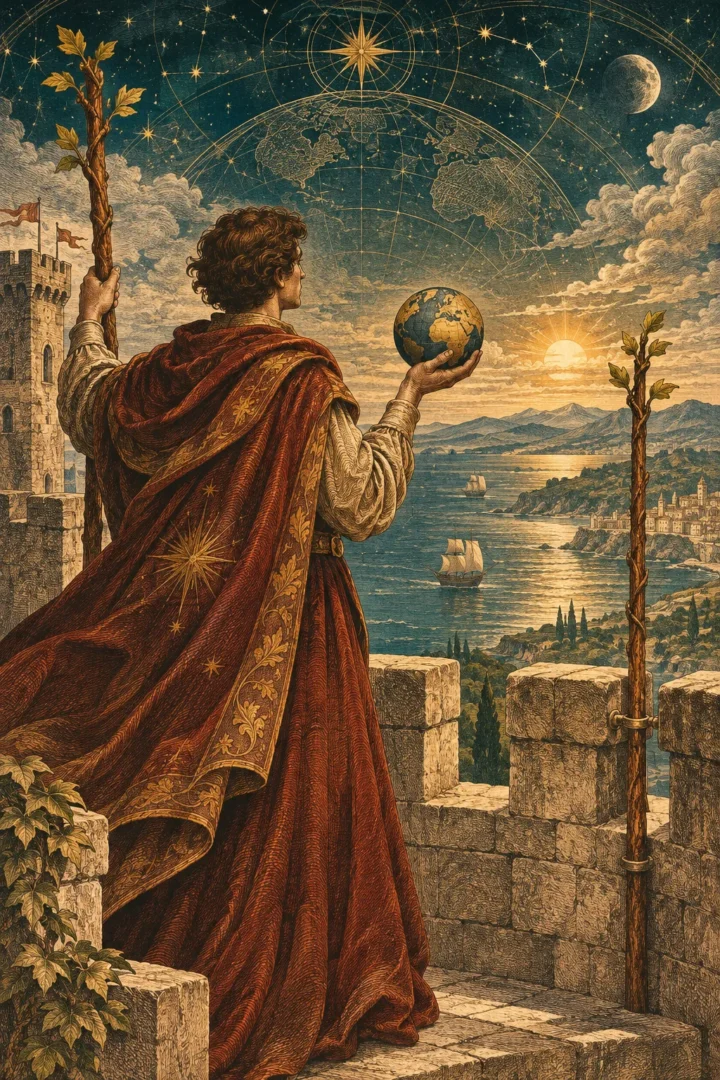 Two · Two of Wands
Upright meaning
Vision, established power and longing
Upright, the Two of Wands commonly appears at a moment when you can imagine a larger future because you already have some stability, skill, or experience. You may be considering a move, asking whether to grow a project, or realizing that a familiar role has become too narrow. Suppose a musician has spent years performing in a local venue and has been invited to tour. The invitation is exciting, but the venue is also the place where they learned their craft and built friendships. The Two asks them to consider what matters about each possibility. They may be ready to go, or they may discover a different kind of growth is calling. The card encourages you to take your longing seriously. What would the next stage give you that you do not currently have? The answer may be adventure, freedom, contribution, recognition, or something quieter. Because the figure already has an elevated vantage point, the Two is also a card of responsibility. Expanding your reach will affect other people and may place greater demands on your time and resources. It is worth knowing what success would cost, and whether that cost belongs to a life you want.
- Vision
- Established power
- Longing
- Ambition
- Choices
- Wider possibilities
Reversed meaning
Uncertainty, a change of heart and fear of the unknown
Reversed, the Two of Wands often describes uncertainty around the future. You might be reluctant to leave an established place or find that a grand plan no longer feels true to you. Reconsidering a direction is not automatically a failure. Waite's older reversed list is strikingly varied: surprise, wonder, enchantment, emotion, trouble, and fear. These are not all negative experiences. A reversal can therefore be read as an unsettled response to a changing world, especially when unexpected possibilities arrive. Imagine receiving an offer you would once have accepted immediately. You feel excited, then strangely unsure. The reaction may reveal an overlooked responsibility, a fear worth understanding, or a new awareness of what you love in your present life. Rather than treating the reversed Two as a command to be braver, give the feeling room. Ask what new information has entered the picture and whether the original vision still fits the person you are becoming.
- Uncertainty
- A change of heart
- Fear of the unknown
- Surprise
- Unsettled plans
Card symbolism
-
The globe: possibility held in the hand
The globe gives the scene its scale.
-
One wand held, one wand fixed
One staff is held close to the figure; the other is secured to the stone wall.
-
The battlements and distant shore
The castle gives the figure height and protection.
-
The rose, cross, and lily on the wall
Look toward the lower left of the Rider-Waite-Smith image.
In depth interpretation
A cloaked figure stands above the sea on a castle battlement. One wand rises from his hand, another is fixed to the stone, and he holds a small globe as though the whole world could fit inside his palm. He has a beautiful view, a position of strength, and somewhere safe to stand. Still, he looks beyond it.
The Two of Wands is a tarot card of vision, authority, choice, and the desire to discover what lies beyond a life you have already built. Upright, it often speaks of considering a new direction from a place of experience or security. Reversed, it can reveal hesitation, unsettling surprises, or a wish that has become difficult to understand.
There is a longing in this picture that makes it more than a card about planning. What if having something you once wanted has changed what you want next?
Why does the Two of Wands mean both success and sadness?
Many modern guides describe the Two of Wands as a planning card. That is a useful reading of the figure looking over the horizon, but it leaves out the most haunting part of the older tradition.
In The Pictorial Key to the Tarot, A. E. Waite presented sharply different meanings for this card. One side concerns riches, power, and magnificence; another brings sadness, chagrin, and suffering. He then pointed to the image of Alexander surrounded by worldly grandeur and still touched by sorrow. The figure has an impressive domain and remains turned toward something beyond it.
That tension matters when you interpret the card. The Two of Wands can describe someone ready to expand, especially when a real opportunity is present. It can also appear when outward achievement has not answered an inward question. The desire to travel, change jobs, or begin again may be rooted in genuine curiosity. Sometimes the imagined future is carrying a hope that success was supposed to satisfy.
Neither reading should be forced. If the card feels quiet or melancholy, allow that atmosphere to speak. The globe invites you to look outward, while the fortified wall asks you to remember what has already been gained.
With the Seven of Swords beside this card, planning gains an ethical question: what belongs in private preparation, and what needs to be shared with others before you act? Ambition can be thoughtful without becoming secretive for its own sake.
What the symbols in the Two of Wands reveal
The globe: possibility held in the hand
The globe gives the scene its scale. The figure surveys land and sea while holding a small version of the world. The image suggests reach, ambition, and a desire to understand possibilities beyond his present life.
A globe is also something you can turn in your hand without entering the places it represents. If you are imagining a move, partnership, or new career, ask what part of the dream you have encountered directly. A beautiful picture of the future is a beginning for inquiry.
In a spiritual reading, this is an invitation to notice the relationship between your vision and your lived world. What do you hope the wider horizon will awaken in you?
One wand held, one wand fixed
One staff is held close to the figure; the other is secured to the stone wall. Pamela Colman Smith made their positions visibly different.
A possible interpretation is that one wand belongs to what is established and the other to what you are considering. The scene does not demand that you abandon your current life. You may be able to explore a desire while honoring the responsibilities and relationships that have helped you grow.
If you feel torn, ask which part of the present is worth keeping. A future can be chosen more freely when you know what you hope to carry into it.
The battlements and distant shore
The castle gives the figure height and protection. He can see far because he is standing on something substantial. That position suggests resources, influence, experience, or a measure of control.
The shoreline is outside his walls. It represents an actual world he has yet to meet, with people, limits, opportunities, and uncertainties of its own. This is a useful detail when ambition feels urgent. The view from a safe place can be inspiring without revealing everything about the journey.
The rose, cross, and lily on the wall
Look toward the lower left of the Rider-Waite-Smith image. There is a small design involving roses, a cross, and lilies on the battlement. Waite specifically told readers to notice these details, although he did not assign a single clear divinatory meaning to them in his card entry.
They are easy to overlook beside the figure and globe. In a reflective reading, you could let the small sacred-looking emblem raise a question about values: what beliefs, vows, or sources of meaning belong inside the life from which you are looking outward? That is an interpretation prompted by the picture, not an inherited rule about what the emblem must signify.
Two of Wands upright meaning: you have something to stand on
Upright, the Two of Wands commonly appears at a moment when you can imagine a larger future because you already have some stability, skill, or experience. You may be considering a move, asking whether to grow a project, or realizing that a familiar role has become too narrow.
Suppose a musician has spent years performing in a local venue and has been invited to tour. The invitation is exciting, but the venue is also the place where they learned their craft and built friendships. The Two asks them to consider what matters about each possibility. They may be ready to go, or they may discover a different kind of growth is calling.
The card encourages you to take your longing seriously. What would the next stage give you that you do not currently have? The answer may be adventure, freedom, contribution, recognition, or something quieter.
Because the figure already has an elevated vantage point, the Two is also a card of responsibility. Expanding your reach will affect other people and may place greater demands on your time and resources. It is worth knowing what success would cost, and whether that cost belongs to a life you want.
Two of Wands reversed meaning: fear, wonder, and changing plans
Reversed, the Two of Wands often describes uncertainty around the future. You might be reluctant to leave an established place or find that a grand plan no longer feels true to you. Reconsidering a direction is not automatically a failure.
Waite's older reversed list is strikingly varied: surprise, wonder, enchantment, emotion, trouble, and fear. These are not all negative experiences. A reversal can therefore be read as an unsettled response to a changing world, especially when unexpected possibilities arrive.
Imagine receiving an offer you would once have accepted immediately. You feel excited, then strangely unsure. The reaction may reveal an overlooked responsibility, a fear worth understanding, or a new awareness of what you love in your present life.
Rather than treating the reversed Two as a command to be braver, give the feeling room. Ask what new information has entered the picture and whether the original vision still fits the person you are becoming.
Two of Wands in love and relationships
In love, the Two of Wands often turns attention toward the life two people might build. You could be discussing where to live, how much independence you each need, or what a deeper commitment would look like in everyday terms.
If you are single, the card may reflect a desire for a relationship that opens your world. It can also invite you to consider whether a particular connection fits the future you imagine, especially when attraction and practical circumstances point in different directions.
For a couple, the card becomes especially revealing when things look settled from the outside. You may have created a good home together and still feel that part of the relationship needs new attention. A conversation about longing can be more useful than immediately proposing a dramatic change.
Reversed, a surprising emotion or change of plan may bring uncertainty. Let both people explain what has shifted before drawing conclusions.
What does the Two of Wands mean as feelings?
In a feelings position, the Two of Wands can suggest interest accompanied by consideration of a possible future. It can also reflect a person caught between affection and a broader decision about their life. The card alone cannot disclose anyone's intentions; look for communication, consistency, and whether both of you are participating in the relationship.
Two of Wands for career, business, and money
At work, this card frequently appears when you have enough experience to look beyond the next assignment. You might be weighing leadership, independence, a move, or the expansion of something you created. Its central question is whether the ambition serves a purpose you care about.
Imagine being offered a promotion with more authority. It also means less time doing the work you love. The Two of Wands would invite you to acknowledge that success has different meanings. An impressive title may fit your goals, or it may draw you away from the part of work that feels most alive.
In money readings, the globe can represent possibility and the castle can suggest what you already hold. Treat the image as a prompt to weigh goals, obligations, and uncertainty. The card cannot validate an investment, establish future income, or replace a realistic assessment of risk.
Reversed, revisit an expansion plan if its conditions have changed. A thoughtful revision of the route can preserve what matters about the destination.
The Two of Wands in spiritual practice: what is dominion?
In the Golden Dawn's Book T, the Two of Wands is titled Lord of Dominion and assigned to Mars in Aries. The traditional language emphasizes will, authority, courage, and the power to direct action. These are correspondences from a particular Western esoteric system; they are not universal meanings attached to every deck.
That older title adds a compelling question to the Rider-Waite-Smith scene. The figure seems to command a domain, yet the world extends beyond his control. How do you exercise power when the things that matter most cannot simply be possessed or ordered into place?
On a spiritual path, the Two can invite you to examine the difference between choosing a direction and trying to govern every outcome. Your practice may be asking for more purpose, deeper study, or greater honesty about the life you want to lead.
How to interpret the Two of Wands with surrounding cards
In a present position, the Two often shows a horizon you are considering right now. In a challenge position, it may ask whether the dream truly fits your life. As advice, it can encourage a clearer view of your choices before you commit. As an outcome, it suggests an opening toward a different direction, with details still to be decided.
The Ace of Wands and Two of Wands are close neighbors in the suit, but their questions differ. The Ace depicts inspiration before a receiver has acted. In the Two, a figure already occupies a place of power and must consider how to use it. The Three of Wands moves into the stage of enterprise and watching a plan travel beyond its starting point.
Worked reading: should I accept a promotion that no longer excites me?
Suppose you draw the Two of Wands in the present position, the Nine of Pentacles for what you already have, and The Hermit for guidance.
The Two names the tension: a larger role is possible, though the wish behind it is uncertain. The Nine of Pentacles draws attention to independence and the life you have patiently cultivated. The Hermit asks you to seek your own understanding instead of relying solely on the prestige of a new title.
Together, the cards suggest examining what has changed in your ambitions. A quiet conversation with yourself, and then an informed conversation about the role, may reveal a direction you had not considered. Nothing in the spread demands that you accept or refuse the promotion.
Notice how the reading would change if The Emperor appeared as advice. Structure, authority, and responsibility would move closer to the center. The cards offer a vocabulary for reflection that becomes more precise as you consider their relationships.
The Two of Wands as advice: look outward, then look home
Spend a moment studying the figure and the little globe. Name one future you have been imagining. Write down what attracts you to it, including any feeling you hope it will bring.
Then turn your attention to the castle wall. List the people, abilities, responsibilities, and sources of meaning that already support you. Which of them do you want to keep close as your world expands?
Finally, choose one way to learn something real about the possibility. It could be a conversation, a visit, or an experiment. Return to the card afterward and see whether the horizon feels different.
Is the Two of Wands a yes or no card?
The Two of Wands usually leans toward exploring a possibility. It encourages vision and considered choice, especially when you already have a foundation from which to act. It offers no simple promise about the result. Reversed, slow the decision long enough to understand what has surprised, unsettled, or changed you.
A brief note on tradition
Pamela Colman Smith illustrated the Rider-Waite-Smith Two of Wands for the deck first published in 1909. Waite associated it with a striking contrast between material magnificence and sorrow, and his reversed list included wonder and enchantment alongside fear. The Golden Dawn's Book T gave the Two the title Lord of Dominion and the correspondence Mars in Aries.
Contemporary readings often emphasize planning, discovery, and stepping outside a comfort zone. That approach makes sense of the visible horizon, while the historical tension helps explain why a person could look toward the future from a place of considerable success.
Frequently asked questions
Does the Two of Wands mean travel or moving abroad?
It can, especially when the question involves relocation or expanding your experience of the world. The figure remains at the castle, so the card often concerns considering the journey rather than confirming that travel will happen.
Does the Two of Wands mean choosing between two people?
The two staffs do not establish a love triangle. In a relationship reading, the choice may concern commitment, independence, location, or your imagined future. Consider the actual circumstances before attaching the image to particular people.
How is the Two of Wands different from the Three of Wands?
The Two shows a person surveying possibilities while remaining at their stronghold. The Three of Wands shows ships already at sea, drawing attention to enterprise, expansion, and the stage after an undertaking has begun.
Keep reading
Explore the Wands
Every card page names the tradition behind each meaning, so you can compare readings instead of taking one as fixed.
Cards to explore alongside this one
Their symbols reveal useful similarities and differences for your next reading.
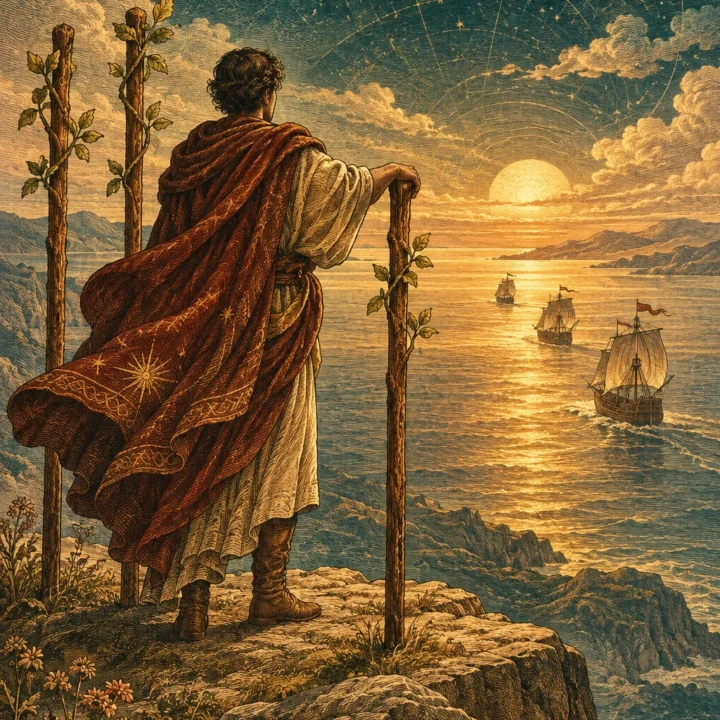
Three of Wands
established strength, expansion, enterprise, cooperation
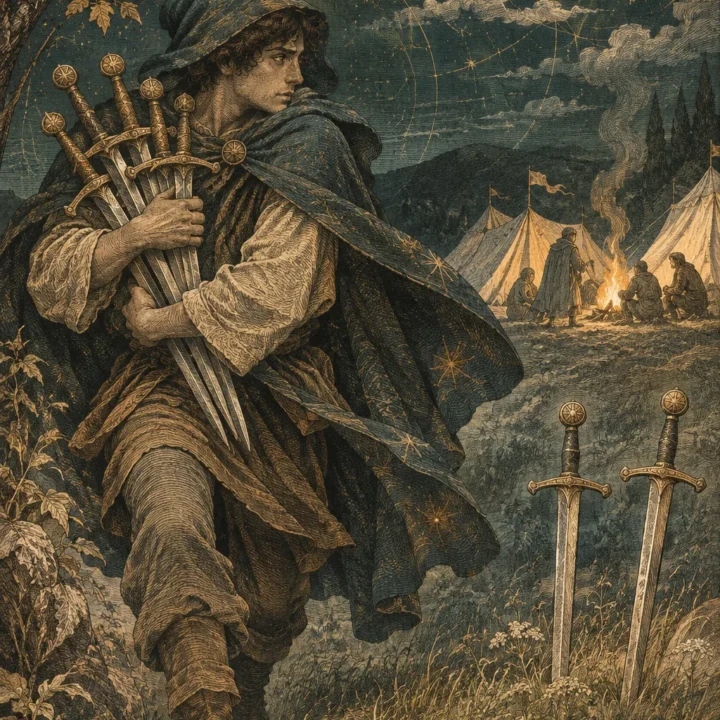
Seven of Swords
strategy, secrecy, independent action, evasion
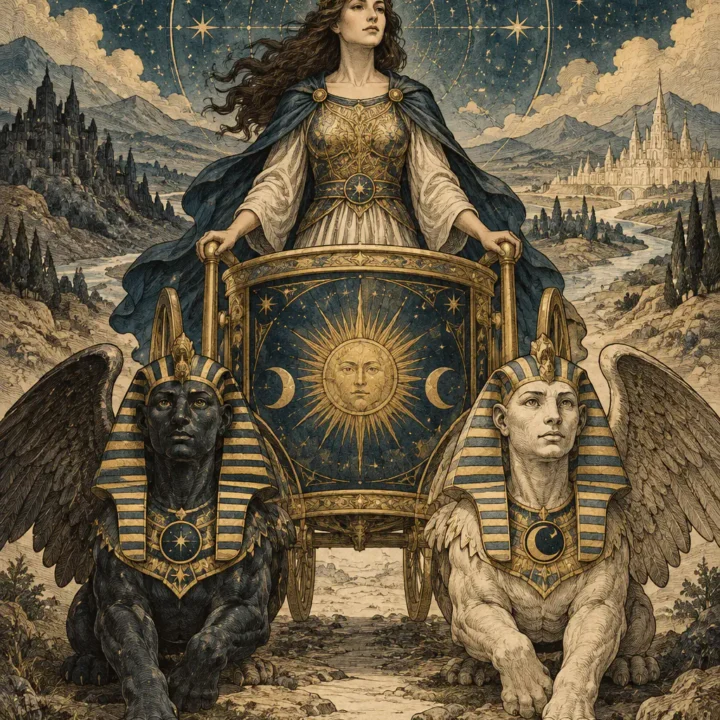
The Chariot
resolve, direction, self-command, movement
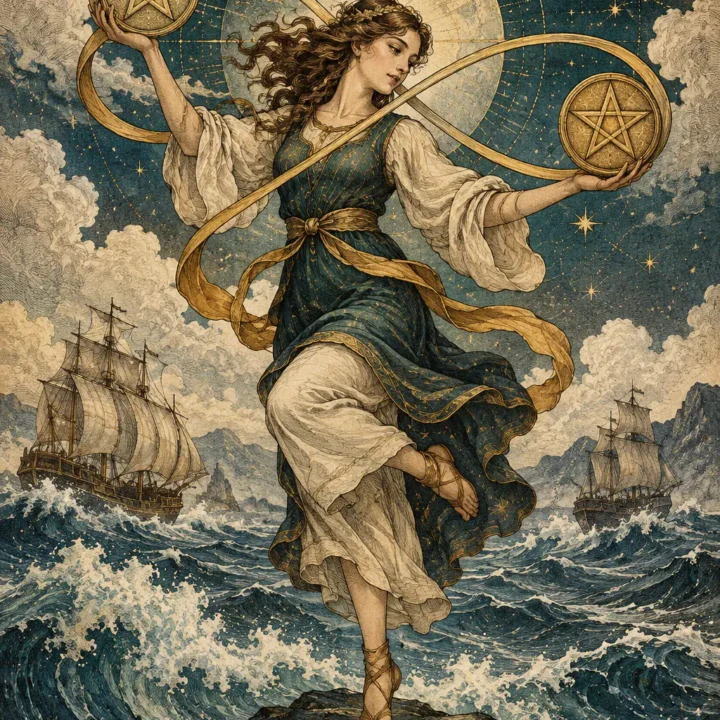
Two of Pentacles
adaptability, changing priorities, flexibility, timing
Sources and further reading
- Arthur Edward Waite, The Pictorial Key to the Tarot, Part III, Two of Wands Read the text
- Book T, A Description of the Cards of the Tarot, The Equinox, Volume I, Number 8 (1912) Read the text
- The Morgan Library & Museum, Pamela Colman Smith and the Rider-Waite-Smith deck Read the text
- Tarot Association of the British Isles, Roses and Lilies in the Rider-Waite-Smith deck Read the text