King of Wands Tarot Card Meaning
A crowned King holds a living wand on a throne of lions and salamanders. Discover the King of Wands' creative authority and the responsibility behind his fire.
- creative authority
- vision
- honesty
- enterprise
- generosity
Card at a glance
- Number
- King
- Element
- Fire
- Astrology
- Associations vary by tradition
- Keywords
- creative authority, vision, honesty, enterprise, generosity, purposeful influence
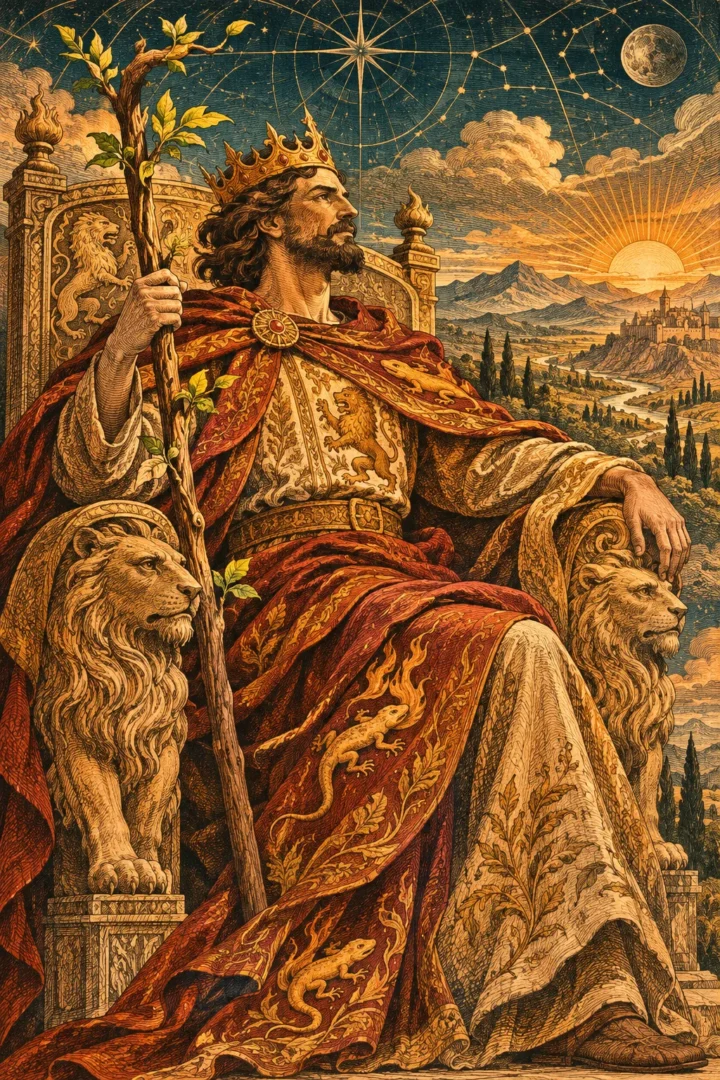 King · King of Wands
Upright meaning
Creative authority, vision and honesty
Upright, the King of Wands often appears when someone is ready to lead an undertaking, make a meaningful decision, or bring people together around a vision. His confidence can inspire others to participate. Imagine a musician who has played in local groups for years and is now organizing a festival. He knows what the gathering could become, and he invites performers who will give it a life beyond his own preferences. His ability to make decisions matters, as does his willingness to hear what others understand about the community. Waite's historical divinatory meanings place unusual emphasis on honesty and conscientiousness. Those qualities offer a valuable counterweight to modern descriptions that focus almost entirely on charisma and ambition. If the King appears as advice, ask whether your actions match the purpose you claim to serve. Look for decisions you could explain clearly to the people involved. You can be decisive while remaining willing to correct an assumption. The King's fire is generous when it gives other people a better chance to contribute.
- Creative authority
- Vision
- Honesty
- Enterprise
- Generosity
- Purposeful influence
Reversed meaning
Severity, rigid expectations and impatience
A reversed King of Wands is frequently portrayed as domineering, impatient, arrogant, or controlling. These are useful shadow possibilities when the situation genuinely involves someone exerting pressure or refusing to listen. Waite's reversed meaning is notably different. He described a person who remains good while being severe, austere, and tolerant. His reversed King does not automatically lose his moral character. The figure may instead be demanding, restrained in temperament, or difficult to please while still acting from principle. This is an important distinction in a relationship or workplace reading. A person who communicates bluntly may need to soften their approach. Someone who ignores others' basic rights and boundaries requires a more serious response. The card cannot make that distinction on its own. The reversal can also describe your relationship with authority. Perhaps your standards have become so strict that nobody feels safe bringing you an unfinished idea. Or perhaps you have avoided setting necessary expectations because you fear appearing harsh. Let the surrounding cards and your actual experience guide the interpretation. An upside-down King is a prompt to examine how power is used, rather than a verdict about a person's character.
- Severity
- Rigid expectations
- Impatience
- Leadership without listening
Card symbolism
-
A wand that is still growing
The King holds a leafy staff, an emblem shared by the Wands court cards.
-
Lions and salamanders
Lion imagery appears behind the King, giving the throne a bold, commanding character.
-
The cap beneath his crown
Waite made a point of noting that the King of Wands wears a cap of maintenance beneath his crown, as do the Kings in the other suits.
-
His seated, watchful posture
Unlike the Knight of Wands, whose horse seems impatient to travel, the King is seated.
In depth interpretation
A crowned figure sits on a throne in a landscape warmed by gold and orange. He holds a wand alive with fresh leaves, while lions and salamander-like creatures decorate the throne and his clothes. His gaze turns toward the space beyond the card. The King looks settled in his authority, yet the living staff suggests that his work is still growing.
The King of Wands represents creative authority, purposeful leadership, vision, and the responsibility to act on what you believe matters. Upright, he often appears when you are ready to guide an undertaking or accept influence over a decision. Reversed, he can bring questions about severity, impatience, and the way power affects other people. His older divinatory meanings include honesty and even a favorable but austere reversal, giving him more depth than the familiar portrait of an overbearing leader.
The King holds a living wand while seated on a throne. He has learned something about directing fire. What will he ask it to illuminate?
The spiritual meaning: learning to tend a larger fire
A small creative spark can belong to one person. You begin with something you love and discover how it feels to act on an idea. Over time, other people may become part of it. They place trust in your decisions, lend their talents, or rely on the space you have helped create.
The King of Wands belongs to this wider circle of responsibility. The wand in his hand is still green. He presides over a living force that needs to be directed with care.
The King sometimes appears in a reading when you have begun to recognize your own influence. Perhaps you are leading a creative group, guiding a family decision, or becoming the person younger colleagues turn to for help. You may feel excited about what is possible and uneasy about getting it wrong.
His spiritual invitation is to consider what kind of authority you want to practice. Imagine a community elder who has spent decades learning a craft and now makes room for younger makers to offer ideas of their own. The work continues to grow because the elder's experience gives people a foundation from which to create.
The King asks you to notice the living world your choices touch. The Queen of Wands shows creative warmth through her personal presence; the King carries responsibility for a wider undertaking. The King of Cups offers another kind of authority, rooted in fair responses to people's feelings. A clear vision grows more meaningful when those affected by it have room to speak.
The flowering wand, throne, and hidden details
A wand that is still growing
The King holds a leafy staff, an emblem shared by the Wands court cards. His crown and throne suggest a mature role, while the leaves remind us that creation remains alive.
You may be experienced in a field and still have much to learn. A long-held vision can develop new branches when you encounter people with different skills, needs, or perspectives.
If the wand draws your attention, consider which part of your work still feels vital. What would help that part flourish through the next stage?
Lions and salamanders
Lion imagery appears behind the King, giving the throne a bold, commanding character. Salamander-like shapes also repeat through the decoration, echoing the fiery character of the Wands suit.
Contemporary readers sometimes connect the salamanders with transformation or an endless cycle of creative energy. These are interpretive associations rather than meanings Waite spells out for each decorative shape.
The throne gives the King a stable place to sit while the designs around him evoke movement and vitality. It is a striking combination for a person who must make decisions while new possibilities continue arriving.
The cap beneath his crown
Waite made a point of noting that the King of Wands wears a cap of maintenance beneath his crown, as do the Kings in the other suits. It is a small detail that many modern tarot summaries overlook.
The cap is a reminder that the figure is dressed for an office or role, with expectations attached to it. This is an interpretive reading of the visual detail, not an extra divinatory meaning Waite assigned to the cap.
The distinction can matter. You might be capable of taking charge of a situation and still need to ask whether the responsibility properly belongs to you. An impressive position can bring demands that extend beyond the person's private ambitions.
His seated, watchful posture
Unlike the Knight of Wands, whose horse seems impatient to travel, the King is seated. His gaze and the living wand maintain a sense of readiness.
The card can suggest a point when constant movement gives way to choosing how and where energy is invested. You may have enough experience to recognize an opportunity without chasing every new possibility.
King of Wands upright meaning: confidence held to a standard
Upright, the King of Wands often appears when someone is ready to lead an undertaking, make a meaningful decision, or bring people together around a vision. His confidence can inspire others to participate.
Imagine a musician who has played in local groups for years and is now organizing a festival. He knows what the gathering could become, and he invites performers who will give it a life beyond his own preferences. His ability to make decisions matters, as does his willingness to hear what others understand about the community.
Waite's historical divinatory meanings place unusual emphasis on honesty and conscientiousness. Those qualities offer a valuable counterweight to modern descriptions that focus almost entirely on charisma and ambition.
If the King appears as advice, ask whether your actions match the purpose you claim to serve. Look for decisions you could explain clearly to the people involved. You can be decisive while remaining willing to correct an assumption.
The King's fire is generous when it gives other people a better chance to contribute.
King of Wands reversed meaning: must he become a tyrant?
A reversed King of Wands is frequently portrayed as domineering, impatient, arrogant, or controlling. These are useful shadow possibilities when the situation genuinely involves someone exerting pressure or refusing to listen.
Waite's reversed meaning is notably different. He described a person who remains good while being severe, austere, and tolerant. His reversed King does not automatically lose his moral character. The figure may instead be demanding, restrained in temperament, or difficult to please while still acting from principle.
This is an important distinction in a relationship or workplace reading. A person who communicates bluntly may need to soften their approach. Someone who ignores others' basic rights and boundaries requires a more serious response. The card cannot make that distinction on its own.
The reversal can also describe your relationship with authority. Perhaps your standards have become so strict that nobody feels safe bringing you an unfinished idea. Or perhaps you have avoided setting necessary expectations because you fear appearing harsh.
Let the surrounding cards and your actual experience guide the interpretation. An upside-down King is a prompt to examine how power is used, rather than a verdict about a person's character.
The unexpected inheritance: a historical meaning worth understanding
Waite also included an unusual traditional association: news concerning an unexpected inheritance. This is far removed from the modern keyword list of leadership and entrepreneurship.
It belongs to a historical divinatory system in which court cards could represent people and specific news about their lives. That meaning can be of interest when studying older readings or comparing tarot traditions.
The King of Wands cannot establish that money or property is about to arrive. In a personal spread about family resources, the old association might lead you to ask about responsibilities, trust, and information that has not yet been shared. Any actual inheritance question needs facts and appropriate professional guidance.
The useful lesson is that the King has never had only one meaning. Tarot's court figures carry layered histories, and the question being asked determines which layer deserves attention.
King of Wands in love and relationships
In love, the King of Wands often describes attraction toward someone confident and expressive, or a relationship reaching a moment when shared direction matters. One partner may be eager to make plans or invite the other into a larger part of life.
The card can be encouraging when both people have a voice. A decisive partner can offer warmth and stability when their attention includes what the other person wants.
For an established couple, the King's theme might arise around moving house, parenting, or a major commitment. Are decisions being shared in a way that respects each person's experience? Does the vision for the future have space for both people?
Reversed, pay attention to rigid expectations or difficulty listening. The older favorable reversal may fit a caring partner who is simply reserved or strict. The behavior you know matters more than a keyword chosen for the card.
King of Wands as feelings
As feelings, this King can suggest admiration, attraction, a wish to take initiative, or respect for a strong personality. It does not confirm that a particular person will commit or reveal their private intentions. The relationship becomes clearer through what they communicate and do.
The King of Wands as a person or court role
This King can represent a mentor, organizer, creative director, parent, or person accustomed to making decisions. The traditional image is male, although the archetypal qualities can apply to anyone.
Sometimes the court card describes a situation rather than an individual. It may show that a project needs someone to take responsibility for its direction. In a position representing a quality to cultivate, the King could invite you to become clearer about your values and more accountable for your choices.
Try asking who has influence, what responsibility comes with it, and whether that influence is being exercised well. Those questions are more useful than assuming the card always represents an older man.
King of Wands for career and money
Career readings bring the King's theme into focus when an idea has become large enough to need coordination and shared responsibility. The card can appear for someone building a business, leading creative work, or helping a team decide where to direct its energy.
Suppose your initiative has attracted more people than expected. You now need to decide which opportunities deserve resources and how to give contributors credit. The King encourages you to develop a vision that people can understand and work within.
In money readings, his themes of enterprise and responsibility are relevant, but a confident financial idea still needs independent evidence. The card cannot validate an investment or promise an inheritance. Consider the cost of a decision and the people who would be affected.
Reversed, the question may concern unrealistic expectations, a leader unwilling to change course, or a severe standard that is exhausting a group.
What the Golden Dawn teaches, and why the King's rank is complicated
The Golden Dawn's Book T describes court cards through elements within elements, assigning different roles to mounted figures, queens, princes, and princesses. Its Queen of Wands has a fairly direct correspondence with the Queen in the Rider-Waite-Smith deck.
The King's Golden Dawn correspondence needs care. Book T labels the chariot figure King of Wands and Prince of the Chariot of Fire, or Air of Fire, while the mounted Knight is also called King of the Spirits of Fire, or Fire of Fire. A rank-based comparison can swap those correspondences. This reading keeps the two mappings distinct rather than assigning Smith's seated King an unexplained elemental subtype.
For this article, the King is interpreted through Smith's image and Waite's divinatory description. The Golden Dawn remains a relevant neighboring tradition, with different court imagery and rank conventions.
On a spiritual level, that distinction is a useful reminder of something broader: even a familiar title can carry different responsibilities in different traditions. The meaning of authority depends partly on the system in which it is exercised.
Worked tarot reading: should I take charge of a new initiative?
Imagine being asked to lead a program that several people in your community care about. You draw the King of Wands for your role, Justice for the standard you must meet, and the Six of Pentacles for what the group needs.
The King shows your ability to give the project a direction. Justice asks how decisions will be made, who will be heard, and what fairness means in practice. The Six of Pentacles places resources and reciprocity in view: who gives time, who receives support, and whether the arrangement is sustainable.
Together, the cards suggest accepting authority only with clear agreements about how it will be used. You might establish a simple way for people to raise concerns, distribute responsibilities, and review what the project is achieving.
If The Emperor appeared instead of the Six of Pentacles, the emphasis might shift toward structure and durable rules. The King would still contribute the energy of a living vision, with the surrounding card emphasizing the framework needed to sustain it.
This reading cannot determine whether the role is right for you. It gives you specific questions to ask before accepting.
How is the King of Wands different from the Emperor?
Both cards are associated with authority. The King of Wands emphasizes creative will, energetic leadership, and the ability to make an idea meaningful to others. The Emperor draws attention to established order, structure, responsibility, and the systems that allow a community or undertaking to continue.
In a question about launching a community event, the King may be the person whose vision gathers people together. The Emperor could symbolize the agreements and practical arrangements that keep the event safe and workable.
When both appear, consider whether inspiration has the support it needs. A good idea might require structure, and a rigid arrangement might benefit from renewed creative purpose.
King of Wands as advice: keep the living wand in sight
Look at the leafy wand in the King's hand. Think of one responsibility you have accepted and the purpose that first made it important.
Write down who is affected by your choices. Then consider whether those people have enough information and freedom to contribute meaningfully. Is there someone whose perspective could help you recognize what the project needs now?
Choose one action that makes your responsibility clearer. You might ask for feedback, share credit, or explain a decision with care. The King offers a way to use your influence that leaves room for the life growing around it.
Is the King of Wands a yes or no card?
The King of Wands generally leans yes to a well-considered leadership opportunity or initiative that fits your experience and values. Reversed, review the expectations and the effect your decisions could have on others. The card does not guarantee success or prove someone's intentions.
A note on tradition
Pamela Colman Smith's Rider-Waite-Smith King holds a flowering wand on a throne marked with lions and salamanders. Waite emphasized an animated, noble temperament, honesty, and conscientiousness, while giving his reversed King a severe but still favorable character. Book T offers a related but differently organized court hierarchy. Modern readings often explore creative leadership and its controlling shadow.
Frequently asked questions
Does the King of Wands mean a man in my life?
He can represent a person, particularly someone with influence or a strong sense of purpose. He can also express a role or quality that anyone may embody. Consider the question and the card's position before deciding who it might describe.
Is the reversed King of Wands a bad person?
No. A modern shadow reading may explore control or impatience, but Waite's reversed King remained fundamentally good while severe or austere. The card cannot establish a person's moral character.
How can the King of Wands lead without overpowering others?
Share the purpose behind a decision and invite people to name what you might have missed. Confidence becomes generous when other people can help shape the work. If your vision cannot survive honest questions, the King may be asking you to examine how you are using your influence.
Is the King of Wands a good card for business?
It often supports examining your ability to lead an enterprise and direct creative effort. The card encourages purposeful responsibility. A business decision still needs realistic costs, reliable information, and consideration for the people involved.

Keep reading
Explore the Wands
Every card page names the tradition behind each meaning, so you can compare readings instead of taking one as fixed.
Cards to explore alongside this one
Their symbols reveal useful similarities and differences for your next reading.
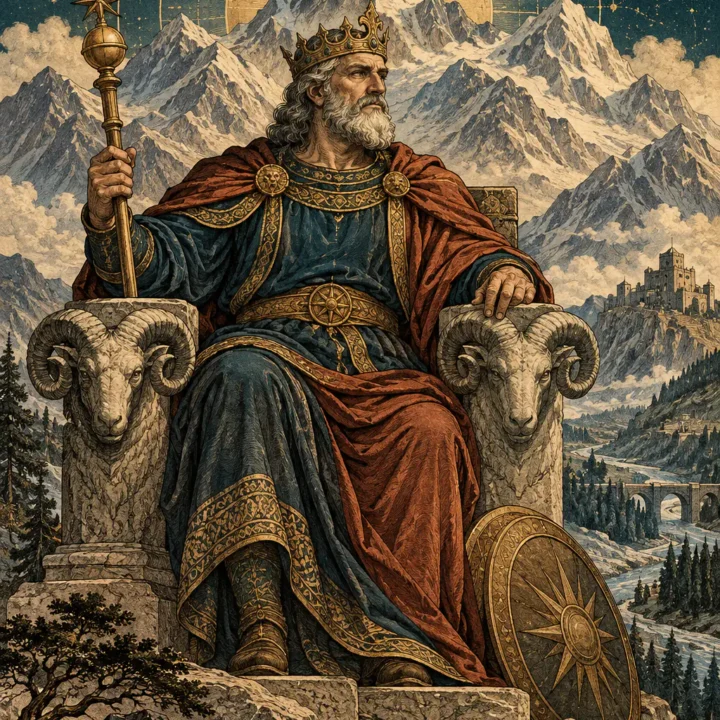
The Emperor
structure, reliability, discipline, leadership
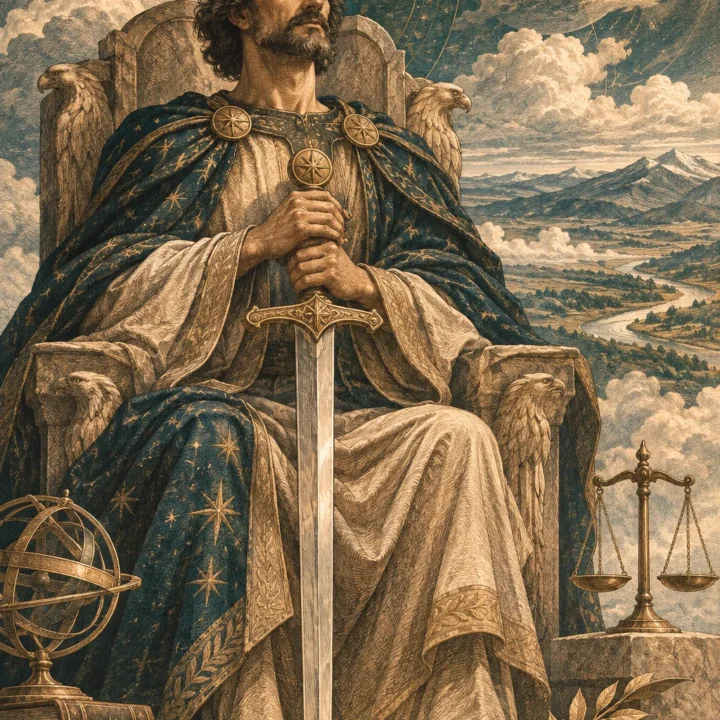
King of Swords
authority, judgment, clear thinking, responsibility
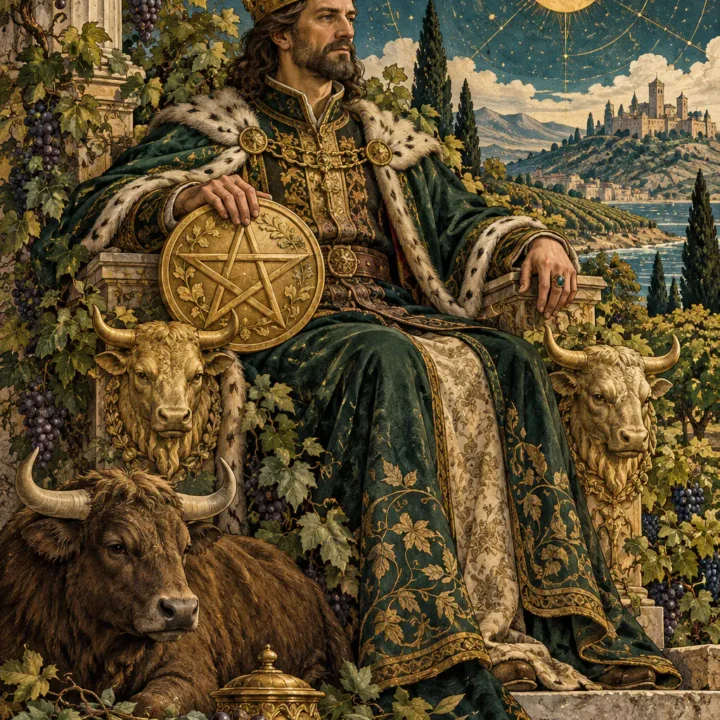
King of Pentacles
stewardship, experience, material security, sound judgment
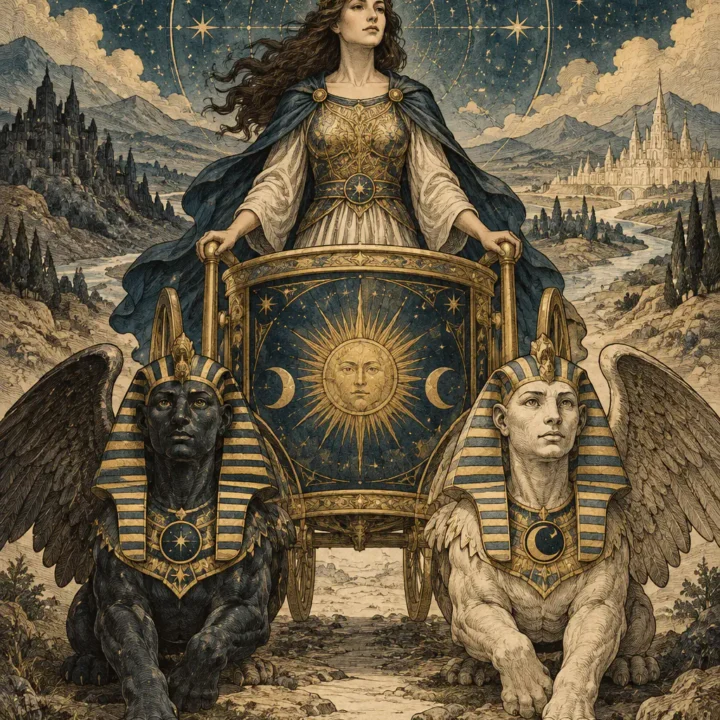
The Chariot
resolve, direction, self-command, movement
Sources and further reading
- A. E. Waite, The Pictorial Key to the Tarot, King of Wands Read the text
- Golden Dawn, Book T, Wands courts and rank descriptions Read the text
- The Morgan Library & Museum, Pamela Colman Smith and the Rider-Waite-Smith tarot Read the text
- Biddy Tarot, King of Wands, contemporary practice Read the text