The Chariot Tarot Card Meaning
Two sphinxes wait before a chariot whose driver holds no reins. Explore the meaning of choosing a direction while different hopes and fears pull at your attention.
- resolve
- direction
- self-command
- movement
- determination
Card at a glance
- Number
- VII
- Element
- Water
- Astrology
- Cancer (Golden Dawn)
- Keywords
- resolve, direction, self-command, movement, determination
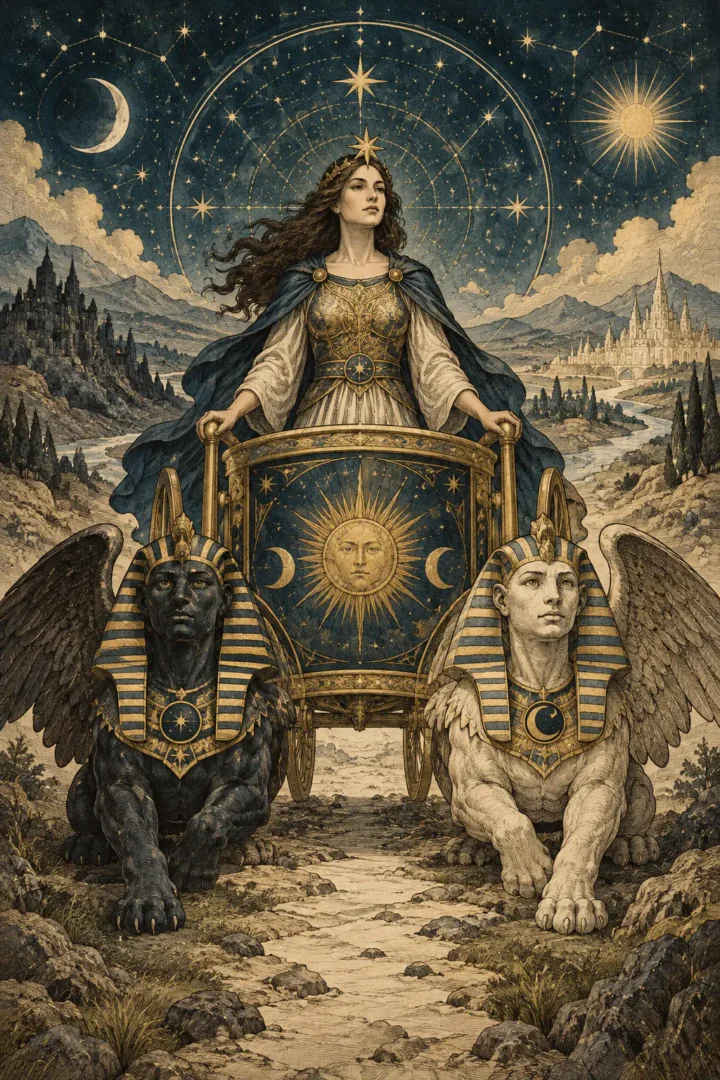 VII · The Chariot
Upright meaning
Resolve, direction and self-command
Upright, The Chariot often appears when you have reached the point of doing something about a long-held intention. An application is ready to submit. You finally have the courage to ask for a change. A demanding project has moved beyond its planning stage.
- Resolve
- Direction
- Self-command
- Movement
- Determination
Reversed meaning
Divided priorities, haste and stalled efforts
Reversed, the image may feel like a journey that cannot quite begin. You have plenty of energy, but each new demand pulls you toward a different priority. Perhaps you keep changing your goal whenever it becomes difficult, leaving several unfinished plans behind you.
- Divided priorities
- Haste
- Stalled efforts
- Aggression
- Losing your way
Card symbolism
-
The black and white sphinxes
The sphinxes are the heart of the image. They sit motionless beneath the chariot, their heads angled apart, while the driver holds no visible reins.
-
The charioteer and his armor
The crowned figure stands upright inside his carriage, dressed for a demanding undertaking. His armor gives the image a feeling of preparedness.
-
The starry canopy and lunar shoulders
A canopy decorated with stars rises above him, and crescent shapes rest upon his shoulders. Many occult readers associate these details with celestial order and changing cycles.
-
The winged emblem and square on the chariot
The front of the carriage bears a winged emblem, while a square appears on the charioteer’s clothing. These are among the card’s occult visual details, and interpretations differ between readers.
-
The city and river behind him
The walled city stands in the distance, with water separating it from the foreground. The charioteer has a place he came from, a world of familiar streets and known obligations.
In depth interpretation
A charioteer stands beneath a canopy of stars. Behind him are the walls of a city; before him sit two sphinxes, one black and one white. Their bodies face forward, though their heads turn in different directions. He holds a small wand, and there are no reins in his hands. For a card named after a vehicle, it is an astonishingly still scene.
The Chariot speaks of determination, purposeful movement, and the effort required to follow a chosen course. Upright, it often marks the moment when you are ready to make progress through a difficult situation. Reversed, it may reveal conflicting priorities, exhaustion, or an attempt to force events beyond your control.
If you drew this card, spend a moment with the sphinxes. What in your life wants to move forward, and what seems to be looking elsewhere?
What The Chariot is really asking
Imagine standing at the beginning of a journey you have planned for months. The bags are packed. The road is open. Just as you are about to leave, you realize you are carrying two very different hopes. One part of you longs for the adventure; another wants the comfort of home. Neither feeling disappears when the engine starts.
The Chariot recognizes this complexity. You can have a clear destination while feeling several things about the journey. Its spiritual lesson concerns the ability to move with those feelings present, especially when they make competing demands on your attention.
There is exhilaration in this card. A task that once seemed impossible may suddenly have a route through it. You might be ready to advocate for yourself, begin training for something difficult, or leave a familiar situation. The Chariot gives that determination a place in the story.
Its warning is woven into the same image. A victory can be costly when you drive past your limits or disregard someone else’s wishes. Sometimes the important question arrives after the celebration: did the journey take you somewhere you truly wanted to go?
The symbols in The Chariot card
Pamela Colman Smith’s Rider-Waite-Smith Chariot brings together armor, celestial signs, a city, and two enigmatic animals. The details encourage a reading about direction and the forces involved in choosing it.
The black and white sphinxes
The sphinxes are the heart of the image. They sit motionless beneath the chariot, their heads angled apart, while the driver holds no visible reins. Readers often understand them as contrasting impulses: confidence and doubt, independence and loyalty, or different needs competing for the same energy.
They are sphinxes, creatures associated with riddles and mysteries. It is worth asking whether your situation needs a better question before it needs more effort. Which part of the problem have you been too eager to answer?
The charioteer and his armor
The crowned figure stands upright inside his carriage, dressed for a demanding undertaking. His armor gives the image a feeling of preparedness. If you are about to face a difficult conversation or change of circumstances, his posture may remind you to bring the skills and support that make the undertaking manageable.
The driver’s expression is composed. He does not seem to be wrestling the animals into motion. That stillness makes the card useful for moments when you want to rush before you have chosen your route.
The starry canopy and lunar shoulders
A canopy decorated with stars rises above him, and crescent shapes rest upon his shoulders. Many occult readers associate these details with celestial order and changing cycles. The image seems to place his earthly ambitions under a much larger sky.
If the stars draw your attention, reflect on the values that give your goal meaning. What will still matter to you when the excitement of the journey has passed?
The winged emblem and square on the chariot
The front of the carriage bears a winged emblem, while a square appears on the charioteer’s clothing. These are among the card’s occult visual details, and interpretations differ between readers. The square is often associated with form and the practical world. It offers a useful reminder that movement needs a workable plan.
The city and river behind him
The walled city stands in the distance, with water separating it from the foreground. The charioteer has a place he came from, a world of familiar streets and known obligations. In some readings the city becomes a symbol of home; in others, it is the life you have begun to outgrow. Its presence gives the journey emotional weight.
The Chariot upright meaning
Upright, The Chariot often appears when you have reached the point of doing something about a long-held intention. An application is ready to submit. You finally have the courage to ask for a change. A demanding project has moved beyond its planning stage.
Imagine someone who has spent years wanting to learn to swim. The early lessons are frightening, and progress comes slowly. Eventually they manage a full length of the pool. The Chariot might describe that feeling of discovering what steady practice has made possible.
It can also reflect real opposition. Perhaps people disagree with your plans, or circumstances make the route more difficult than you expected. The card encourages a clear sense of purpose and a willingness to adjust methods when new information arrives.
The Chariot reversed meaning
Reversed, the image may feel like a journey that cannot quite begin. You have plenty of energy, but each new demand pulls you toward a different priority. Perhaps you keep changing your goal whenever it becomes difficult, leaving several unfinished plans behind you.
In another situation, the problem is the pace. A person who has been told to be strong for too long may start treating rest as failure. A disagreement can turn into a battle that nobody remembers choosing. The reversed Chariot can help you see the cost of trying to control every outcome.
Ask where movement has become difficult. It might help to reconsider the destination, seek assistance, or give a neglected part of your life some attention. Sometimes the route becomes clearer once you stop forcing a decision.
The Chariot in love and relationships
In love readings, The Chariot can appear when two people are figuring out where the relationship is going. One may want to move cities, begin a family, or make a commitment while the other needs time to consider the change.
The card can be encouraging when both people are willing to work toward a shared goal. Imagine a couple planning to live together after years of distance. The excitement is real, along with questions about money, friendships, and daily routines. A thoughtful plan gives their hopes somewhere to land.
Reversed, The Chariot can draw attention to competition within the relationship or attempts to rush intimacy. The pace and direction need to be freely chosen by the people involved. Pressure to ignore a boundary deserves attention regardless of the tarot cards.
The Chariot as feelings
When you ask about someone’s feelings, The Chariot can suggest an urge to pursue a connection or make something happen. The energy is active and determined, although the card does not tell you whether the person feels emotionally prepared for the relationship you want.
A reversed Chariot might describe mixed signals or frustration around the direction of the bond. Let the person’s behavior and willingness to talk reveal what they intend. You deserve clarity without having to decode every action as a secret sign.
The Chariot for career and work
At work, The Chariot can reflect a demanding objective that requires coordination. A promotion, project launch, exam, or change in professional direction may be calling for sustained effort. The card encourages you to choose which achievement matters enough to organize your week around.
Consider someone leading an event with a capable team whose members disagree about priorities. A useful leader listens to the concerns, sets a realistic schedule, and keeps everyone informed when conditions change. The Chariot might describe their ability to guide the work through confusion.
Reversed at work, it may suggest burnout, scattered direction, or ambition tied too closely to proving something. You can question whether a goal still fits your life without erasing the value of the effort you have already given it.
The Chariot for money
For money, the Chariot can describe setting a financial goal and following a practical route toward it. You might be saving for a move, reducing a debt, or trying to understand how a series of small choices adds up.
The reversal sometimes points toward impulsive decisions, rivalry, or the sense that you must catch up with everyone else. Check the numbers, costs, and risks before committing. The card can help you explore the emotional force behind the decision.
The Chariot in spiritual practice
The Chariot can accompany a spiritual discipline that asks for regular attention. Perhaps you are learning to meditate, observing a sacred season, or making time each week for study. Some days you will feel inspired; on others, the practice may feel ordinary. Returning to it can deepen your understanding.
Its Cancer correspondence in the Golden Dawn system adds another layer for readers who use astrology. Cancer is associated with home and protection, themes that offer an interesting perspective on the armored traveler. What are you trying to preserve as you move into unfamiliar territory?
The Chariot as advice: the two-sphinx exercise
Put The Chariot in front of you and name one destination that matters right now. Write it at the top of a page. Below it, draw two small columns, one for each sphinx.
In the first column, write what is pulling you toward that goal. In the second, write the needs and concerns pulling your attention elsewhere. Try to be specific. A wish to see your family more often deserves a more useful answer than simply calling yourself undisciplined.
Look at the page as a whole. Is there one adjustment that would honor an important concern while allowing you to continue? Choose a next step that you could realistically take this week.
Is The Chariot a yes or no card?
The Chariot often leans yes for questions about taking initiative, travel, competing for an opportunity, or carrying a plan forward. Reversed, it may suggest that the timing, direction, or available support needs review. The card cannot guarantee a victory, an approval, or a safe journey.
How to read The Chariot in a tarot spread
Consider where the card falls. In the past, it may describe a determined move that brought you to the present. As a challenge, it can point to pressure or clashing priorities. In an outcome position, it might suggest forward movement that depends on preparation and continued effort.
Imagine asking about returning to study after years away. You draw The Chariot as your present energy, the Two of Pentacles as advice, and the Six of Wands as a possible outcome. You might read this as strong motivation to begin, a need to make the schedule workable, and the possibility of feeling proud of visible progress. The cards offer perspective on the path. They cannot establish what your results will be.
A brief note on tarot tradition
This reading uses the Rider-Waite-Smith card illustrated by Pamela Colman Smith and first published in 1909. In The Pictorial Key to the Tarot, Arthur Edward Waite described the two sphinxes and the charioteer’s triumph, including the limitations of a victory gained in the external world. Earlier versions of the Chariot often featured horses in place of the sphinxes. Its correspondence with Cancer belongs to the Golden Dawn’s system of tarot attributions.
Frequently asked questions
Can The Chariot mean literal travel?
Yes. Depending on the question and surrounding cards, it can suggest a journey, relocation, commute, or transportation issue. For practical travel arrangements, use current information and ordinary safety precautions.
Why does the charioteer have no reins?
The Rider-Waite-Smith image shows him holding a wand while the sphinxes sit before the vehicle. Many modern readers interpret the missing reins as a sign that direction depends on will and attention. The still animals leave room to wonder whether the journey is just beginning.
How is The Chariot different from Strength?
The Chariot is concerned with setting a course and negotiating forces that pull you in different directions. Strength offers a closer encounter with a lion and the courage to meet powerful feelings. When both appear, the reading may involve your relationship to the forces shaping a decision.
Does The Chariot promise success?
It is often an encouraging card for determined effort. Its older meanings also include conflict and presumption, so a prediction of certain success would go beyond what the card can support. Look at the full spread and the real situation.

Keep reading
Explore the Major Arcana
Every card page names the tradition behind each meaning, so you can compare readings instead of taking one as fixed.
Cards to explore alongside this one
Their symbols reveal useful similarities and differences for your next reading.
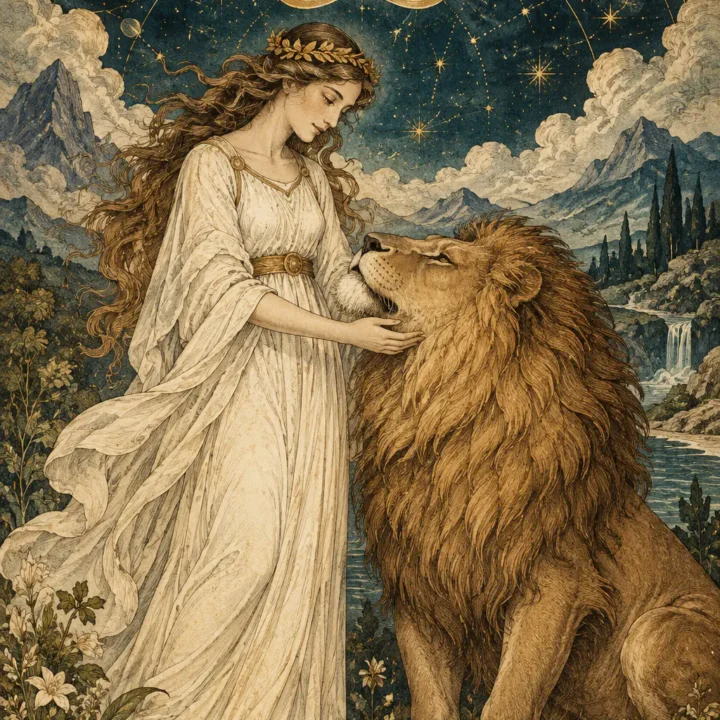
Strength
courage, compassion, patience, steadiness
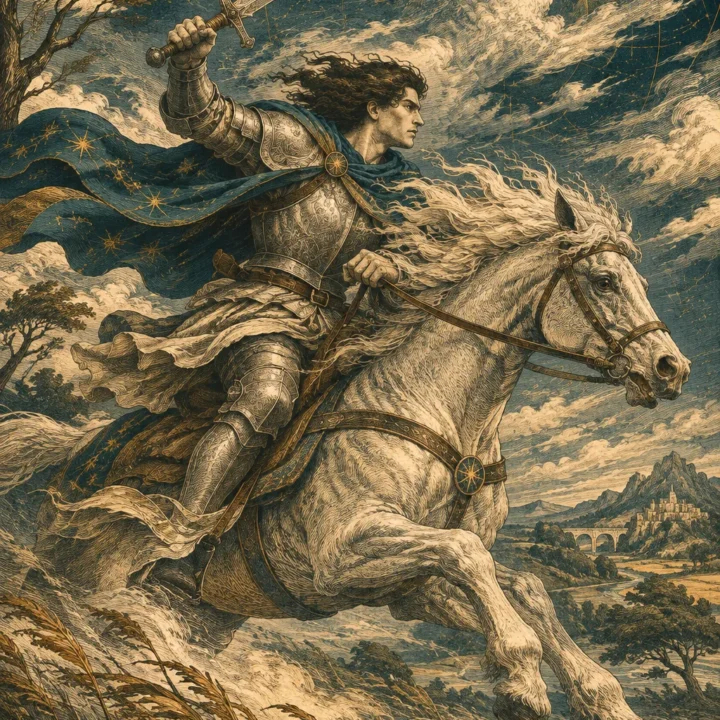
Knight of Swords
decisive action, urgency, ambition, direct speech
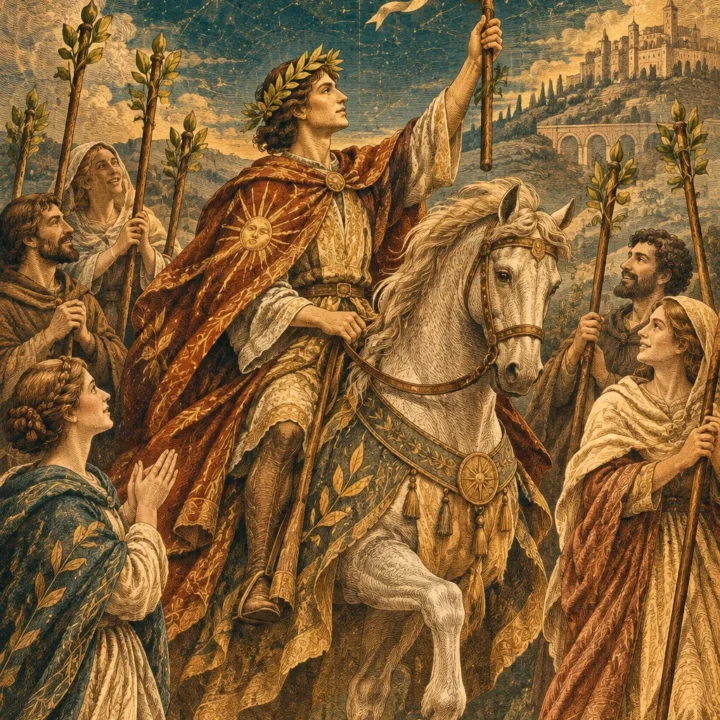
Six of Wands
victory, recognition, good news, encouragement
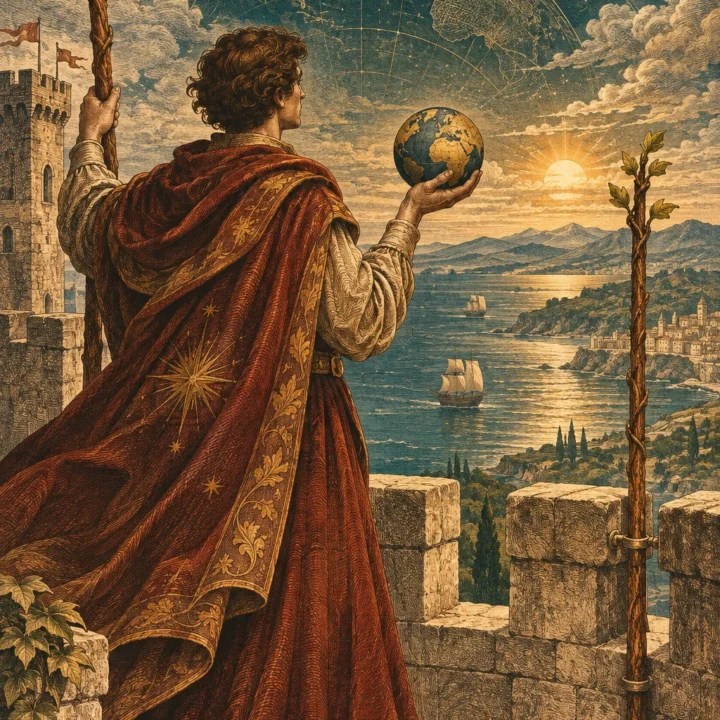
Two of Wands
vision, established power, longing, ambition
Sources and further reading
- Arthur Edward Waite, The Pictorial Key to the Tarot, Part II, The Chariot Read the text
- Arthur Edward Waite, The Pictorial Key to the Tarot, Part III, divinatory meanings Read the text
- Golden Dawn Book T attributions, The Chariot and Cancer, with source references Read the text
- Victoria and Albert Museum, A history of tarot cards Read the text