Knight of Pentacles Tarot Card Meaning
A knight on a powerful black horse pauses before a ploughed field. Discover how the Knight of Pentacles explores promises kept, sustainable effort, and responsible progress.
- reliability
- planning
- perseverance
- consistency
- responsible action
Card at a glance
- Number
- Knight
- Element
- Earth
- Astrology
- Prince of Earth, Air of Earth, under one common rank mapping (Golden Dawn)
- Keywords
- reliability, planning, perseverance, consistency, responsible action
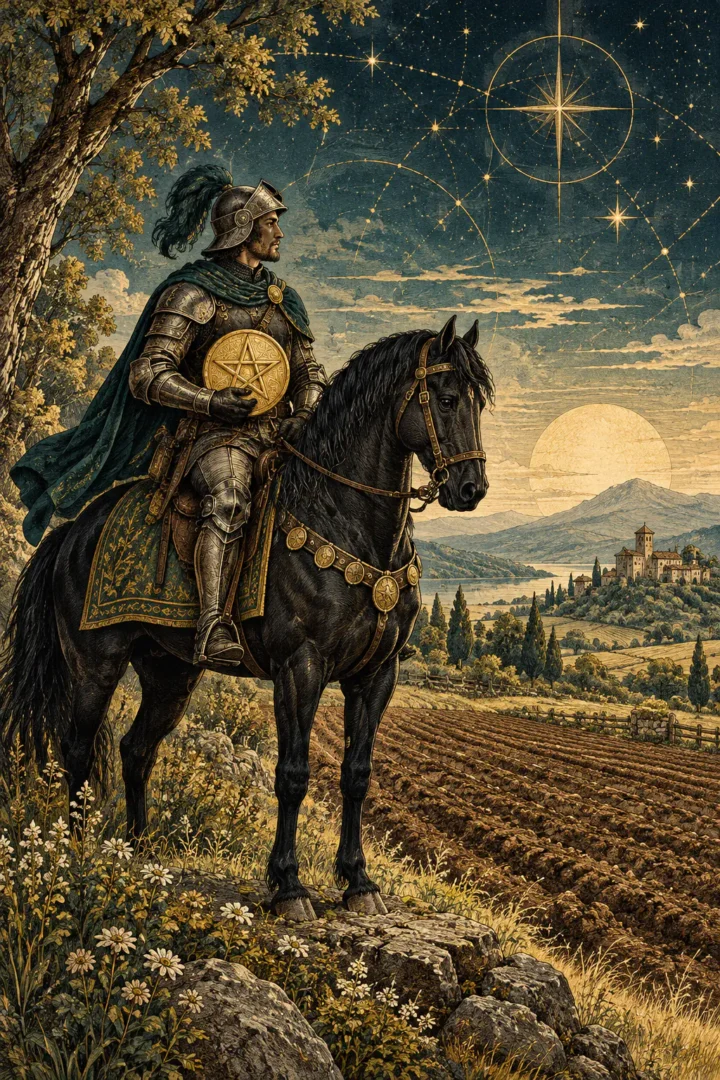 Knight · Knight of Pentacles
Upright meaning
Reliability, planning and perseverance
Upright, the Knight often describes a person or process that is moving slowly and reliably. A task may require careful completion, a relationship may be deepening through regular contact, or you may need to build a skill before taking on a larger commitment.
- Reliability
- Planning
- Perseverance
- Consistency
- Responsible action
Reversed meaning
Stagnation, stubbornness and neglected duties
Reversed, steadiness can become an obstacle. You revise the schedule again rather than begin. An old routine continues because it is familiar, even though nobody remembers why it was created. Responsibilities are met, but every day feels smaller.
- Stagnation
- Stubbornness
- Neglected duties
- Excessive routine
- Discouragement
Card symbolism
-
The dark, heavy horse
The black horse stands with all four feet firmly planted. Its body suggests great strength, though it shows none of the urgency of the other mounted knights.
-
The pentacle held forward
The knight presents the coin in his gloved hand. In Waite’s description, he displays it without gazing into it.
-
The ploughed field
Rows of worked earth spread across the background. Someone has prepared this land in the hope of a future harvest.
-
The armor and horse’s harness
The rider wears protective armor, and the horse is equipped for a journey. These details bring the responsibilities of travel into view.
In depth interpretation
A knight sits on a powerful black horse at the edge of a ploughed field. The horse has come to a complete stop. The rider holds a golden pentacle before him, while the long furrows of the farmland reach toward distant hills. Other knights in the Rider-Waite-Smith deck rush through wind and water. This one seems willing to remain exactly where he is until he understands the ground beneath his feet.
The Knight of Pentacles is a tarot card of reliability, deliberate progress, responsibility, and keeping promises through ordinary actions. Upright, it often appears when a worthwhile goal needs steady attention. Reversed, it may reveal stagnation, excessive caution, carelessness, or the quiet resentment that grows when duty leaves no room for enjoyment.
If you have drawn this Knight, look at the still horse. What are you preparing to carry forward, and what would make the journey sustainable?
The spiritual meaning of showing up
There is a kind of devotion that rarely receives applause. You water the plant again. You practice the same passage of music. You take care of a person who needs you, even when the task is repetitive and nobody else notices.
The Knight of Pentacles understands this quieter courage. His horse is strong enough to travel, and the knight has chosen to look carefully at the landscape. He evokes a person who knows that care becomes meaningful through the commitments we keep.
Think about a promise you made when you were full of enthusiasm. Perhaps you wanted to learn an instrument, strengthen a friendship, or build a more peaceful home. The beginning felt exciting. Then ordinary life arrived, with tired evenings, unexpected expenses, and other people’s needs. The Knight belongs to the part of the journey that begins after the excitement settles.
His spiritual lesson is connected with trust. When you repeatedly do what you said you would do, people may begin to rely on you. Over time, you may also become more able to trust yourself.
Yet devotion needs a living purpose. A promise that once supported your life can become a burden when circumstances change. The Knight invites you to examine the road and the person traveling it. Sometimes the most responsible action is to alter a plan that no longer serves the people involved.
The Knight of Swords brings a much faster rhythm to the same spread. Where the Pentacles knight tests the ground and maintains a reliable pace, the Swords rider rushes toward action. Their contrast can help you recognize whether a situation needs greater urgency or the patience to finish well.
The symbols in the Knight of Pentacles
Pamela Colman Smith’s Rider-Waite-Smith image has an unusual stillness. Even the sky seems to give the rider room to think.
The dark, heavy horse
The black horse stands with all four feet firmly planted. Its body suggests great strength, though it shows none of the urgency of the other mounted knights.
There is reassuring power in that posture. You might see someone who has learned to respond without panic or a plan supported by dependable habits. The horse can also evoke the weight of obligations that must be carried carefully.
Look at whether the animal seems peacefully ready or unwilling to move. Your own response may help you understand whether the card is describing patience or a situation that has become stuck.
The pentacle held forward
The knight presents the coin in his gloved hand. In Waite’s description, he displays it without gazing into it. His attention seems directed toward the land and the task that lies ahead.
That detail can distinguish him from the Page of Pentacles, who is absorbed in studying a single coin. The Knight has moved toward responsibility. He must decide how to use a resource once its promise is understood.
If money, skill, or time belongs to your question, consider what you are responsible for doing with it. A good intention takes on weight when other people begin to depend on the result.
The ploughed field
Rows of worked earth spread across the background. Someone has prepared this land in the hope of a future harvest. There are no ripe grapes or golden coins waiting to be gathered.
The field invites reflection on groundwork. Perhaps you are at a stage when the visible reward remains distant. What preparation would actually make the next season easier? The Knight encourages attention to conditions you can influence.
The armor and horse’s harness
The rider wears protective armor, and the horse is equipped for a journey. These details bring the responsibilities of travel into view. Preparation has a practical purpose when a road is long or conditions are uncertain.
You may be preparing for a new role or a demanding project. The card can help you recognize the value of a realistic schedule, useful tools, and support that allows you to keep going.
Knight of Pentacles upright meaning
Upright, the Knight often describes a person or process that is moving slowly and reliably. A task may require careful completion, a relationship may be deepening through regular contact, or you may need to build a skill before taking on a larger commitment.
Imagine someone restoring an old house. The exciting plans for paint and furniture are waiting, but a persistent leak needs attention first. They find the source, arrange repairs, and check the work before moving on. The Knight could represent that choice to protect the home by attending to its foundations.
There is also a sense of service in this card. Someone may be willing to take responsibility for a difficult assignment because they understand how much it matters. You could be that person yourself.
The Knight invites pride in work done carefully. He also encourages you to ask whether the pace is appropriate. A deliberate approach can be wise; a plan still needs moments when you are willing to act.
Knight of Pentacles reversed meaning
Reversed, steadiness can become an obstacle. You revise the schedule again rather than begin. An old routine continues because it is familiar, even though nobody remembers why it was created. Responsibilities are met, but every day feels smaller.
Another expression is neglect. You promised to handle something important, then lost interest in the repetitive work required. Waite’s reversed meanings included inertia and carelessness as well as stagnation, so the card can reflect different kinds of difficulty.
Sometimes the reversal belongs to a person who has been carrying far too much. They appear dependable to everyone around them, and exhaustion has made even simple tasks feel heavy. More discipline may offer little help until the demands change.
Ask what your current rhythm is producing. A new method, a conversation about expectations, or permission to rest could help restore movement.
The Knight of Pentacles as a person
In a person-focused reading, this Knight often represents someone careful, patient, practical, and slow to make promises they cannot keep. They may be drawn to routine and feel most comfortable when expectations are clear.
Their affection or commitment can be understated. A person who remembers the details of your day or reliably follows through on a plan may express a great deal through ordinary actions.
The card can describe anyone, regardless of gender or age. It may also represent a role or quality that you are being asked to develop rather than a literal person arriving in your life.
Knight of Pentacles in love and relationships
In love, the Knight often speaks through consistency. A new partner calls when they said they would. Someone makes room for you within a busy week and follows through on the plans you make together.
For an established couple, the card can highlight the comforting routines that hold daily life together. Preparing breakfast, remembering an appointment, or sharing an unpleasant task may become small expressions of devotion.
Its shadow appears when predictability leaves little space for playfulness or emotional conversation. Two people can manage a household efficiently and still miss feeling close to one another.
Reversed, consider whether promises are repeatedly delayed or whether one partner has begun treating the relationship like another obligation on a long list. A warm, specific conversation can help reveal what both people need.
Knight of Pentacles as feelings
A Knight of Pentacles in a feelings question may suggest cautious affection, a wish to build trust, or interest expressed through practical gestures. The emotional atmosphere is often steady and reserved.
Someone’s silence can have many explanations, however. The card cannot tell you whether they secretly intend a commitment. Look at their willingness to communicate and how they respond when you ask about the connection.
Knight of Pentacles for career and work
At work, this is a natural card for maintenance, careful execution, training, and the people who keep a system functioning. Progress may depend on repeating a sound process rather than inventing something new each day.
Consider an engineer responsible for checking a building’s safety. Her work involves ordinary procedures performed with serious attention. The Knight captures the dignity of reliability when other people’s lives depend on it.
The card may also describe professional growth built over years. A colleague becomes someone others trust because their work is consistent and they acknowledge problems early.
Reversed, the Knight can bring attention to tedious processes, inflexible leadership, or an organization that confuses long hours with responsible work. Ask whether the systems you’re maintaining still serve their purpose.
Knight of Pentacles for money
Financially, the Knight can evoke budgeting, realistic repayment plans, regular saving, and caution with resources. The image suits a person who prefers to understand obligations before agreeing to them.
Perhaps you are setting aside a modest amount each month for a planned move. The individual deposits seem small, but the routine gradually gives you more options. The Knight can help you value that consistent action.
Reversed, he can describe avoiding a necessary review because the numbers feel uncomfortable, or becoming so risk-averse that a reasonable decision remains indefinitely postponed. Check the real terms and seek appropriate guidance when needed. The card offers no promise of profit.
The Knight of Pentacles in spiritual practice
This Knight can deepen a spiritual practice based on regular acts of care. A short prayer spoken every morning, a weekly visit to someone who is lonely, or tending a sacred space may acquire meaning through repetition.
Think about what feels nourishing in your current practice. Does a familiar ritual still help you become more present? Has it become so rigid that the experience of wonder feels distant?
Golden Dawn court correspondences add another layer for readers who use them. The manuscript’s Prince of the Chariot of Earth is associated with Air of Earth and is called the Knight of Pentacles in some headings. The mounted King is Fire of Earth. Readers have mapped those figures onto Rider-Waite-Smith ranks in different ways, so the equivalence should be stated rather than assumed.
Knight of Pentacles as advice: make a promise you can keep
Choose one commitment you want to honor during the next two weeks. Write it on a small piece of paper and place it beside the Knight.
Describe the smallest action that would genuinely serve it. If you want to learn a skill, decide what you will practice and when. If you want to care for a relationship, choose a gesture you can offer consistently.
Now look at the horse. What could make the journey difficult? Consider fatigue, money, another obligation, or a lack of support. Adjust the promise so it fits your real circumstances.
At the end of the two weeks, notice what you have learned. A sustainable commitment should leave room for the person who has to live with it.
Is the Knight of Pentacles a yes or no card?
The Knight of Pentacles often leans yes when a question concerns a careful plan, reliability, or a commitment you are prepared to maintain. For urgent requests, he may suggest a slower pace. Reversed, take a closer look at whether caution has become avoidance or the undertaking lacks support.
Reading the Knight of Pentacles in a spread
In the past, the Knight may represent a dependable influence or years of preparation. As advice, he can encourage you to define what consistent action would look like. As a challenge, he may point to a pace that is no longer useful.
Imagine asking whether to return to a demanding course of study. You draw the Knight of Pentacles in the present, the Two of Pentacles as advice, and the Star as a possible direction. The reading could help you examine the realistic weekly commitment, the responsibilities that must be balanced around it, and the sense of renewed hope that learning might bring. A course timetable and your available resources will still determine what you can take on.
A brief note on tarot tradition
Pamela Colman Smith’s 1909 Rider-Waite-Smith Knight rides a dark, heavy horse and offers a pentacle before ploughed land. Waite emphasized usefulness, responsibility, and proper conduct, with inertia and carelessness among the reversed meanings. The earlier Golden Dawn Book T has different pictures and an unusually confusing naming system: its Prince of Earth is also labeled Knight in some versions, while its mounted King has Fire of Earth attribution. Neither image is identical to Smith’s rider. Modern readings of diligence and reliable progress bring these strands into conversation without requiring a single fixed correspondence.
Frequently asked questions
Does the Knight of Pentacles mean someone is serious about me?
It often suggests sincerity and a preference for building trust over time. The card cannot establish another person’s intentions. Notice how reliably they communicate and whether their actions support the relationship you want.
Is the Knight of Pentacles slow or stuck?
Both are possible. Upright, deliberate movement may be useful when a task needs care. Reversed, the pace can reflect avoidance, exhaustion, or a routine that has lost its purpose. Context matters more than speed alone.
What is the difference between the Knight and the Eight of Pentacles?
The Eight focuses on a craftsperson refining skill at the bench. The Knight brings that care into the responsibilities of a longer journey. They can appear together when expertise needs a practical plan for ongoing use.
Is the Knight of Pentacles Air of Earth?
A common rank-based comparison pairs this Rider-Waite-Smith Knight with the Golden Dawn Prince of Earth, associated with Air of Earth. Other readers compare court figures by their mounted or enthroned imagery and reach a different correspondence. Name the system you are following before using the elemental layer.

Keep reading
Explore the Pentacles
Every card page names the tradition behind each meaning, so you can compare readings instead of taking one as fixed.
Cards to explore alongside this one
Their symbols reveal useful similarities and differences for your next reading.
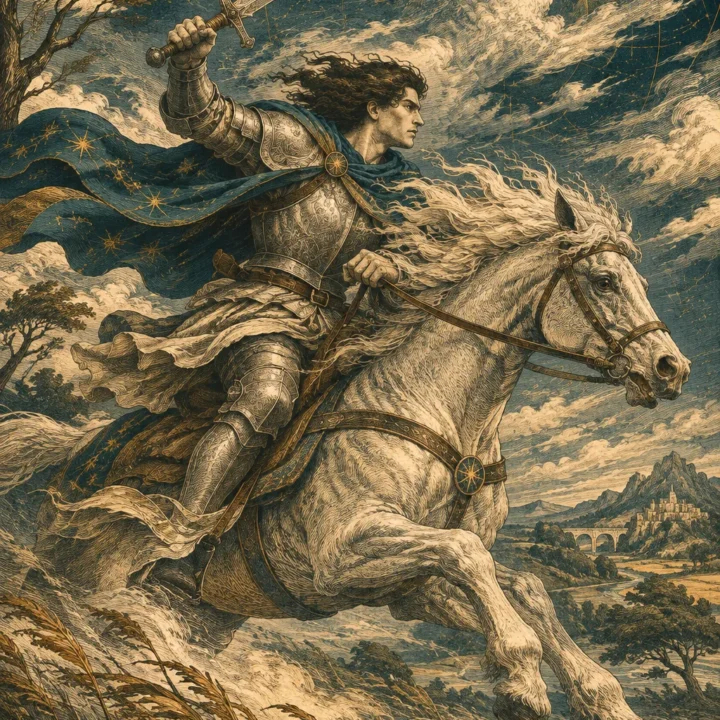
Knight of Swords
decisive action, urgency, ambition, direct speech
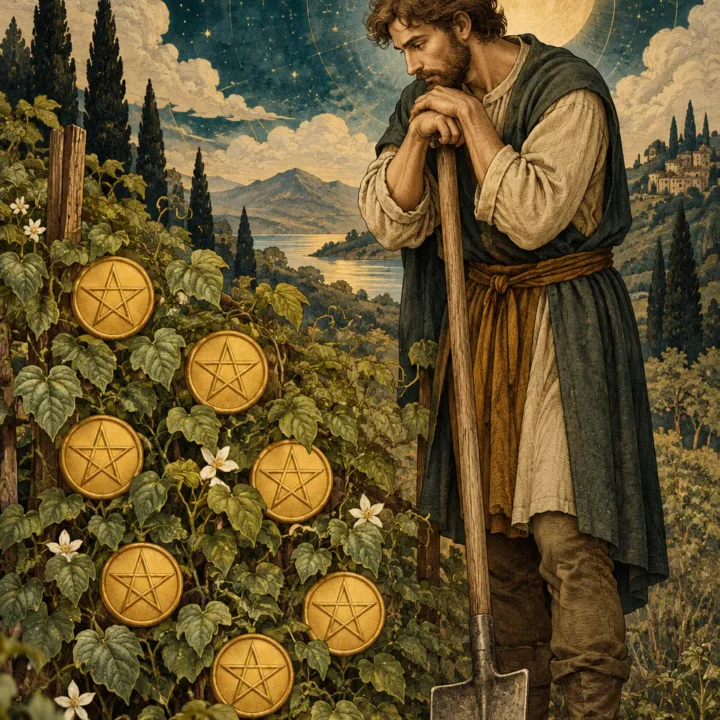
Seven of Pentacles
cultivation, evaluation, patience, invested effort

Eight of Pentacles
diligence, learning, craft, deliberate practice
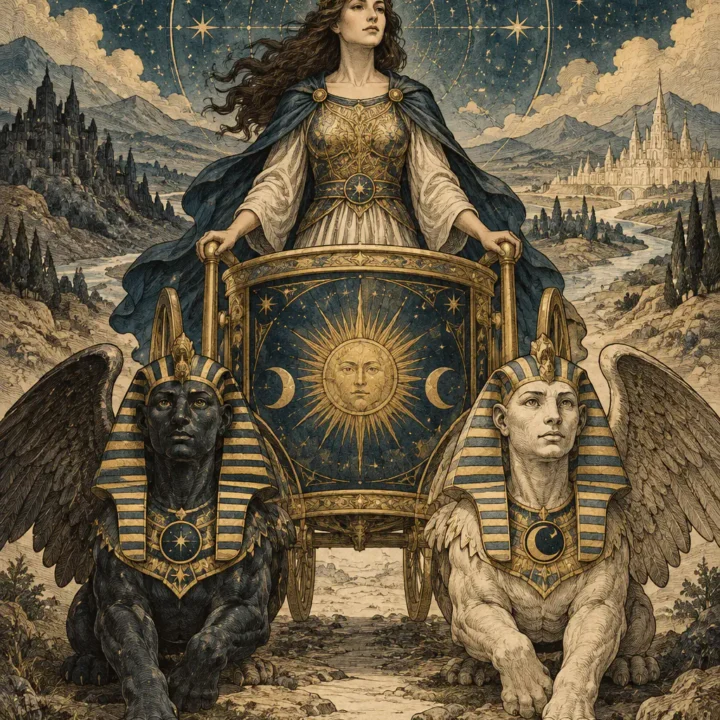
The Chariot
resolve, direction, self-command, movement
Sources and further reading
- Arthur Edward Waite, The Pictorial Key to the Tarot, Part III, Pentacles court cards Read the text
- Golden Dawn, Book T, court-card titles and elemental attributions Read the text
- Golden Dawn court-rank mapping discussion, The Final Star Read the text
- Victoria and Albert Museum, A history of tarot cards Read the text