
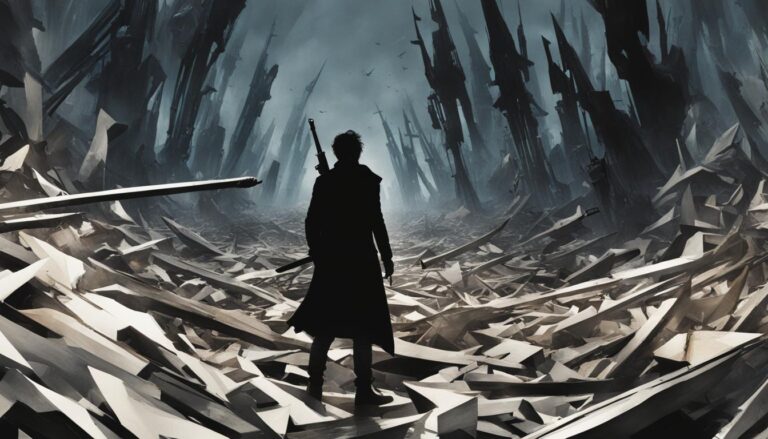
What Does Fighting in a Dream Mean?
Quick answer
Fighting in a dream almost never predicts real violence. It typically signals an unresolved internal conflict — a part of you pushing back against pressure, a decision you haven't made, or an emotion you've been suppressing. The opponent in the dream is usually a stand-in for a situation, belief, or aspect of yourself, not the literal person wearing their face.
Had a different dream? Describe it and get a reading.
Interpret my dream →Why this dream sticks
Dreams of fighting are memorable because the body responds as if the threat is real — elevated heart rate, muscle tension, the jolt of waking mid-punch. That physical imprint is the dream’s way of flagging urgency. Your sleeping mind escalates to conflict imagery specifically when waking-life signals have been ignored long enough. The louder the physical sensation on waking, the longer the underlying tension has been building.
The persistence of this dream type also reflects how the brain consolidates emotionally charged material. Conflict — even internal conflict — activates the same threat-processing circuits as physical danger. When you can’t resolve something consciously, the brain rehearses it at night, casting it in the most attention-grabbing narrative it knows: a fight.
What do the common variations mean?
| Variation | Core reading |
|---|---|
| Fighting a stranger | Conflict with an unknown aspect of yourself — often a trait or impulse you haven’t yet acknowledged. The stranger’s defining characteristic (aggressive, cold, frightened) is the clue. |
| Fighting someone you know | Suppressed tension in that relationship, or using that person’s face to represent a broader dynamic (authority, intimacy, competition) they symbolize in your life. |
| Losing the fight | Feeling overwhelmed by a situation in waking life — not a prediction of failure, but an honest signal that current resources feel insufficient. Worth taking seriously as a stress gauge. |
| Winning the fight | Integration or resolution — the part of you represented by the opponent is being overcome or absorbed. Often follows a real-life decision or moment of clarity. |
| Punches that won’t land | One of the most reported fighting variants. Signals powerlessness or frustration — specifically the feeling that your efforts in a waking situation aren’t producing results. |
| Fighting to protect someone else | Protective instincts under pressure, or guilt about someone you feel responsible for. The protected figure often represents a vulnerable part of yourself rather than the literal person. |
| Fighting and feeling calm | A positive sign — you are processing conflict without being destabilized by it. Often appears during or after a period of personal growth or therapy. |
| Recurring fight with the same person | An unfinished emotional exchange. Something unsaid or unresolved with that person (or what they represent) is looping until waking life addresses it directly. |
What this dream is not
A fighting dream is not a premonition of violence, a sign that you secretly hate the person you fought, or evidence of aggression you should be ashamed of. It is also not a literal replay of a memory — even when the setting or person matches real life, the dream’s logic is symbolic, not documentary. If you fought your manager in the dream, the dream is not telling you that your manager is your enemy; it is telling you that something in that power dynamic is generating internal friction worth examining.
It is equally worth noting that not every fighting dream carries deep meaning. A single instance after a stressful day, an argument before bed, or watching conflict-heavy content is often just the brain clearing its cache. Recurring dreams, or those that leave a strong emotional residue hours after waking, are the ones that merit closer attention. For more on sorting signal from noise in dream interpretation, see how to interpret your dreams.
A short practice
Within fifteen minutes of waking, write down three things: who you fought, what the emotional tone was (fear, anger, frustration, calm), and one waking-life situation that carries the same emotional tone. You are not looking for a one-to-one match between the dream figure and a real person — you are looking for the emotional signature. That signature is what your mind is actually trying to process. If the same signature appears across multiple recent dreams, treat it as a priority signal, not a coincidence. For a broader framework on working with recurring themes, see what recurring dreams mean.
Frequently asked questions
Does fighting in a dream mean I have unresolved anger?
Sometimes, but anger is only one possibility. Fighting imagery also surfaces alongside anxiety, grief, creative frustration, and major life transitions — none of which are primarily anger. Look at the emotional texture of the dream rather than the act of fighting itself. If you woke frightened rather than furious, the root is more likely fear or powerlessness than rage. You can explore related themes in our guide to anxiety dreams.
Why do my punches never connect in the dream?
This is neurologically consistent: during REM sleep, the motor cortex activates but the body is in a state of atonia — voluntary muscles are temporarily paralyzed to prevent you from acting out dreams. Some researchers believe the sensation of weak or ineffective punches is a direct bleed-through of that physiological state into the dream narrative. Symbolically, it maps to feeling ineffective or unheard in a waking situation. Both readings are worth considering — they are not mutually exclusive.
Should I be worried if I enjoy fighting in a dream?
No. Experiencing satisfaction, exhilaration, or even pleasure during a dream fight is common and does not indicate anything troubling about your character. Dreams allow the emotional and nervous systems to work through scenarios in a consequence-free environment. Enjoyment in a fighting dream often signals that you are successfully processing a conflict — the positive affect is the mind registering resolution, not a latent desire for real-world violence. If the enjoyment persists into waking as a disturbing thought, that is worth reflecting on; if it simply dissolves with the dream, let it.
This article is for reflective and educational purposes only. It is not a substitute for professional mental health support. If distressing dreams are affecting your sleep or daily functioning, speak with a qualified clinician.
For a broader reference on what nighttime imagery means, visit the dream symbol library or use the dream interpretation guide to work through a specific dream in full.
Author

Before you read a fixed meaning, ask:
What happened — the central image or event, in one plain sentence.
How it happened — calm or violent, easy or forced, sudden or slow.
Who was watching — alone, one person, or a crowd.
Those three usually matter more than the symbol name alone.
Meanings reflect widely shared symbolism; your own context comes first.
Explore the next dream

Dreams are not medical, legal, or financial advice. The Dream Symbolist offers symbolic interpretation to support reflection, not diagnosis.