
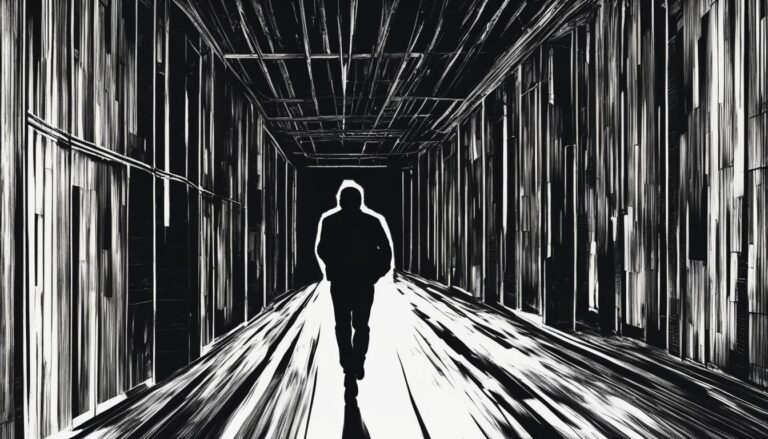
Dreams About Running Away: Meanings & Symbolism
Quick answer
Chase dreams are among the most common dreams reported worldwide, and they almost always point to something you are avoiding in waking life — a difficult conversation, a looming decision, or an unresolved emotion. Your sleeping mind uses pursuit as a vivid metaphor to signal that avoidance has become a problem worth examining.
Had a different dream? Describe it and get a reading.
Interpret my dream →Why This Dream Sticks
The brain processes threat with the same neural circuitry whether the danger is real or imagined. During REM sleep, the amygdala — your emotional alarm system — can fire as intensely as during an actual emergency, which is why you wake with your heart pounding and the scene burned into memory. The vividness is not random; it is your nervous system insisting you pay attention to something you have been sidestepping.
Chase dreams also tend to recur. Each time the underlying stressor goes unaddressed, the dream loops back with slight variations. The persistence is the message. Much like dreams about falling, the feeling of helplessness is the real content — not the specific details of the scene.
What the Common Variations Mean
| Variation | Common Interpretation |
|---|---|
| Chased by an unknown figure | A vague but persistent anxiety — often a responsibility or emotion you cannot yet name |
| Chased by an animal | Primal fears or instincts pressing for acknowledgment; the animal’s nature matters (a wolf suggests survival stress, a swarm suggests accumulating small worries) |
| Chased by someone you know | Unresolved conflict or unexpressed feelings toward that specific person |
| Legs feel slow or frozen | A sense of powerlessness; feeling stuck in a situation you believe you cannot escape |
| You turn and confront the pursuer | A positive sign — your psyche is rehearsing facing the avoided issue head-on |
| You escape successfully | Growing confidence that you can manage the stressor, or that a pressure is genuinely lifting |
| Chased but unable to hide | A feeling that there is no safe way out of a current dilemma |
| You are both chased and the chaser | Internal conflict between two competing parts of yourself; common during major life decisions |
What This Dream Is Not
A chase dream is not a literal warning of danger, a prediction about real people, or a sign that something is clinically wrong with your sleep. Most often it points to one specific, bounded pressure — not your entire life. Explore other classic dream scenarios and you will find the same principle: dramatic imagery almost always represents something more ordinary and workable than the dream itself feels.
A Short Practice
Within a few minutes of waking, write down three things: who or what was chasing you, where you were running, and what emotion was strongest. Then ask yourself: What am I currently avoiding or delaying in waking life that carries that same emotional charge? You do not need a full answer immediately. Simply naming the candidate out loud begins to reduce the dream’s need to repeat.
If the image feels especially charged, try a brief body scan before getting up. Notice where you are holding tension, then breathe slowly and deliberately — this signals your nervous system that the threat has passed and helps move residual stress out of the body before your day begins.
Frequently Asked Questions
Why can’t I run fast or scream in a chase dream?
During REM sleep, your motor cortex is largely inhibited — the brain suppresses signals to your muscles so you do not physically act out your dreams. This suppression bleeds into the dream narrative, creating the characteristic heavy-legged slowness or silent scream. It is a normal artifact of REM mechanics, though the emotional experience of powerlessness it produces is still worth reflecting on.
Is being chased the same dream as falling?
They share important features — both are triggered by anxiety, both produce intense physical sensations, and both recur when an underlying stressor is unresolved. The key difference is trajectory: falling dreams tend to accompany a sudden loss of control or status, while chase dreams are more specifically linked to active avoidance of a known pressure. See our guide to dream meanings for more on how the two overlap.
When should I be concerned about recurring chase dreams?
Occasional chase dreams are normal and universal. Concern is warranted when they are frequent or distressing enough to consistently disrupt your sleep or carry into daytime anxiety — at that point they may be one symptom of a broader stress response worth discussing with a qualified mental health professional. This article is not a substitute for medical or psychological advice. You might also notice patterns alongside other recurring dreams, such as teeth falling out, which together can indicate a period of unusually high stress deserving attention.
Author

Before you read a fixed meaning, ask:
What happened — the central image or event, in one plain sentence.
How it happened — calm or violent, easy or forced, sudden or slow.
Who was watching — alone, one person, or a crowd.
Those three usually matter more than the symbol name alone.
Meanings reflect widely shared symbolism; your own context comes first.
Explore the next dream



Dreams are not medical, legal, or financial advice. The Dream Symbolist offers symbolic interpretation to support reflection, not diagnosis.