
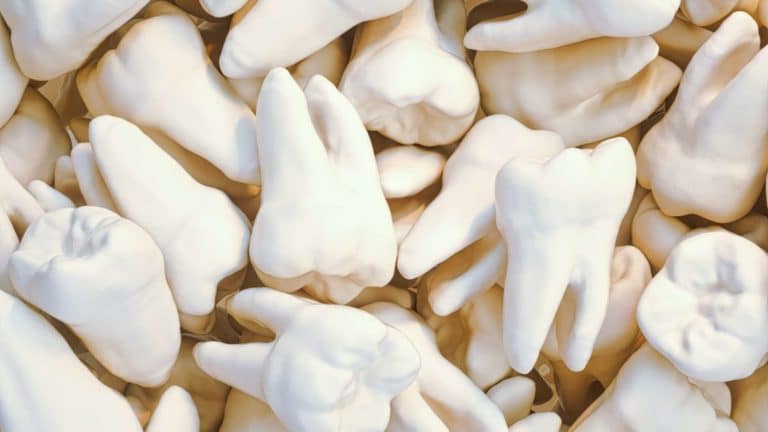
Teeth Falling Out in Dreams: Meaning & Symbolism
Quick answer
A dream about teeth falling out almost always circles back to one core fear: that something about the way others perceive, judge, or listen to you feels suddenly fragile. The dream is not predicting tooth decay or death — it is your sleeping mind processing anxiety about reputation, voice, or self-image that surfaced during the day.
Had a different dream? Describe it and get a reading.
Interpret my dream →Why this dream sticks
Teeth occupy an unusual place in the human psyche. They are tools of speech — you need them to form words clearly — and they are among the first things another person notices about your face. Lose them, even in a dream, and two primal fears activate at once: the fear of not being understood and the fear of being seen as diminished.
Researchers who study recurring dream themes consistently find teeth-loss imagery clustered around periods of heightened social evaluation: job interviews, relationship conflicts, public presentations, or moments when someone’s criticism landed harder than expected. The dream does not cause the anxiety; it reflects anxiety that was already running in the background.
There is also a sensory dimension that keeps the image vivid. The mouth is densely mapped onto the brain’s sensory cortex, so dreams involving it feel unusually real — more likely to jolt you awake, and more likely to be remembered and replayed. That vividness is why the image lingers through the morning when a dream about misplacing your keys would not.
If you are noticing a cluster of anxiety-themed dreams — teeth, falling, or running away — treat them as a set rather than isolated events. They often share a single source of waking-life stress that the mind is working through from different angles. The dreams archive covers many of these overlapping themes.
What the common variations mean
The specific texture of the dream shapes what it is pointing toward. A tooth crumbling quietly in your palm carries a different emotional charge than a mouthful spilling out in public. The table below maps the most reported variations to the concerns they most commonly reflect.
| Variation | What it usually means |
|---|---|
| Teeth crumbling or dissolving slowly | A gradual erosion of confidence — often tied to a situation where your authority or credibility is being quietly undermined rather than openly challenged. |
| Teeth falling out all at once | A sudden, overwhelming threat to self-image; frequently appears after a public embarrassment, harsh criticism, or unexpected social rejection. |
| Losing teeth while speaking or trying to speak | Directly linked to communication anxiety — fear that what you say will come out wrong, be dismissed, or expose you to ridicule. |
| Spitting teeth into your hand | Awareness of the loss paired with unusual calm; often signals that you have half-accepted a change in status or role and are processing the grief quietly. |
| Teeth falling out in front of a specific person | The relationship with that person is the live wire — you feel judged, unseen, or powerless specifically in their presence. |
| Loose teeth that do not fall out | Anticipatory anxiety about an outcome that has not happened yet; the dream is rehearsing a feared scenario rather than processing one that has already occurred. |
| Teeth growing back or replacing themselves | A positive sign of psychological resilience — the dreaming mind is already scripting recovery and renewed confidence. |
| Someone else’s teeth falling out | Worry about a person close to you losing standing, health, or voice; can also reflect projected anxiety you have not yet claimed as your own. |
These interpretations reflect the most commonly reported associations, not universal rules. Dream imagery is shaped by personal history, cultural context, and current stress levels. A dream that feels like an exception probably is one.
What this dream is not
This is not a medical symptom. Dreaming about teeth does not diagnose dental disease or predict tooth loss. If you have dental concerns, see a dentist — not a dream analyst.
This is not a death omen. Older folk traditions treated teeth dreams as portents of illness or death in the family. No credible evidence supports this, and treating the dream as a warning of physical harm is likely to amplify anxiety without resolving anything.
This is not a sign that something is irreparably wrong with you. Teeth dreams are among the most commonly reported dream experiences across cultures and age groups. Having one — or many — says nothing about your mental stability. It says you are human, under some form of social stress, and that your brain is doing its job of processing that stress overnight.
Finally, this is not a message that requires decoding to be useful. You do not need a perfect one-to-one mapping between dream symbol and waking event. The more practical question is simply: where in my life right now do I feel like my voice, my reputation, or my image is at risk? The dream is pointing in that direction. What you do about it is a waking-life decision.
For more on how the body encodes emotional experience during sleep, the body and emotions in dreams guide covers the underlying mechanisms in plain language.
A short practice after waking
The goal is not to eliminate the dream — you cannot curate your dreams on command. The goal is to reduce the waking anxiety feeding it, so the dream has less material to work with.
- Name the specific fear before you get out of bed. Not “I’m anxious” — something more granular. “I’m afraid my manager thinks I’m not performing.” “I’m scared that what I said at dinner made me look foolish.” Specificity shrinks the fear because vague dread is harder to respond to than a named concern.
- Write one true thing about your competence or worth. Not a forced affirmation — something you actually believe. The brain is running a negative social-evaluation loop; one piece of counter-evidence disrupts the loop without dismissing it.
- Identify one small action that addresses the named fear. Send the email you have been avoiding. Have the conversation you keep rehearsing. Ask for the feedback instead of waiting for it. Action is the fastest circuit-breaker for anticipatory anxiety, which is what most teeth dreams are running on.
- Let the image go without trying to resolve it. You do not need to determine exactly what the dream meant. Naming the fear and choosing a response to it is the useful work.
Frequently asked questions
Does having this dream repeatedly mean something is seriously wrong?
Repetition usually means the underlying stressor has not been resolved, not that something is wrong with you psychologically. If the same dream recurs over weeks or months, ask honestly whether the waking-life situation it seems to reflect has actually changed — or whether you have been avoiding it. Recurring dreams tend to fade when the concern they reflect is addressed, not when the dream itself is analyzed further. If repetition comes with significant distress, disrupted sleep, or intrusive waking thoughts, speaking with a therapist is a reasonable step — though that is a clinical judgment to make with a professional, not one to base on dream content alone.
Why do I feel physical sensations during the dream — like actually feeling my teeth come loose?
The sensation is real even though the event is not. During REM sleep, the brain’s sensory and motor cortices are partially active, which is why dreams can involve genuine physical experience — temperature, texture, pain, and the specific feeling of looseness in the jaw. The mouth is one of the most densely innervated parts of the body, so dream experiences involving it feel especially vivid and tactile. This is also why the dream is so reliably jarring: your body briefly believes something is actually happening to it.
Is there a difference between this dream appearing in men versus women?
Some research suggests women report this dream slightly more frequently, but the difference is modest and the interpretation does not meaningfully differ by gender. What does vary is the specific social context generating the anxiety: the environments where a person feels judged, silenced, or at risk of losing standing naturally differ based on individual life circumstances, not gender. The dream’s core meaning — threat to how you are perceived or heard — holds across reported demographics. Any claim that it means categorically different things for men versus women goes beyond what the evidence supports.
Author

Before you read a fixed meaning, ask:
What happened — the central image or event, in one plain sentence.
How it happened — calm or violent, easy or forced, sudden or slow.
Who was watching — alone, one person, or a crowd.
Those three usually matter more than the symbol name alone.
Meanings reflect widely shared symbolism; your own context comes first.
Explore the next dream


Dreams are not medical, legal, or financial advice. The Dream Symbolist offers symbolic interpretation to support reflection, not diagnosis.